




Real Tribute to Our Martyrs Begins When the Ceremonies End
Every year as Kargil Vijay Diwas is commemorated across the country, the Nation pauses to remember the extraordinary courage of the soldiers who laid down their lives defending India's sovereignty. Wreaths are laid at war memorials, bugles echo through the valleys where history was written in blood, patriotic songs stir emotions and heartfelt speeches remind us of the indomitable spirit that defines the Indian soldier.
These ceremonies are not mere rituals but are Nation's expression of gratitude to the supreme sacrifice made. They preserve the legacy of courage, inspire future generations and remind every Indian that the peace we enjoy is at priceless cost and has been secured by men who placed duty above their life itself.
Yet, when the ceremonies conclude and life returns to normal, there remains another battlefield that receives far less attention. It is the battlefield of memory which is fought not by soldiers in uniform but by the parents who continue to wait for their son who will never return, by wives who silently shoulder the responsibilities of both parents and by children who grow up knowing their father more through stories than through shared moments. So, for them the sacrifice did not end on the day the bugle sounded the Last Post. It only simply changed its form.
We must know that what binds the Armed Forces together is not merely discipline, training or military professionalism but it is a deep sense of belonging and patriotism. The Armed Forces are not simply an organisation but it is like a family that celebrates, mourns and stands together in times of adversity and this is all for the National honour. This unique bond is one of the greatest strengths of our Armed Forces. It is also one of the principal reasons why a young soldier while standing on an icy post in Siachen, patrolling the heights along the Line of Control or operating in hostile terrain, performs his duty with sheer dedication, utmost commitment with a deep sense of belonging and togetherness. Deep within his heart lies an unspoken confidence that “If something happens to me, the family will never stand alone and there exists an extended family to take care of them”. This belief is a tremendous source of prevailing moral courage within the Armed Forces which cannot be created by military doctrine or battlefield technology but it is built over generations through trust, compassion and the lived experience of soldiers who see the Army standing steadfastly beside him and family. Thus, for this reason the remembrance must never become confined to only annual commemorations. The true tribute to our martyrs actually begins after the wreaths have been laid with a culture of lifelong engagement.
The soldiers and their families look at the society expectantly with a hope that our citizens in various walks of life understand their pain and sacrifice and that the multiple government establishments from village upwards will continue to extend support.
The parents of our martyrs deserve much more than ceremonial invitations on commemorative occasions. They deserve companionship, respect and the comforting assurance that the comrades of their sons still remember them not out of obligation but out of affection. The widows of our brave soldiers display remarkable resilience while rebuilding lives that changed forever in a single moment. Behind their quiet dignity often lies a lifetime of emotional struggle. Standing beside them with empathy and continuity strengthens not only them but also the very values that define military service. The children of our martyrs should grow up feeling that they have inherited not only the pride of their father's uniform but also an extended family that genuinely cares about their future. Their academic achievements should be celebrated. Their aspirations should find mentors. Their milestones should be shared by those who once served alongside their fathers. The emotional reassurance, therefore, flows from something much deeper, that is, from continuity of relationships. There have been many occasions when a martyred soldier’s sister gets married, her brother's colleagues along with the battalion step in as a surrogate family to fulfil all duties of the brother.
If every Regiment, unit and formation informally adopt a commitment that the families of its fallen soldiers would remain an integral part of the regimental family for generations, also every school identifies and honours a local martyr by regularly interacting with his family and every Regimental Associations, universities, professional bodies as also the civil society organisations consciously included these families in national celebrations not as guests of honour for a day but as members of one extended family throughout the year, then just imagine the kind of confidence it would instil in every serving soldier will be humungous. Such initiatives require sensitivity rather than much resources.
The greatest tribute to a fallen soldier is not merely to remember how he laid down his precious life but it is to remember those whom he has left behind. A telephone call simply to ask their wellbeing, helping a child prepare for college, guiding a widow through life's practical challenges, sitting with ageing parents over a cup of tea and listening to stories they have narrated countless times because they fear the world may eventually forget, will heal their hearts.
As another Kargil Vijay Diwas passes into history, let us certainly continue with the wreath laying ceremonies, the patriotic songs, the inspiring speeches and the solemn salutes. They are undoubtedly indispensable expressions of national gratitude but let those ceremonies also become gentle reminders of a larger responsibility that begins after the function concludes. The true measure of our gratitude is not how magnificently we commemorate our martyrs for a day but how faithfully we stand beside their families for a lifetime.
We Indians must reciprocate the call of our Kargil Hero Late Captain Vikram Batra, PVC “Yeh Dil Mange More” which personifies the spirit and sacrifice of every Indian Army brave soldier. Another hero Late Capt Vijayant Thapar had written a letter to his parents saying that “By the time you get this letter I will be observing you all from the sky and if I become a human again, I will join the Army and fight for my Nation”. Every Indian says, 'I love my country.' The soldiers of Kargil proved it. Patriotism is not measured by words spoken in comfort but by sacrifices made in hardship. Every victory has a family that paid the ultimate price and behind every martyr is a family that serves forever. The echo of Kargil lives in every martyrs’ family.
Kargil Vijay Diwas, therefore, is not about remembering how our heroes laid down their lives. It is about remembering what they fought for and asking ourselves one question - if our soldiers gave their tomorrow for our today then what are we doing today for our Nation tomorrow?"
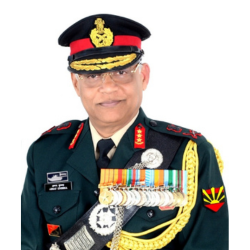
Lt Gen Abhay Krishna, Retd
Lt Gen Abhay Krishna (retd, PVSM, UYSM, AVSM, SM(G), VSM, - is a former Army Commander of South Western, Eastern and Central Army Commands.


Comments