







Can India Apply Iran's War Strategy?

Lessons from War
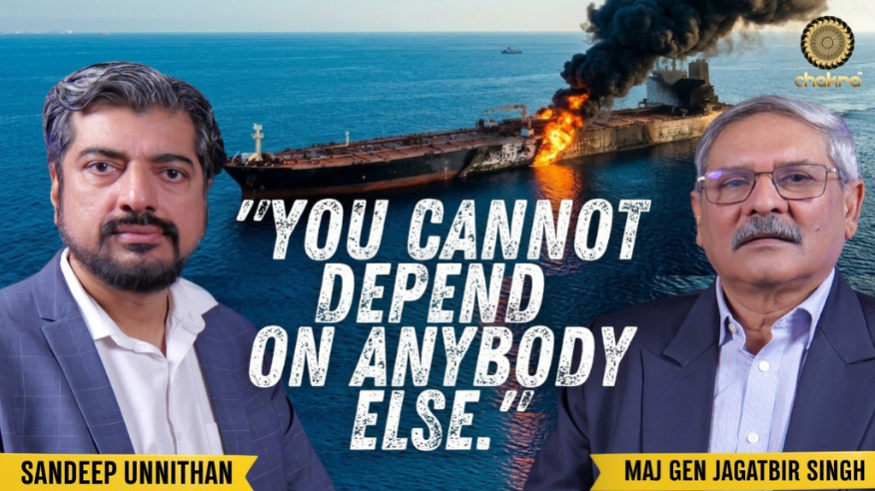
Feat. Major General Jagatbir Singh, VSM (Retd), Armoured Corps Veteran, Author, and Defence Analyst
Sandeep Unnithan: Winning means battlefield superiority. What was different about the Iran-US war?
Major General Jagatbir Singh (Retd): For Iran, the mere fact that they could stand up to the US and Israel was a victory of sorts.
Sandeep Unnithan: The US and Israel misjudged Iran's centre of gravity.
Major General Jagatbir Singh (Retd): Despite this collapse and the leadership, how did Iran keep functioning as a country? How did their military keep functioning? That needs to be studied.
Sandeep Unnithan: The US Navy's ability to physically destroy its adversary is meaningless.
Major General Jagatbir Singh (Retd): Today, sea control also has to look at commercial confidence. How many ships are still struck? With small assets, with drones, with small boats, speed boats, and with mines, they've been able to disrupt the state of the world.
Sandeep Unnithan: Gulf countries are now reconsidering their basing arrangements with the US?
Major General Jagatbir Singh (Retd): Well, they may reconsider, but that's a long-term thing.
Sandeep Unnithan: Civilian infrastructure, which was seen as, you know, you can't target them as military targets, now they're being freely targeted because they're making the case that they actually enable the war effort.
Major General Jagatbir Singh (Retd): Absolutely. Today, the bulk of the people who are saying the war has to end are the Americans and others because they're feeling the commercial pains of that war. I mean, if they had just targeted some, you know, military personnel or military assets, that pain would not have been felt as it's being felt now.
Sandeep Unnithan: Hello and welcome to Lessons from War, a new series on Chakra News. I'm joined by Major General Jagatbir Singh, Armoured Corps veteran, author, defence analyst, and the writer of a new piece on the lessons from the Iran-US war for India. General Jagatbir, welcome to my show.
Major General Jagatbir Singh (Retd): Thank you very much, Sandeep, for calling me here. It's indeed a privilege and honor to be here on the platform with you today to share this platform with you. And firstly, I must thank you very much for appreciating my piece, which I wrote for Chakra News. And more than that, thank you so much for publishing it.
Sandeep Unnithan: Thank you. And we're going to talk more about that, the lessons from the Iran-US war, in greater detail.
Major General Jagatbir Singh (Retd): I look forward to that and engaging with you and your audience. I'm really looking forward to this interaction. Thank you.
Sandeep Unnithan: General Singh, you made this point in your piece that Iran's win wasn't military, but it was strategic. They made it difficult for the war to be contained, rather than outright trying to beat the US and the United States. Can you unpack that distinction for our listeners who assume that, you know, winning means battlefield superiority? What was different about the Iran-US war?
Major General Jagatbir Singh (Retd): Actually, Sandeep, you made a very interesting point. And I wrote that in my piece that Iran, for Iran, the mere fact that they could stand up to the US and Israel was a victory of sorts. That is the whole thing. They felt that by just standing up, they realised that they were weaker on certain fronts. They were weaker conventionally. They don't have the weapon systems. They don't have the army. They don't have the, you know, command structure. They don't have those, you know, missiles, which the US and Israel had. They never had any fighter aircraft, comparatively. I'm saying in comparison. And yet they were able to take on the US. And it's not happened all of a sudden.
They have been taking on the US since 1979. If you remember, go back in time. So, there's 40 plus years, 46 years they've been doing this. And they've been studying the US over the years as to where its vulnerabilities lie. They've studied the vulnerabilities in Afghanistan. They studied their vulnerabilities in Iraq. And they also saw what they did right over there and what happened and how they should check that. So that is the main thing. So, they reframe the rules of taking on the US. So, they never countered them force to force, but they decided to take them on in different ways, which we can discuss. Absolutely. And to ensure that, you know, today the tide has shifted. The narrative has shifted, even though today, you know, the MOU has collapsed. But if you study the MOU, the mere wording of the MOU is a sort of victory for Iran. The US agreed to, you know, allow the sanctions to be lifted as far as the oil goes and to compensate, give them back a certain amount of money, which is their own money lying frozen. So I mean, things were there. There's no talk of this nuclear enrichment. So, these are things that need to be studied, need to be analysed.
Sandeep Unnithan: Absolutely. And you know, you've also written that the US and Israel misjudged Iran's centre of gravity. The centre of gravity is something that you're very familiar with.
Major General Jagatbir Singh (Retd): Centre of gravity is something that everybody looks at. Now, look at the Indian case, where we took 1971. Initially, our centre of gravity was not Dhaka. General Sagat Singh decided to seize Dhaka, and you saw how the Pakistan army collapsed at that time. So identifying the centre of gravity is extremely important. Now the Americans had laid out five or six war aims. I mean, if we go, the first one was the so-called military-industrial complex of Iran. Then there was their ballistic missile. Then there was their nuclear enrichment. Then was the targeting of the naval assets. Then was the targeting of the proxies. And also, which was number one, but they never mentioned, was the leadership. And to do that...
Sandeep Unnithan: Regime change.
Major General Jagatbir Singh (Retd): Regime change. And to do that, they had, you know, fomented, there was trouble in Iran earlier. People were out on the streets. And they felt the minute you target the regime, Khamenei, the supreme leader, things will change. Everything will go. But it never happened. What happened was totally different. You've just had Khamenei's funeral, which took place over six days. And what has come out is this popularity, which no one had expected. So, what did they do? Now, what did Iran do? They changed, and they went for the, you know, state of Hormuz, which was never there. Their state of Hormuz was functioning earlier. Ships were going through. Everything was happening. Today, the focus of the world is on the Strait of Hormuz, on the reopening of the Strait of Hormuz. So, something has gone wrong as far as the American identification of that centre of gravity is concerned. Now, America, President Trump was also, you know, may have got a sense of bravado, may have got a sense of, because of what happened in Venezuela lately, where they, you know, were able to go in, pick up the president.
Sandeep Unnithan: It's a walkover.
Major General Jagatbir Singh (Retd): It's a walkover over there. So, he felt the same thing would happen there. They'll kill him and the pro-Iranian regime. And they were priming up the Shah's son to come in his place, little realising that the Shah's dynasty was also very unpopular in its time. It was seen as too pro-West. I mean, there's the fact which is there. So, in spite of this collapse of the leadership, how did Iran keep functioning as a country? How did their military keep functioning? That needs to be studied. That needs to be analysed.
Sandeep Unnithan: So, there's another point that you made in your piece where you said that, you know, commercial confidence is now part of sea control. That's a very interesting postulation where you say that the US Navy's ability to physically destroy its adversary is meaningless. And Trump kept saying, we have sunk so many ships. We've sent them to the bottom of the Arabian Sea or the Gulf of Oman or something. But they've been attacking their submarines. They've knocked out all their combatants. But the Iranians continue to keep fighting. How did
Major General Jagatbir Singh (Retd): So, I wrote that thing. I said, you know, today, sea control also has to look at commercial confidence. As you said, if you go track, in the article I've given you, some people track the movement of ships. The movement of ships came down by 92%. I mean, that's a huge figure. Today, there are ships still stuck. One month 17th of June, the MOU was signed. Today we are on, you can say, the 14th of July, nearly one month ago. How many ships are still struck? There's a problem that took place the day before yesterday because the centre of the state of Hormuz is mined. Iran says, come on our coast. Whereas the Omanis say, come on their side. And the ships which went on the Oman side were struck by Iran. The ships that have gone this side have been struck by the US. But the US has a huge, huge Navy. It's the largest. Now, of course, China is going to...
Sandeep Unnithan: In terms of numbers, the US has fewer ships.
Major General Jagatbir Singh (Retd): And they're deployed all over. What does Iran have? Nothing.
Sandeep Unnithan: But despite that...
Major General Jagatbir Singh (Retd): And despite that, with small assets, with drones, with small boats, speed boats, and with mines, they've been able to disrupt the state of Hormuz. And this is not the first time we've seen something which is so asymmetrical taking place. The same thing has happened in the Black Sea as far as the Russian fleet is concerned. The Russian ship Moskova was struck by a missile. Four years back. So, the nature of warfare itself has changed. So you can't say, I've got a huge army. I've got the latest weapons. I've got the willingness to use those. But the manner in which you use them and the manner in which your adversary responds, that is something that needs to be seen, studied and analysed.
Sandeep Unnithan: So, could the US and their allies have prevented this collapse in confidence on the part of the commercial lines, the shippers? Could they have kind of promised them convoys, escorts, and demined the straits? Was that something that they completely left out of their planning?
Major General Jagatbir Singh (Retd): If you ask me, in hindsight, now they're trying to do it. Today, both sides are trying to say that we'll impose taxes, we'll ensure safe passage. President Trump yesterday only announced, I'll charge 20 per cent, you know, to ensure safe passage. But the safe passage means that the mines have to be cleared. And they're too close. There are also coastal batteries over there. There are mines also. So, when you come into a restricted area, unless you can sanitise everything around you, the American ships are at risk of being targeted. And the Iranians had realised this. Now, for them today, the leverage of the Straits of Hormuz is far greater value and far more critical for the rest of the world than their leverage of having, you know, nuclear weapons. That's what I mean, it's demonstrated. The entire focus of the world has shifted to reopening the Straits of Hormuz to keep this important choke point flowing as far as energy goes. And which are the countries affected most by this? China, India. I mean, we are the largest oil consumers in the world. And which is the other side affected? All the Gulf states are affected because, unless India and China buy the oil, who will they sell to? How can they go? So yesterday, in fact, there was a very interesting development. Who's the beneficiary of this? In the long term, maybe Syria. Because they want a gas pipeline. But that gas will go to Europe, not come here, because imagine if it goes out to a Syrian port and then is transported by sea to India, it will increase the cost.
Sandeep Unnithan: So that explains why the West is, you know, making peace with Shara, the leader of Syria. Former al-Qaeda leader.
Major General Jagatbir Singh (Retd): Absolutely, and Macron visited Syria the other day. So this is one of the things.
Sandeep Unnithan: Another interesting point you made, General Jagatbir, in your piece is that Iran escalated vertically and horizontally in a way that nobody had expected. Describe for us what you mean by this vertical and simultaneous vertical and horizontal escalation.
Major General Jagatbir Singh (Retd): So, simultaneously vertical means that you hit me at some point, I hit you at a point which is either deeper or more vulnerable or target an asset of yours. So the same country. But what Iran did is when they were targeted, and this is with Israel, they hit Israel, and they even hit the Israeli Dimona nuclear plant around that. So that is what you call vertical escalation. So you hit me, I hit the American aircraft carrier, which is hitting me. What did they do? They said that we'll do horizontal. So, they started by hitting American bases in countries which were around them. So, they hit the American bases, which were meant to be absolutely safe. So, they hit American bases in the Gulf. Now they went one step further. They said we'll hit those systems that, you know, sustain their war effort of these countries. So, they hit the energy infrastructure. They're hitting their own infrastructure in those countries. They hit certain buildings so that, you know, their financial markets would get rattled. Everybody's portfolio was hit in different ways. So they hit six to seven countries. Now, can you imagine you've been taken on by Iran and Iran was taken on by the US and Israel, and they've targeted Gulf countries? That is half a dozen Gulf countries. And they've even gone as far as targeting Jordan recently, yesterday and Cyprus. So, I mean, this is the thing. A lot of the strikes that were carried out on Iran were carried out by assets which were not located in these Gulf countries by the US. They were carried out by assets located in Europe, which came and overflew. So that is the degree. Just see how they changed it. Now there's a lot of confidence in these countries as far as the world is concerned. They'd invested heavily in these countries. And suddenly these countries now seem to be, you know, lacking that defence umbrella that was guaranteed to them, a security umbrella by the United States. And the investor confidence in them is also shifting.
Sandeep Unnithan: So, this targeting the US bases in these Gulf countries seemed to have been an Iranian ploy to kind of fracture the coalition from within. Do you think the Gulf countries are now reconsidering their basing arrangements with the US?
Major General Jagatbir Singh (Retd): Well, they may reconsider, but that's a long-term thing. So, they've already talked to them, and they've started talking to Pakistan to give them a certain amount of security. You've seen a Saudi-Pakistan pact.
Sandeep Unnithan: Yes, there's a Pakistani contingent in Saudi Arabia. Air Force.
Major General Jagatbir Singh (Retd): And they will also now diversify their relationships. So, they'll diversify relations. And the UAE will start getting closer to India as far as defence cooperation goes. So they will diversify their things. And the main thing is that trust in the US has been reduced. Their trust in the US has been reduced to a great degree because they felt the US could not defend them. So, I mean, this is something that needs to be seen. And you've seen the behaviour. And what is surprising is how much the Gulf countries retaliated to the Iranian strikes.
Sandeep Unnithan: That's true. Another point that you made, General Jagatbir, is that you said that the legitimacy of targeting decisions may become as strategically important as the strikes themselves. How does a democracy like India, for instance, build legitimacy into an AI-accelerated targeting?
Major General Jagatbir Singh (Retd): So, I mean, this is something which I've written because everyone talks of AI. You see, the number of targets that were engaged the first day, 70 targets, could not have been engaged unless AI was involved. Now, frankly speaking, at what point do you have AI? Till what point do you have AI? So, I mean, these are the two things. And if you have AI, how much do you allow AI to dictate things for you? So the girls' school was targeted. It was targeted based on certain inputs that would have come. AI felt it was a legitimate target. Ultimately, what was proven was that it was a girls' school, and 150 children died in that.
Sandeep Unnithan: Was it an AI problem, or was it a targeting, old-fashioned targeting failure that we've seen in the past?
Major General Jagatbir Singh (Retd): I think it would have been an AI problem in this case. So that's why I say that today, you have to be very sure when you go into AI. I don't think a decision by somebody would have been taken to physically target a girls' school. We had a case many years ago, when, during the Iraq war, a bomb shelter was targeted, where 270 people died. You know, that was also horrific at that time. So, I mean, mistakes do take place. And President Trump was asked about this. And he's said very clearly.
Sandeep Unnithan: It was in the past.
Major General Jagatbir Singh (Retd): It was in the past. That's what he said at the G7 summit. But it's not in the past. So, I mean, increasingly, as you go ahead, there has to be a fine balance between how much you can, because the speed is changing so much of decision making, of acting, that OODA loop has got compressed to such a degree that these sort of mistakes can take place, will take place in future. But the fallout will be far greater. Now, if they hadn't targeted that, there would have been no fallout. But now the Iranians cashed in on that. He came for his first meeting in a plane with that, you know, girls' school painted on it, the foreign minister. And they had photographs of the kids who died there. On all the chairs. They did that.
Sandeep Unnithan: But, you know, other points that you mentioned, General Jagatbir, set me thinking that you're talking about data centres being targeted. In the Russia-Ukraine war, for instance, refineries are being targeted. What are the lessons for India from these wars? I mean, does it mean that earlier civilian infrastructure, which was seen as, you know, you can't target them as military targets? Now they're being freely targeted because they're making the case that they actually enable the war effort. What are the lessons for India? Does it mean that we need to start hardening our infrastructure?
Major General Jagatbir Singh (Retd): Absolutely. Look at the thing. Earlier, the main target to target was military targets. You know, the target is, you know, a key military command and control system. The target is an air defence system. Target is, you know, armour concentrations. But what have they done now? They've targeted data centres of countries, of companies such as Amazon. For one. Now, imagine if this data centre, everyone talks of cloud, but cloud is not something up there. It exists on the cloud. Huge thing with, you know, electric backup, with air conditioning, with people working there. You target that, and all your data is kept there. So how do countries function? Now, imagine if you have your own data stored in your country in some place, and people target that. So now you have to start thinking, can you keep all your data in your country? Do you need to have a certain amount of your data stored outside in so-called, you know, data embassies in your own, you know, places? Is it the case that instead of people now, these big companies, instead of storing their data in the Gulf, which is a region under threat, where there's the Iran-Iraq war, will the Iran-Iraq war continue? Will they start storing data in India, and can certain data centres come up in India? Is this another opportunity for India? Can we look in that direction? Can we store data of say countries like Singapore here? Can we store data of the Amazon here? So, I mean, that's something that needs to be seen. But this is something which is increasingly there. They've targeted data centres. They've targeted oil infrastructure. They're targeting, you know, what did they target in Ukraine first? They targeted the energy setup, the dams. They targeted the nuclear power plant. They targeted, today, they are targeting the oil refineries in Russia. The Russians are queuing up for oil. So, I mean, they want the pain to be felt outside the military. So, I mean, that's where the popular opinion rises against the regime. So, I mean, that's what they feel. So, I mean, today, the bulk of the people who are saying the war has to end are the Americans and others because they're feeling the commercial pains of that war. I mean, if they had just targeted some, you know, military personnel or military assets, that pain would not have been felt as it's being felt now.
Sandeep Unnithan: So, General Jagatbir, what is the one lesson that you would want the MEA, the Defence Ministry to take away from this war? Given the fact that we've seen our energy vulnerabilities being probed, because, you know, 80-90% of our, we're so dependent on the seas for everything from energy to commerce and everything. So, what is the one big lesson to your mind that we need to take from this Iran war?
Major General Jagatbir Singh (Retd): So, I've always said this, that we have to be very clear about what our vision is of our threats and what is the vision of our war in future? How is it going to happen? Is it going to pan out in the manner which we've always thought? Start from the borders, hit our, you know, military assets. And, or is it going to cascade in all directions which are not known? Are they going to be short wars? Are they going to be prolonged wars like, you know, Chairman Mao that time spoke about, prolonged wars, which Iran is prepared for a long war. So, I mean, that's something. What are your assets that are now vulnerable? Are your military assets more vulnerable? Or imagine if they target something like, say, your Reliance Refinery or the Indian Oil Refinery.
Sandeep Unnithan: Yeah, or the Indian Oil Refinery.
Major General Jagatbir Singh (Retd): Will that affect me more? Imagine if they target some, you know, your IT centres in Bangalore or Hyderabad. Will that affect me more on a global scale? So, I mean, they will; people are going to find your vulnerability. Your main assets now can turn into your vulnerability. So, how do you protect them? What measures does the country take to protect these? I mean, these are things that have to be thought of in the long term. And there has to be greater integration between, you know, you can't work in silos anymore. It has to be a whole nation approach. So, you have the Army, Navy, Air Force, together with the people in government, and the private sector has to be involved more and more because the private sector is getting affected. And people like you in the media have a major role to play because the narrative is the thing which is there because everybody's targeting you in the mind.
Sandeep Unnithan: Cognitive warfare. Absolutely.
Major General Jagatbir Singh (Retd): So, I mean, unless you shape the narrative, prepare people for this, but you can't just think that this will not happen. These wars have shown us that anything can happen and anything is possible. So, we need to prepare for our next crisis. And the other thing we have to do, which is the most important thing, is that we have to start building our own capabilities and capacities. And that's where we have to move in that direction. Because you cannot depend on anybody else at that time. So, unfortunately, we don't have; we are not an oil-producing country. So, you have to build and have your storage facilities and reserves.
Sandeep Unnithan: We have to increase our storage capacity.
Major General Jagatbir Singh (Retd): Yeah, you have to build that. And in the same way, as far as your defence capabilities are concerned, the future only lies in Atamannirbhar Bharat. So, you have to build your own capabilities. So, you have a huge pool of, you know, scientists, you have everybody like that. So, in India, manufacturing has to diversify from the public sector, and you have to start depending more and more on the private sector. But there has to be, as I've always said, coordination between the public sector, private sector, academic researchers and the users. The all-of-nation and the bureaucracy.
Sandeep Unnithan: So, I mean, until you do that, things have to move much faster than they are moving now. Right, absolutely. So, I was just thinking of where we were six years back, General Jagatbir with COVID, and that is possibly the last time that we saw a war effort or an all-of-nation approach where the whole country came together literally to, you know, fight this virus. But in conclusion, what are the lessons for India when you're facing a more powerful adversary? Can we borrow from the Iranian playbook in terms of, you know, asymmetric warfare? Do we have the right tools to fight that kind of warfare? Because, you know, a lot of people say that, oh, we are a democracy, we can't do choke point warfare, we can't fight the way the Iranians did. What, to your mind, are the lessons that India must draw when you're confronted with a superior adversary?
Major General Jagatbir Singh (Retd): You see, you draw lessons from any conflict, any country. But those same lessons cannot be applied in the manner in which those countries have applied those lessons. So, you draw those lessons, and you modify your abilities based on your own threat perceptions and your own terrain and your own capabilities, and you apply them in the Indian context. Now, just look at what the Iranians did when they felt that their leadership was decapitated. They just carried out what we call Mosaic sort of warfare, Mosaic defence. So, you have people in the front line who were their regular troops. They were backed by their, you know, IRGC. They're backed by Basij units. They are back. They had, you know, ready to put up asymmetric. They had missiles. They had small naval, you know, vessels. And I mean, they had the narrative. Today, the narrative in the world has changed. So, I mean, there are a lot of lessons that India can teach. India is learning from this. But this is a great time, like you brought up, for all our training institutions, the military training institutions, to pick up these lessons and, you know, to explore what the future, where we can put it. Not only do you know, exploiting these lessons by digging deep into this and looking outside the box. If they've done this, what more can we do? We need to look into exploring what more we can do with these same things. Yes, you're right. We are taking on two. Actually, I've always said that it's not two things. We have one consolidated, fused thread. That is, China and Pakistan are together in more ways than one. And how do we take them on is what is the question. You know, we have to be prepared for that. And yes, we have our own choke points also. A very vulnerable choke point we have. We actually control the entrance to the Gulf of Malacca. Malacca Straits. That, you know, 10-degree channel, which is down in the Andaman. So, I mean, what can we do? As far as that is concerned, China, because of that vulnerability, built the CPEC. And went around. So, I mean, these are things which are there. I'm sure those who are now, you know, planning all this, looking at these lessons, are going into this. Some will be out in the open domain. Some will not. But yes, all armies have learned lessons from these conflicts. As I said, Iran also picked up lessons from America's vulnerabilities and their successes in the earlier conflicts, where they had gone and applied those now.
Sandeep Unnithan: So, I mean, this is something. You think Iran kind of borrowed from Op Sindoor because our war was fought in May 2025 with Pakistan, the 88 hours. And in February, you saw the Iranians doing exactly what we did, which is to basically attack all the air bases of the Pakistanis rather than, you know, focus on the fighters.
Major General Jagatbir Singh (Retd): You know, the first time we fought Sindoor in May 2025, they fought the 12-day war in June 2025. So that time also, you saw the exchange of missiles taking place between Iran and this thing, Israel. But now what they've done is, yes, they have picked up. Everybody picks up on the other thing. They have picked up this precision strike capability. Today, precision weapons are going to play a major role in warfare. Firepower delivered by this precision means to give a point. And I must say that India has demonstrated certain capabilities during Operation Sindoor, which I don't think our adversary was ever prepared for. That 88-hour war conflict actually brought home certain very, very telling points as far as the Indian ability to conduct operations at this scale, coordinated operation between the army, navy, and the air force at that scale and with the precision, precise manner in which they did them. And exactly, but we hit terrorist targets at that time. Iran now expanded that, and they started hitting American targets in the Gulf countries, but also hit civil infrastructure. We never hit any civil infrastructure. So, that's the difference.
Sandeep Unnithan: That's the difference. But, lots to unpack there. General Jagatbir, thank you for taking the time out. Thank you for your thoughts. Most interesting as always speaking with you. And, for those of you who want to read uh what Major General Jagatbir wrote, you can see his uh article. It's appended in the description right below this video. Thank you very much for joining us, General Jagatbir. Uh look forward to speaking to you again.
Major General Jagatbir Singh (Retd): Thank you very much, Sandeep, for calling me here. And it's indeed a pleasure for me to interact with you and all your viewers. Thank you, and Jai Hind.
Sandeep Unnithan: Thank you, Sir. Jai Hind.
Watch the full podcast: https://www.youtube.com/watch?v=v14Pni-cuw4&t=124s
Chakra Desk
Chakra News is a specialised digital media platform committed to in-depth coverage of India’s defence, national security, geopolitics, and critical technologies.




Comments