






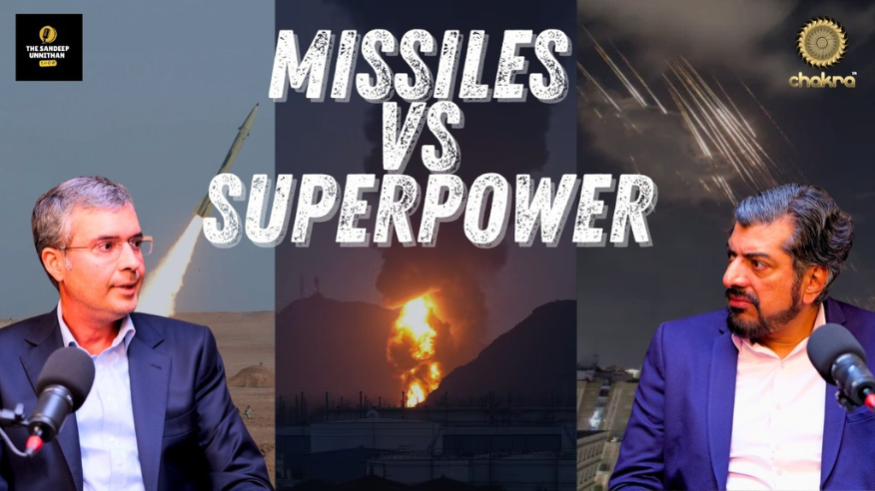
Iran War: Is This the End of American Power?

The Sandeep Unnithan Show
With Zorawar Daulet Singh, Author, Historian and Geopolitical Expert
Sandeep Unnithan: Hello and welcome to the Sandeep Unnithan Show. Your weekly dose of defence, geopolitics and much more. Today I'm joined on my show by Zorawar Daulet Singh. He's an author, a historian and a geopolitical expert. Zorawar, welcome to my show.
Zorawar Daulet Singh: Thank you, Sandeep. Thank you, and I really enjoy the chakra. You've done a fantastic job over the last 10 months to bring up strategic issues to the Indian audience. So, thank you. Hats off to you.
Sandeep Unnithan: Thank you, Zorawar. But I want to start by asking you this, straight up. Iran 2026, is this America's Vietnam? Is it Iraq 2003? Is it Afghanistan 2001? How do you read this?
Zorawar Daulet Singh: There's always been this belief that the American superpower is immune to any kind of costly interventions; history has shown that it has gotten away with many. even Vietnam's massive intervention, 58,000 casualties, several hundred-thousand injured, loss of prestige for decades, but it bounces back. I think this particular conflict is happening at a time when a broader power shift is happening in the international order. You're seeing what many of us would argue is a shift from the fading unipolarity to a multipolar world. And in this, you are seeing the United States as all previous sorts of hegemonies hold on to its strategic position, and there was no position more vital for the United States than the Middle East and West Asia. It was on the gates of Eurasia. It was the classic sort of rimland state, as Nicholas Spikeman in 1945 spoke about. If the United States is going to lead the world, it needs to dominate all the centre points or the entry points into Eurasia, East Asia, the North Atlantic and Southwest Asia. And as we know, the subcontinent was carved up precisely to ensure that the Americans and the Anglo-Americans had a foothold. So, this area is so vital and so strategic. So, when you play a game here and roll the dice, which they have done for a big stakes game, and it doesn't work out, you are in for some great surprises now, and we don't really know which way it's going to unfold, but the repercussions could be felt for several years to come.
Sandeep Unnithan: So, it's part of a larger game. You're saying that the American intervention in Iran is more than about Israel. It's about America.
Zorawar Daulet Singh: So, that's an interesting question. We've, there is no doubt that the Greater Israel project. And the Zionist, the Jewish lobby, it's all been well documented by very prominent American scholars.
Sandeep Unnithan: The greater Israel project, is there anything like that? I mean.
Zorawar Daulet Singh: I think there has been a I think the idea is that there has been a belief that, to expand the security perimeter of Israel, which is really an American presence in the Middle East, is something that, and events have played out, right? You've eliminated all its key rivals, Iraq and Syria. I think Iran was the last one standing. So that's there, and it's not even disputed by mainstream Americans. I think the other game that was played here, which I believe converged with this faction or this worldview, was that now you've got great bars in the Eurasian heartland, who are pushing back. We know they're pushing back. The Russians are pushing back. The Chinese are pushing back. They are collaborating. The global south is looking at all these events. There are BRICS. So I think this was to sort of kill several birds with one stone, and it's not just about strangling the oil, and we can get into that where there's an attempt at dollarisation. So if you can grab hold of the last remaining independent reserves outside of Russia, you can impose enormous costs and leverage on the independent actors in the world.
Sandeep Unnithan: You're talking about Lindsey Graham's 31% oil?
Zorawar Daulet Singh: I mean, it's been there. It's beyond that. The United States needs to control natural resources and critical commodities if it's going to deny its rivals a kind of independent power projection capability.
Sandeep Unnithan: So, it's actually about the US. It's what the US wants to do. And it's not about, there's this myth that it's the US that's being led by Israel into this conflict. And so you're saying it's more about the
Zorawar Daulet Singh: I think it's both. It's both. No doubt. Israel has its regional agenda, which is, as I said, that they want to expand the security perimeter to a point where it is invulnerable. But it's a bigger game than that. I'm saying it's a grade of geo strategy where fading unipolarity must be restored or put in a position where you can have a position of strength with the other great paths. And this is an important step to achieve those larger grand strategy goals. But if you fail here, you hand the initiative back to your rivals. This is why this conflict has multiple pathways. It could end in the coming weeks, or it could carry on for a much longer time in a different form, because the consequences are absolutely profound.
Sandeep Unnithan: Absolutely. It's affecting us now. It's the second week. We are in the second week of the conflict now. possibly entering a third week. Where do you see this playing out? Do you like it? You mentioned. Give us a couple of those trend lines that we see emerging.
Zorawar Daulet Singh: So, if you go just simply from an operational perspective, I think that first opening phase was really where you could have dislodged Iran. You could have sort of undermined its sort of central authority, undermined the shock and all. You could have created complete mayhem, right? December gave you a little glimpse into a colour revolution. This was meant to be even a bigger sort of shock to the system. But it seems the Iranians had sort of gamed this. They had created these decentralised commands multiple layers down. It's now kind of well acknowledged. But not only that, but they had also created these decentralised command control retaliatory battle groups that are now operating across Iran in different districts, and each has its own mission sets, target sets, and they're lashing out in a very precise way. So I think that the blowback, the retaliatory. The costs of your intervention are now being felt, and now it's become a little bit of a cost-benefit game: are you going to be able to overrun the Iranian military machine before it completely unravels your strategic position, your global economy and your allies? And it's like a game where who has more time on their hands, because then you've got, as Trump himself has admitted, you've got a quantity problem of firepower, right, which you can bring to bear
Sandeep Unnithan: Munitions.
Zorawar Daulet Singh: Munitions of all kinds that are being used defensively and offensively. We know the interceptors and the air defence systems you've seen Korea being depleted of its
Sandeep Unnithan: THAAD batteries.
Zorawar Daulet Singh: THAAD batteries, you are seeing the US now unable to really use its frontline bases in the Iranian periphery. It's using NATO bases. I believe the UK certainly, but I heard even Romania is an area where they possibly could be operating from. So, you're talking of going back thousands of miles. To what was intended to be a literal squeezing of the Iranian periphery. The US Navy is, I believe, several hundred miles away, at least 5 to 600 miles outside the range of Iranian sea from shore bases.
Sandeep Unnithan: Anti-ship ballistic missiles.
Zorawar Daulet Singh: Anti-ship ballistic missiles. They've got their underwater drones, and they claim they've got surprises up their sleeve. So, no US commander is going to risk expensive platforms, which could go down with a half-million-dollar weapon system.
Sandeep Unnithan: So, was this conflict surprising for you in that sense? I mean, you've been looking at warfare over several hundred years. You're a scholar of geopolitics and battles, and this conflict. Have we seen a conflict of this nature in the past, maybe even a 100 years?
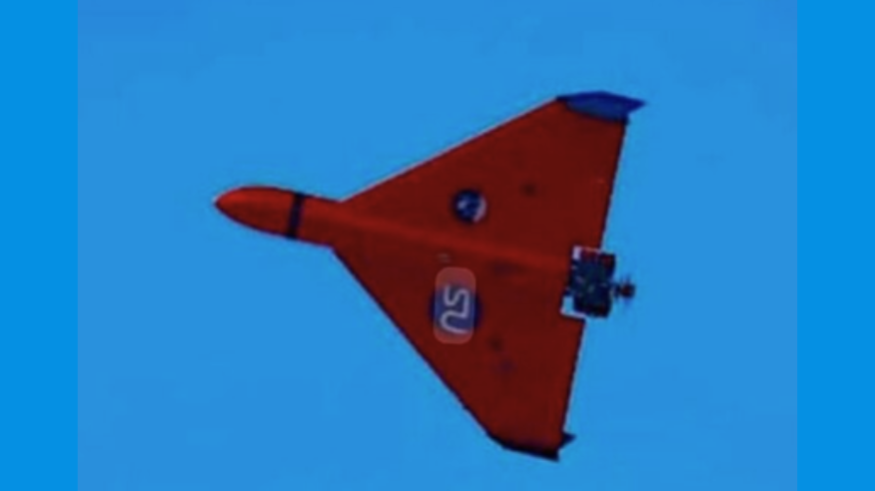
Zorawar Daulet Singh: I mean, you could speak of the European conquest for hegemony by Japan in the second world war leadup, those were quests to overrun what was perceived to be inferior sort of power balances, but they also took on bigger players even at the time so this is in that line here in this case I think there's been a miscalculation of what exactly was Iran's force structure its doctrine and its resilience at a military level to able to resist bear and respond and I think that's it's still unclear in terms of the level of knowledge that we have on it but it's all coming out and also it seems that after the June conflict last year that the Iran did leverage great pass support to advance the shortcomings and lessons because you have Iranians who are speaking about their, they were gaps in their defence and offense last time like for example the strikes that fell on Israel were very scattered they weren't precise this time you are seeing their drones having these anti-jamming systems inbuilt and they're going in these very efficient tactical waves with some attribute to Russian lessons that have been absorbed or being actually provided to the Iranian.
Sandeep Unnithan: Russian lessons from Ukraine.
Zorawar Daulet Singh: From Ukraine, the Iranians are being provided access to, or they're absorbing it themselves, because let's not forget the original drones that they created. Russians bought those reverse-engineered, advanced them further, and now it's coming back. So there is this sort of a mutual loop of innovation and interdependence, and they quit. I think another thing we learn from history is that when states have clear security threats and challenges, their doctrines are dedicated to dealing with those threats right away, not scattered, and there's no prestige buying, and there's no comprehensive military, they are targeted. So in Iran's case, they were targeted in what would be the deterrence doctrine, and they have Israel a thousand miles away or a thousand kilometres away, whatever they need to do, so they develop these ballistic missile capabilities, it goes back to several decades now and it was very clear that even though they mentioned how do you have that parity in terms of a conventional sort of, and I don't think people took it seriously that they could really do that, I mean, could you actually blow up US bases?? 17 US bases have now been struck. >>
Sandeep Unnithan: But where is the last time that reminds me when's the last time anyone hit US infrastructure, military infrastructure?
Zorawar Daulet Singh: That's absolutely mind-boggling. It wasn't expected. I think that's the real shock. If you look at Ukraine, and I recently made this point, if you imagine the Ukraine war spreading out into NATO in the very first weeks, Russia striking all the frontline bases that were the supply base for the Ukrainian military, they could do that, right? You're not, they're not going to launch a nuclear weapon on Russia. Nobody can touch that because they are going to exchange New York for Moscow? They're not going to. So, the Russians had the industrial depth, the restraint, and we know from their strategic culture, the Kremlin leadership is cautious in how it grinds out its opponents at times when it does not have the level of total superiority. So, they were being extra cautious. In Iran's case, there was no NATO umbrella in the same way as Article 5, and even if it were, it has not been activated. And so, they call the bluff, and in that sense, it is shocking. But coming back to this point of states being driven, let's look at China's case, for example, the PLA has had a very clear mission. What do you develop for the Taiwan contingency, and they've built up into an 80 strategy as you've spoken about and written about? They built up this massive missile sort of capability, firepower, they know all the frontline areas where the United States could project power, and it's single-minded, and they've got the surge capacity. So that's the lesson really, that if your threats and they're real and present and can erupt, then your doctrine and force structure is dedicated to that, and the states that can develop the military-industrial complex or have a collaboration with an external power will succeed in this. So it's really a lesson in the success of the Iranians in knowing the threats that they face and then going about and solving them within the constraints of their political economy and the global sort of.
Sandeep Unnithan: So, are we in, are we seeing in Iran 2026, are we seeing a foreigner, what we could actually see in the China-Taiwan military crisis?
Zorawar Daulet Singh: I mean if China were to make for that it's perhaps a little early to say what the lessons the Chinese are drawing, but if they were to see what an Iran with even a lesser capacity than what they would have in terms of surge capacity and stockpiles, you're talking of unthinkable that the United States would intervene in most Taiwan scenarios and get away with it. And so it'll be extremely costly. Let's put it this way. and US allies in East Asia, particularly Korea. I mean, then you're talking of nuclear weapons coming with a picture to that it goes back to the 50s, where we're just going to use massive retaliation to deter conflicts at this mid-level, and once you get into that game, then you open up the idea of incremental sort of salami tactics and elsewhere. So, the you have you have you have certainly seen that this idea of total primacy, total spectrum dominance that the United States had projected in as a way of discourse. I don't think they truly believed it because their own Pentagon obviously knew the limits. They don't have ground power or ground forces to project and follow up on a campaign. They also have these air defence networks that are not as good as they were claimed to be. We have the S400s, which we've got thankfully and our own air defence network, and I think, yeah, proven itself. So it's not about just spending billions and billions of dollars, and that's the other lesson in terms of building a modern force structure, which is asymmetric and high-tech, and does not need you to bust the bank in a way.
Sandeep Unnithan: So, that's the lesson for you from Iran.
Zorawar Daulet Singh: I would certainly say that you don't need to just be spending money, but you've got to now be targeted in terms of, for example, drones counter drone, you've got now Russia-Ukraine, Iran-US two conflicts where it's clearly been shown where those technologies exist. You've got strategic partners who are available for you to develop and expand that from India. I mean, I'm digressing, but that's certainly one lesson where it's a low-cost supplement to your precision strike capabilities that you have, like the Brahmos, for example, because you can't be shooting off a $45 million Brahmos for several targets when you can have once the air defence network has been suppressed. You can have these sorts of mid-end systems, and that's what they've done. The initial wave of Iran seemed to have overwhelmed the air defence network over the GCC with the old generation ballistics, and now they are slowly sort of calibrating the newer generation stuff.
Sandeep Unnithan: So that's the big lesson for us then in terms of cost. I think they are.
Zorawar Daulet Singh: Absolutely.
Sandeep Unnithan: Economies of scale and all that need to kick in. Are we what are the other big lessons for us apart from this cost asymmetry that the Iranians seem to have imposed on the region and, of course, the United States? What are the big takeaways for us? Are we on the right path?
Zorawar Daulet Singh: In terms of broader geopolitical trajectory?
Sandeep Unnithan: I think one is, of course, the tactical side of things. looking at the
Zorawar Daulet Singh: I think there's been an if I may be completely frank there has been a misreading of where world order is heading in a sense and I there is you can't deny the past shifts that are happening and you can't sort of just put them and cherry pick the areas where you feel they are happening and where they're not happening and buy into this. There is a systematic structural transformation of the world system that's happening, and now, how do you deal with it and I think there is a there is a there is certainly a need to redraw what the chessboard looks like and is beginning to look like you've got your location again as a rimland state I come back to this I like this framework of the rimland thesis because it really tells you the maritime will want these areas.
Sandeep Unnithan: So, explain to our viewers what the heartland is, what the rimland is?
Zorawar Daulet Singh: So, this idea goes back 200 years; it really was that, and it was developed by the maritime powers, the British and the Americans. You had Mackinder, who had developed this argument that the central heartland, which was Russia at the time. If Eurasia were to develop autonomy and expand its industrial base and interior lines of communication, because at that time land connectivity was becoming more and more it was competing with maritime connectivity, it would then be able to project power and develop power which would be impervious to maritime intervention, so that was the purpose, so to respond to that that strategy, along with military technologies unfolded in a way where the maritime powers needed access to the entry points Middle East, Southwest Asia, South Asia, Southeast Asia, Northeast Asia. These became the sort of forward hubs, so to speak, and you got the western Europe after the Second World War. So, it was this encirclement of a greater Eurasia, in a sense, to keep America permanently physically entrenched because once you are out of that area, we saw to deploy force and project power and have influence over those states is impossible if you're not physically present.
Sandeep Unnithan: Which is why you need those bases.
Zorawar Daulet Singh: Which is why you need those bases and those bases need to be backed up by a lot of other stuff for firepower, political, economic influence, technology and the whole work. So, now we are seeing those rimland regions being contested by the heartland and the maritime powers, and we are kind of in the middle because we are a hybrid state. We're a continental state and a maritime power. We've always used that geopolitical location to maintain your strategic autonomy, your strategic independence, because you could never become a frontline state leaning against greater Eurasia, which was your position by the way under British India. You were a base for the British to play the Great Game. In Asia, they got into Tibet. They got all the way up north as much as they could. The Russians pushed back. Eventually, they called a day of taunt in 1907. The great game, kind of, but that game continues to be played. It plays 47. They said okay, if India is not going to play, we're going to make Pakistan play that game, so it's an endless game, I mean, it's still being played, so how do you respond to both sides now you can say which one is on the offense which one is on the defence but the heartland power is not going to work with the new technologies available. That's the other lesson: range strike power that you have you didn't have that 50 years ago, 30 years ago you had it at a very high-end level, it's become democratised, you can't know play that frontline game anymore unless you're willing to pay serious costs for it. So the structural logic for strategic independence for some rimland states that have not already been taken and toppled over, right? There are some states like Japan which are part of the US sphere of influence because it goes back to the 45 arrangement, right? Korea is contested, north and south, the Philippines, Australia, but the ones that are independent, Southeast Asia, India, and Iran, these areas are now discovering new opportunities to leverage what is a new balance of power. Now you can say that there's the argument in India that now we must choose a side, and usually it's intended to be that the maritime world is our world, and we cannot do without them because we need the economy, the technology, etc. So it's a little bit of an exaggerated argument because nobody's asking you to make zero-sum choices other than the maritime world. The Eurasian world is not asking you to make a zero-sum choice. It's saying you guys do what you want. You've got your autonomy and your sovereignty. Just don't become a projecting base or a power projection. It doesn't have to be military. It could be in any form to eventually play the old Mackinder rimland game. Really?
Sandeep Unnithan: Fascinating.
Zorawar Daulet Singh: So, that's the bigger picture.
Sandeep Unnithan: It's great overview you've given us, Zorawar but what does this mean for US bases, I'm looking at it again at the CENTCOM Empire that they have in West Asia, which is under a lot of fire right now, they've been forced to move back the entire region has become a free-fire zone with Iranian missiles and drones. So what's the long-term prognosis for this? Do you see them staying there, or do you see them beefing up there?
Zorawar Daulet Singh: That's a good question because of the capabilities, because we've known that now we've seen that those bases cannot be protected by the existing military technical stuff that's happening, right? You can use escalation to protect those bases. But they're not. So, if you look at the statements coming out of Iran, one of the terms that is being suggested, I don't know if it's been fully in line with a potential settlement, is that the regional security architecture must no longer have these frontline bases.
Sandeep Unnithan: American bases.
Zorawar Daulet Singh: So now, whether that's an opening hand of a bargaining process, but certainly the security architecture cannot be this lopsided, right where you're not going to take this major. strategic regional actors not seriously anymore because I think what the Iranians have shown is that they are a major regional power in this conflict if it unfolds and ends on terms where the Iranian state society military survives. That, in other words, is that the US did not attain its strategic objectives, which means that Iran exists as a major regional power. Now, should the security architecture reflect that, or are you going to double down on a future replaying of this game in the coming years, which I mean, then you're asking for even a bigger escalation because the arena of conflict will grow. The geography of this contest will now include even greater Eurasia, because you have so many other initiatives that are bringing in these states as bricks and others. So, so, so again it comes back to are you willing to make the adjustments of those states that are outside your sphere of influence, or are you going to just smother them at all costs?
Sandeep Unnithan: Don't the GCC countries have any agency? I mean, I'm sure they must be feeling the pinch.
Zorawar Daulet Singh: There's no doubt that from what we see, they are privately, I think, urging the United States to literally call off this mission or just
Sandeep Unnithan: Urgent Fury.
Zorawar Daulet Singh: Yeah. There seems to be, because the whole illusion of this beautiful experiment of creating these megacities in a desert sort of paradise is now linked to security. Right. And if security means you, it has to be an interdependent cooperative security. You can't. I think what the Iranians are really showing is that if you're not going to have security, we don't have security. So, this idea that you're going to now piecemeal open up Hormuz and allow the world economy to function while you keep waging war. They are denying that argument, and we are really facing what the terms of the termination of this conflict will be, and both sides are, of course, playing their cards. The US card is really doubling down on even more escalation. Hopefully, it doesn't reach a level of nuclear threats because then you are opening up a debate within Iran of going nuclear and possibly a nuclear test will be conducted.
Sandeep Unnithan: Do you think Iran will go nuclear now? I mean, given the fact that they've been under intense attack. So you think that this kind of justifies the reason for them to go nuclear?
Zorawar Daulet Singh: See, after these conflicts end, the Iranians are going to ask themselves this question: how many times can you play this game of being completely demolished? And of course, you impose severe costs, but you can't go around these rounds again and again. So there are only two or three ways out. You go nuclear, you have a great power alliance umbrella, which is going to come from greater Eurasia. I don't think the Chinese are going to offer an umbrella. It's really the Russians who might offer that nuclear umbrella, provided there is an understanding. The third is a security guarantee which is multilateral and has some kind of credibility. How do you trust, the United States to not sort of walk back a pledge, because I mean, we've seen in the past that it just it's not this president whenever temptation arises to make that move how do you sort of come to that, so those are big questions for I would Say all the major actors today, and they should be seeking to develop a cooperative architecture framework. But it's happening in such a vicious backdrop where you have this ideological racial sort of connotations to how this conflict unfolded. They were demonising the opponent in the US discourse, and how do you overcome that bit? So, they could have to undertake a serious sort of a reversal of so many entrenched positions in the US establishment, and it won't be easy.
Sandeep Unnithan: But you think if this conflict kind of if there is an end to this, there is going to be another round in the future, do you foresee that? How do you ensure that there is no repetition?
Zorawar Daulet Singh: That's precisely what we are seeing: the Iranians don't want a ceasefire. They're saying that we want to do it like that classic thing, escalate to de-escalate. They want to impose costs at such a level to destabilise the global economy, so that this war of extinction against them isn't attempted again.
Sandeep Unnithan: That's their sort of phase two plan right now. They're already on to phase two. You're saying.
Zorawar Daulet Singh: It seems that's really what they're doing, right? And, I don't think we want to keep going down that path of escalation because the Iranians are saying you target our critical infrastructure, then they're going to target your critical infrastructure in West Asia, the desalination plants, energy infrastructure. So you're talking of not. $200 a barrel, then $300- $400. I mean, you're talking of a complete breakdown of the global industrial economic system, which we know as the crisis of the 1920s and 30s. So it's unthinkable, and I'm sure the president in the United States is really being urged from all sides in his own alliances to really, and I think now the question is how do you walk back with some face and some leverage, and what would they seek? They want a non-nuclear one. Was always the original ask, but you were getting that on the bargaining table anyway, so why did you go in here so?
Sandeep Unnithan: But there were four things that the four asks One was, of course, capping the nuclear program. The other was handing over the enriched uranium about 400 kg of enriched uranium. The third one is, of course, ending the support for the proxies. And the fourth we've been told is to remove the ballistic missiles completely, dismantled.
Zorawar Daulet Singh: So these were the war aims that were added in at the start of this operation. Now those are unlikely to be met, right?
Sandeep Unnithan: Sure, because you haven't.
Zorawar Daulet Singh: You're not going to demilitarise a state, on the bargaining table, if you haven't been able to do it on the battlefield. So, but you see.
Sandeep Unnithan: The United States is trying to do that even at this late stage, two weeks into the conflict, bringing in the heavy bombers, B-1s, B-52s, possibly even using tactical means. You see that?
Zorawar Daulet Singh: I don't believe the nuclear threshold will be crossed because of the precedent it sets on so many other actors, who possess those systems. It'll it I mean, Ukraine is there, you've got East Asia there. You don't want to go down that path. So I don't think, but they want to know if it's about an incremental game. They want to keep degrading as much as they can. I mean, you have Trump openly talking, we'll push them back 5 years here, 10 years here, and this and a lot of it is bravado, but they want to know it's become a little bit like, we're going to end this, but I'm going to now punish you even more till I end it. But you're punishing civilians. You're punishing the body politic, and you are eventually hardening the Iranian political system. You've taken the reformers out of the picture, who are completely discredited now, and the IRGC is going to be the frontline player in shaping the new.
Sandeep Unnithan: They already are.
Zorawar Daulet Singh: I mean, they seem to absolutely.
Sandeep Unnithan: It's a bizarre state of play. This is like what I call a gunfight in a gas station.
Zorawar Daulet Singh: Absolutely. What a great phrase.
Sandeep Unnithan: And what do you think you are coming back to us again, because we are looking at it, we are alarmed. I mean, this is obviously a scenario we didn't win. Nobody thought the Iranians would be fighting for two weeks and showering ballistic missiles and Shahids across the region. Do you think this time has come for us to kind of derisk our oil portfolio and start looking for other alternatives?
Zorawar Singh Daulet: I think that's already happening now. I think, yeah, this has really been a wakeup call. It should have been obvious even before that, anyway, you need major suppliers outside what is already a conflict-prone area. I think that's happening. I think the real lesson is now you've got to disentangle this argument that you're going to have everything happening through this bilateral portfolio with the United States. There was so much being filtered through that prism that it is okay for this relationship to be held at a higher level than Indian grand strategic interest. So, I think that the relationship now has to be put in place where it serves the national interest, not over the national interest and in your interests are being adjusted to make that relationship work.
Sandeep Unnithan: So you're saying that the Indo-US strategic tail is wagging the dog of Indian interests?
Zorawar Daulet Singh: Absolutely. I mean, there's no, I don't think there's any doubt about that, right? I mean, we can gloss over it, but that's really been the play for a long time, and it's that it goes up in spurts major crisis sort of remind you of the world as it is but then you again lull back so this crisis should I think give us that again it comes down to the trend lines the argument the counterargument would be that these are all sporadic sort of rebellions and ultimately the resilience of this maritime coalition is and it's a lot of it is it's just built on its own sort of momentum and it's even whether it whether the material realities or the other evidence that you're seeing exists you're just going to so it's ideological let's put it this way and I think so there is a time for cause correction and you put that relationship vital as it in the place that it should be. And you leverage the system, you leverage the entire arena in the entire landscape to rebuild yourself because that's been your purpose, right? Your declared purpose is to build up India as a major developing country, build up your economy, your society, and your technology. I mean, it's going to carry on much longer. But, I think it's unsustainable if you were to play the older foreign policy paradigm, that paradigm is, and it's not that we're not the first to bring this out. It's been evident now, and I think the question is who's going to catch the bull by the horns and craft this new strategic consciousness and make those decisions that are done in a sophisticated way because you've still got a window of opportunity. You're outside those arenas of great power collisions. This area of the rimland has its own dynamics. you've got or it's complicated enough but there is no impending sort of collision happening here right this is a this is a this is an area where you can develop you're not a frontline state yet you invite it then you are facing a different geopolitical challenge but if you're going to be outside the scope of this this contest between greater Eurasia and the maritime world and you're going to have a foot in both doors you can you can sort of stay away and cherry-pick what you want. This argument that you can't cherry-pick is completely false. We've seen that you can leverage multiple players at the same time and do it in a fashion where you have a clear sort of interest in defining that process.
Sandeep Unnithan: But aren't we already doing that, Zorawar? I mean, given our stated position of multilateralism, to an extent.
Zorawar Daulet Singh: So the there is a sense that the discourse certainly suggests that but I think now even the discourse is beginning to get a little hollowed out and so there are gaps and but it's not like it can't be done let's put it this way there is contestations are happening there are I think it comes down to there are arguments on which way the world is heading right and which way would you like the world to head so maybe if we digress to for example the idea that you want to create this multilateral plural system to derisk what are I I'm not even getting into ideology of what the United States is doing. It's behaving the way all previous declining superpowers have behaved in the past. Nobody fades away into the sunset by saying Adios, guys, I'm off. They're going to fight for everyone.
Sandeep Unnithan: The British Empire freed quietly; they handed over the baton to the Americans.
Zorawar Daulet Singh: I mean, after the first world war second I mean, you had two major European conflicts that completely demolished the British economy, manpower, and military. So will the US wait for those shocks because it's not going to happen at the grand level? It'll be these regional shocks. Iran is one more shock. Ukraine was one shock. The East Asian landscape, where now US professional military strategists are saying it's unthinkable to be in a collision with China on anything close to their maritime frontiers. So, if all these are realities of a new balance of power, then naturally you have to adapt to it.
Sandeep Unnithan: So, that's going to be catastrophic because then it's going to be, every country to itself, because if they hand over Taiwan to China
Zorawar Daulet Singh: So, it's not going to happen in this sort of sudden way, but I think the idea was that they were going to sort of put themselves in a position to put pressure. I think this was more about sort of coming closer and closer and strengthening your position, and that created sort of threat perceptions on the other side and then the security dilemma played out. So that's really what it is.
Sandeep Unnithan: So, is Xi Jinping going to be more cautious now after Iran, or is he going to be adventurous now?
Zorawar Daulet Singh: I don't see the Chinese have always had this game where they've got this long kind of where what's that famous way that doesn’t interrupt your enemy when he's making mistakes. So I think they're seeing the United States doing a pretty good job of expanding, but I think there is also now a discourse within China that you can't just stand and do nothing. I'm talking from a world order perspective. I'm not talking about your own national interest. There is this idea that the Chinese have not done enough to create true multilateral institutions and invest in BRICS for example in in a more systematic way which is beneficial to the global south and that's something which they have the material wherewithal to do it and these crisis should serve as a lesson that if because eventually the bigger players are going to step in and produce order. India will also do that. It is doing that in some ways but I think it can do more and all these other players if they start pooling in it's a collective action problem right if you pull in your resources into institutions that are going to deliver some public goods because I think the US has shown that it is not interested in offering public goods anymore other than to its core sort of hub and spoke system.
Sandeep Unnithan: The Anglosphere.
Zorawar Singh Daulet: The Anglosphere, perhaps Japan, and it seems like even West Asia is now kind of being left to the wolves, so to speak. So, where are you going to get those public goods from? So, this is the opportunity, and India has a history and tradition of playing that role in concert with so many other actors, and I think it can do that. So, there is an argument to pursue security requirements which may contradict some of your relationships with the collaborator with you in your multilateral initiative. So I'm talking of India-China, you've got certain old disputes, but there is a sense where you have opportunities in the multilateral economy a bit. This year, you're hosting, by the way, the BRICS. So that's a big year.
Sandeep Unnithan: What about Putin? How is Putin looking at this war?
Zorawar Daulet Singh: So that's the big question, which is happening in the shadows. The US certainly believes that there is some element of support that the Russians are providing the Iranians, and when you hear some of the Russian sort of analysts, they call it karma in a way and payback for Ukraine. So there is a sense where they are providing, I don't think it's beyond a certain point, or we'll discover that, but there is, I think, a vital Russian interest. I think they don't want Iran to fall right, they want Iran to remain an independent power. I think that's their primary strategic goal how far they're willing to go to do that are Iranians willing to develop a mutually win-win strategic understanding I think those are the debates that we see from the outside and because I think Putin made an interesting statement in June last year after those where he openly came on record saying we had offered the Russians had offered Iran to modernize their entire air defence systems and networks and but he said they didn't avail of that opportunity. He came out openly. So, but after June, did they do other stuff with the Russians? We don't know. For example, did they improve their precision targeting? Did they improve the ability of their drones to evade jamming systems, etc? There is some evidence creeping out in mainstream Western media that they did receive that level of assistance. So, but I think coming back to this idea that yes, the Russians are seeing this conflict where they might just be the beneficiaries, I mean, if the energy flows in the world are getting tighter and Riskier. The Russian energy complex seems to be in high demand. The Europeans might very well, at some stage, go back to at least having some relationship with Russian energy firms in the future. How do you survive right where you're going to get it all from? American LNG might not be enough, and if it's priced so high, there could be a lot of ripple effects and churning happening.
Sandeep Unnithan: Fascinating overview Zorawar and I couldn't have put it much better than what you've just done you've captured this whole state of tumult that we are in in 2026 it's just been 3 months into the new year and already looking at a turbulent year ahead it looks like but thanks for helping us make sense of the times that we are in.
Zorawar Singh Daulet: Thank you, Sandeep. I think it was a timely dialogue, and I hope your audience engages with it and it initiates a further conversation. Great. Thank you.
Watch the full podcast: https://www.youtube.com/watch?v=gqYYabydQxM&t=200s
Chakra Desk
Chakra News is a specialised digital media platform committed to in-depth coverage of India’s defence, national security, geopolitics, and critical technologies.


Comments