










5 key takeaways from a conversation with Dr. Sudhir Mishra

"India can design, develop and produce any missile — of any range, of any type.”
– Dr. Sudhir Mishra, former CEO & MD, BrahMos Aerospace
In a candid and insightful conversation on The Sandeep Unnithan Show, Dr. Sudhir Mishra laid bare the evolution of India’s missile programme, the technological confidence it now commands, and the persistent challenges that still slow its operational edge. His unequivocal assertion that India has the capability to build any kind of missile system—from strategic to tactical, from air-to-air to hypersonic—set the tone for a conversation rich in both technical detail and strategic perspective.
The episode explored the BrahMos missile system in depth—from its Cold War-era roots to its joint development model, and from the 2013 underwater launch to the yet-unrealised submarine variant. It also touched upon proposed future variants like the air-to-air BrahMos and the upcoming BrahMos NG. Dr. Mishra, with four decades in DRDO and direct involvement in every phase of the missile programme, offered both a historical view and a forward-looking assessment of where India stands and what it must do next.
Here are five key takeaways from the episode:
1. BrahMos Is Technically Ahead of Tomahawk
While the U.S. Tomahawk is a reliable subsonic cruise missile, BrahMos operates at three times the speed of sound, giving it better survivability and reduced enemy reaction time. Its supersonic ramjet engine, inherited from Russian R&D, gives it a decisive edge in regional conflicts.
2. Submarine-Launched BrahMos Exists — But Has No Home Yet
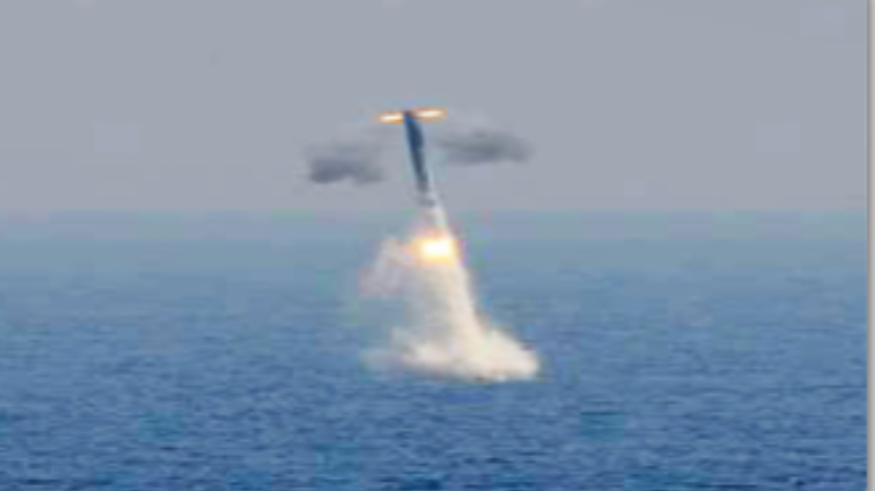
India successfully tested an underwater version of BrahMos in 2013, using a pontoon to simulate submarine launch conditions. However, legacy submarines like the Kilo-class cannot house the missile due to size constraints. A vertical launch module has been developed, but deployment now hinges on the long-delayed P-75I submarine project.
3. Air-to-Air BrahMos Was Explored, Then Shelved
A concept to adapt BrahMos as a long-range air-to-air missile against enemy AWACS and tankers was studied. Technically viable, it was stalled due to lack of data link systems and shifting priorities. It underscores the gap that sometimes exists between scientific possibility and military demand.
4. Indigenous Ramjet and Scramjet Engines Are in the Works
While BrahMos still uses a Russian-supplied ramjet engine, India has developed smaller indigenous ramjets and recently tested a scramjet engine for 1,000 seconds—proof of hypersonic potential. The continued use of Russian engines is a commercial decision to sustain joint venture balance, not a technical limitation.
5. BrahMos NG Could Be a Gamechanger
The upcoming BrahMos Next Generation (NG) missile will be lighter, cheaper, and more versatile. Designed for use across the Army, Navy and Air Force, it could enable mass deployment and make high-volume integration—like the U.S. Navy’s Tomahawk-packed submarines—a realistic possibility for India.
Deepak Bhadana
Over the past decade, Deepak Bhadana has built expertise in multimedia storytelling, with a focus on military conflicts, insurgencies, international relations, the defence industry, and occasionally, wildlife and environmental issues.



Comments