




Netaji pursued independence to hand down a peaceful country to next generation- Yasukuni chief priest
For twenty-five years, they are traveling to Africa, where I was stationed before, uh, for their silver jubilee travel. And, uh, while they are walking in a market, an Arabian merchant came and said, "Mister, mister, you have a very beautiful wife. Why don't you exchange your beautiful wife with my one hundred camels?" And Mr Smith stopped and closed his eyes. Ten seconds, twenty seconds, thirty seconds, and he calmly opened his eye and said, "No." Then the merchant said, "Five hundred camels." Now, Mr Smith said instantly, "No, no." The merchant said, "How about one thousand camels?" Mr Smith said decisively, "No, no, no." And the merchant went away. So, Mrs Smith said, "Darling, I knew you would say no. But why did it take so long to say the first no?" So, Mr Smith said, "Honey, I was thinking very deeply, but I could not find any way to bring one hundred camels back home."
Thank you. So, under the strong leadership of Prime Minister Takaichi and Prime Minister Mo- Modi, the relationship between Japan and India has never been better. Although a summit meeting is just around the corner, the lesson learned from my own recent joke is that no matter how good a bilateral relationship may be, we must never neglect our constant efforts to maintain open communication. Because even spouses married for twenty-five years do not truly understand each other.
Taking this viewpoint into account, this Writing India initiative is incredibly valuable. Congratulations to all. Allow me to introduce myself. Uh, my name is Otsuka Umio, Man of the Sea. Because, uh, Umio literally means man of the sea in Japanese. And my career can be summed up by the numbers forty-five, three, and three. Let me, uh... Forty means I was in the Navy. I was a naval officer for forty years. Then, for five months, I was working at ITOCHU Corporation. And then I was called back by the government to be an ambassador to the Republic of Djibouti for three years. And then after that, I was spending three months in Paraguay as the husband of the Ambassador of Japan to Paraguay. And let me also share my life from a slightly different angle, uh, religious, religion. Uh, I went to a Catholic school for twelve years. And I was, when I was in the States for two years, I was a choir member of a Southern Baptist Protestant church. And then my family religion is Buddhist.
I pray every morning, even this morning, the three Hokekyo prayers at my family temple, Butsudan. And then I come to the shrine as a Shinto prayer. By sharing this, I wanted to demonstrate the very essence of Shinto, its spirit of diversity, inclusiveness, and deep tolerance. Today, I would like to speak about peace, the single keyword that connects every chapter of my background. To begin with, there is an ongoing debate over whether Shinto should even be classified as a religion. Typically, a religion consists of a specific founder, explicit doctrines, and sacred scripture. Shinto has none of these. Instead, Shinto is a form of faith rooted in profound gratitude for the blessings of nature and reverence for our ancestors, expressing these sentiments through the active pra- practice of rituals, or matsuri. In Shinto, we revere kami, K-A-M-I. The word kami can encompass the monotheistic God, the gods of Greek mythology, or the concept of something placed in a position of high honour. In short, something great is what we call kami. For instance, when we witness extraordinary plays in the Soccer World Cup that have- uh, just began last week, people instantly praise them as kami shoot. Right? Or if you put san after kami, kami-san means wife. Something great, isn't it?
When looking at our two nations through the lens of faith, Shinto and Hinduism share numerous striking similarities. A polytheistic, uh, worldview, a culture of purification through water, the nature of an ethnic religion without a specific, specific founder, a deep tolerance that embraces other faiths, and an emphasis on worldly benefits in this life rather than salvation in the afterlife. I think some, some slides more, if you show that. At the end of this. Thank you. Oh, won- wonderful. This demonstrates that the Japanese and Indian people share a foundational affinity that allows for effortless mutual understanding. Let us look back at the pivotal moment in the history of Japan-India relations. Netaji Subhas Chandra Bose, seeking to move his base of operations from Germany to Singapore to lead the Indian independence movement, embarked on a historic journey.
On April 26th, 1943, in the Indian Ocean, southeast of Madagascar, he transferred from a German U-boat, uh, submarine to the Imperial Japanese Navy submarine I-29, commanded by Commander Izu Juichi. On May 6th, he arrived safely at Sabang Port on the northern tip of Sumatra Island. Subsequently, Commander Izu was killed in action in March next year while commanding the submarine I-11. The submarine I-29, which had carried Netaji, was also tragically sunk off the northern coast of the Philippines in July of the same year. Where then do the spirits of these crew members reside today? It is Yasukuni Jinja, my shrine, where their souls rest peacefully. Yasukuni Jinja, or a Shinto shrine, was established in 1869. The next slide, please. To console the souls of those who perished in the Boshin War, a domestic conflict. The root cause of this war was an intense, heated debate over how Japan should engage Western powers in order to avoid falling under Western colonial rule.
The newly born modern Japan, under the slogan of "Enrich the country, strengthen the military," extensively adopted Western systems to forge a nation-state based on a new administrative structure. In this transformation process, the commemoration of those who fell in battle, which had previously been conducted independently by individual feudal domains, was centralised as a national duty. Thus, the first state ceremony was held on the grounds of Yasukuni Jinja in 1869. From that moment until the end of the World War II, more than two million four hundred and sixty-six thousand souls of military personnel, civilian employees of the military, and civilians who were mobilized by state decree and perished in the trag- uh, the tragedies of war have been enshrined here as kami. Yasukuni Jinja has since served as the central institution for commemorating and honouring our nation's war dead. Furthermore, within the precincts of Yasukuni Jinja stands Shinreisha, the Shrine for Quieting the Spirits.
This globally unique sanctuary is dedicated to mourning all individuals worldwide who lost their lives in wars and armed conflicts since 1853, regardless of their ethnicity, nationality, gender, or religion. It is a place where my Shinto priests, including myself, offer prayers every single day. The name Yasukuni translates to a peaceful country, or to bring peace to the nation. True to its name, Yasukuni Jinja is literally a shrine for peace. I firmly believe that our present peace is the hard-won result of our predecessors' efforts, and we must never forget our gratitude to those who became the bedrock of this peace by giving their precious lives. Passing this peace down to the next generation is the sacred duty of those of us who enjoy it today. Yasukuni Jinja's vital mission is to keep the memory of war alive, to learn from the aspiration of Eiei, the enshrined spirits, to pass their legacy onward, and to map out a clear trajectory for the peaceful future. The independence of India that Netaji so fiercely pursued, and the enduring peace of our nation built upon the sacrifices of our predecessors, both are the direct results of a powerful, unyielding will to hand down a peaceful country to the next generation. It is my sincere hope that our two nations, both deeply understanding the true value of peace, will join hands to chart this trajectory toward the future together. Thank you very much.
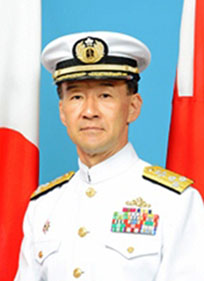
Umio Ōtsuka
Former Ambassador Extraordinary and Plenipotentiary of Japan to the Republic of Djibouti | Vice Admiral (Retd), Japan Maritime Self-Defense Force | Chief Priest, Yasukuni Shrine



Comments