



INITIATION OF CONFLICT IS EASIER THAN ITS TERMINATION
Introduction
While active hostilities have halted in Iran and a Memorandum of Understanding has been reached between the US and Iran, many of the initial reasons for waging war remain unaddressed. The agreement on a framework includes a 60-day ceasefire and reopens the Strait of Hormuz. The MOU is slated to be signed on 19 June. Details of the deal remain unclear, but both sides appear to have agreed to a cessation of military operations on all fronts and to lift their respective blockades on maritime traffic through the Strait of Hormuz.
While the US & Israel campaign degraded Iran’s military capability and targeted its civilian leadership, it did not topple the regime or secure its stockpile of enriched uranium. Iran retaliated by closing the Strait of Hormuz, thereby creating a global energy crisis. In turn the collateral damaged was felt across the globe; in India portfolios were hit, oil spiked, inflation rose and the rupee weakened.
The conflict began with President Trump telling the Iranian’s that their future is “yours to take.” In other words, a call for regime change. Other reasons for the war have included the threats Iran poses. The US and Israeli objectives originally aimed to dismantle Iran's entire ballistic missile program, stop support for its regional proxies and severely restrict nuclear capabilities.
These issues seem to have been deferred to upcoming talks as the US has been ‘Strait-Jacketed’ by the domestic and global pressure on reopening the Strait of Hormuz.
The larger issue is the difficulty of translating tactical military success into strategic results. To quote General James Mattis, President Donald Trump’s first Secretary of Defence “Targetry never makes up for a lack of strategy”.
Desired End State
The lesson lies in how countries need to give careful thought to how they can leverage military power to produce a desired political outcome before going to war. Clausewitz teaches that war ‘is a continuation of politics.’ But it also has its own “grammar”; created by doctrines, structures, weapons, tactics, logistics, and the dynamics of combat.
Even thinkers before him such as Machiavelli understood the importance of determining what realistic political goals are before trying to match military means to them. The fact is that nations, not armies, wage wars. But an examination of previous American wars, including Iraq, Afghanistan, and Vietnam, documents this as an inherent problem which is now visible in Iran.
Post-1991 a weakened and sanctioned Saddam Hussein in spite of the presence of a UN monitoring force remained in prolonged friction with a US led coalition that retained escalation dominance and overwhelming military superiority.
In the present case President Trump has, at various moments, articulated objectives ranging from preventing Iran developing nuclear weapons; a narrow, definable goal to demanding Iran’s unconditional surrender and declaring that he wants the Iranian people to “take back their country. These were later changed to four primary military objectives: destroying Iran’s navy; destroying its missile capabilities; preventing nuclear weapons development; and eliminating proxy support.
Iran aims seem to have been clearer; absorb the bombardment, survive as a regime, demonstrate sufficient military reach to cause pain across the region and wait for economic and political pressure to force the US to end the conflict on acceptable terms.
The fact is a concept of victory must have objectives beyond military activity. Notions of victory must include economic, diplomatic, and societal long-term needs as well as short- and medium-term military outcomes. As such, a theory of victory should include winning the war as well as winning the peace. A perfect case study is India’s operations during the 1971 conflict.
Different Era’s
Further, every era is distinct in its own manner. The Napoleonic age was characterised through mass citizen armies, artillery, cavalry, and nationalist mobilisation. The World Wars demanded industrial production, attrition, and total war, erasing the line between battlefield and home front. The Cold War introduced nuclear escalation ladders, proxy conflicts, and the management of violence under the shadow of annihilation.
In today’s conflicts the geometry is different; precision missile strikes, drone swarms, real-time intelligence, cyber operations, and attacks on civilian infrastructure far from the battlefield itself.
Ukraine, Gaza, Lebanon and Iran are all n exposition of this new way of war fighting in varying manners. But what is visible is the response by an adversary who is unable to match the power and technology but is reshaping the military balance by using cheap drones and precision-guided missiles launched in large numbers, to impose disproportionate operational and economic costs. This includes imposing disproportionate costs on vastly more expensive defensive systems. The other issue is sustenance and as per reports that the US Army’s entire stockpile of PrSM missiles was expended against Iran.
The truth is that the present US administration entered Operation Epic Fury with a theory of means and a range of differing and constantly changing ends.
Conclusion
For the world and India in particular cessation of hostilities is the most favourable outcome as India has been severely impacted by the closure of the Strait and apart from the economic costs there have also been deaths of our sailors in the waters of the Gulf.
In the end it is the interests of countries that come first and President Trump was quite categorical when he told Fox News that he believed America did not have the “appetite” for more aggressive military action. That left no choice but to negotiate with Iran.
An unanswered question is also if President Trump will be able to ensure that Israel ceases all its activities in Lebanon? Further, even if Israel stop hostilities will it continue to occupy and hold large areas of Lebanese territory?
Undoubtedly, the conflict has changed and challenged many fundamental issues not only for the US but also for the region and the world. This includes the relative power of countries and their ability of ‘stronger powers’ to enforce their will; the capacity of countries to disrupt disproportionally and the vulnerability of the global economies.
The choke points and West Asia cannot be ignored and the world will all have to think how they move forward in a region with a potential of disruption with the boundaries of escalation eroded.
The fact is that while both may claim victory, yet both have lost in different ways and peace now needs to prevail as the world cannot afford to go back to square one. No wonder the words used by President Trump while announcing the deal were “Let the oil flow!”
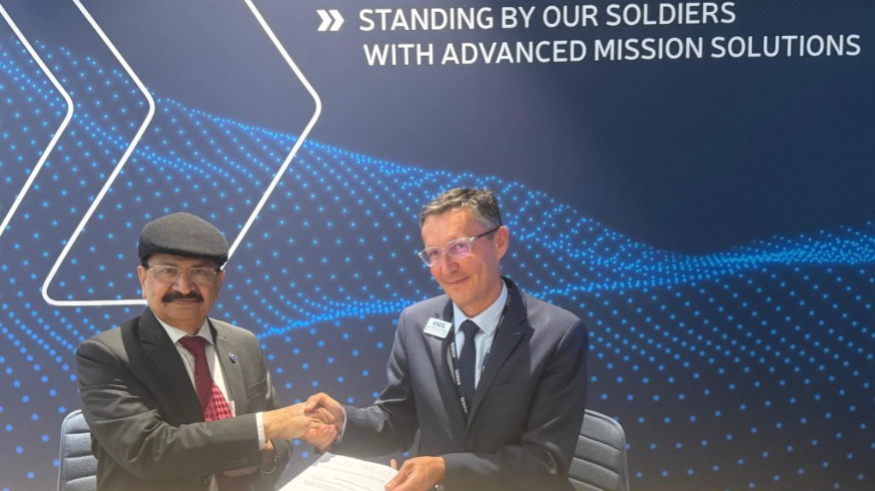
Maj Gen Jagatbir Singh, VSM (Retired)
Major General Jagatbir Singh is an Armoured Corps Officer who commanded the First Armoured Division. He served in varied terrains and tenanted important command, staff and instructional appointments including a UN Peace Keeping Mission in Iraq and Kuwait. He co-authored ‘Armour 1971’ and edited ‘Valour and Honour’.


Comments