






Why India needs to do to recapture the narrative war
Having spent months immersed in the vibrant, forward-looking society of South Korea—a nation decisively reshaped by sustained external engagement—I find myself confronting an uncomfortable mirror. Korea, much like post-war Japan and West Germany, owes its democratic and economic flourishing to consistent American investment and military protection. And crucially, they celebrate this debt with sincerity and national gratitude.
Jazz and American pop pour out of cafés; Ivy-League curricula dominate classrooms; subway announcements roll out in flawless English. The Stars and Stripes are ubiquitous, and memorials to American and UN troops are diligently maintained—each a symbol of remembrance. In stark contrast stands India: a nation with thousands of unsung heroes who fought and died not for colonial grandeur, but for freedom—and yet, whose sacrifices remain largely uncommemorated, even by its own people.
India still pays to maintain British-era Commonwealth War Graves, but took until 2019 to build its own National War Memorial. And while British victories in global wars are celebrated in India, our own battles for freedom remain under-recognised. We remember the Empire, not our emancipators. Here in Korea, I am haunted by a simple question: Why did India, once revered across Asia, fail to convert its sacrifices into influence and reverence?
Bangladesh: The Missed Opportunity of a Generation
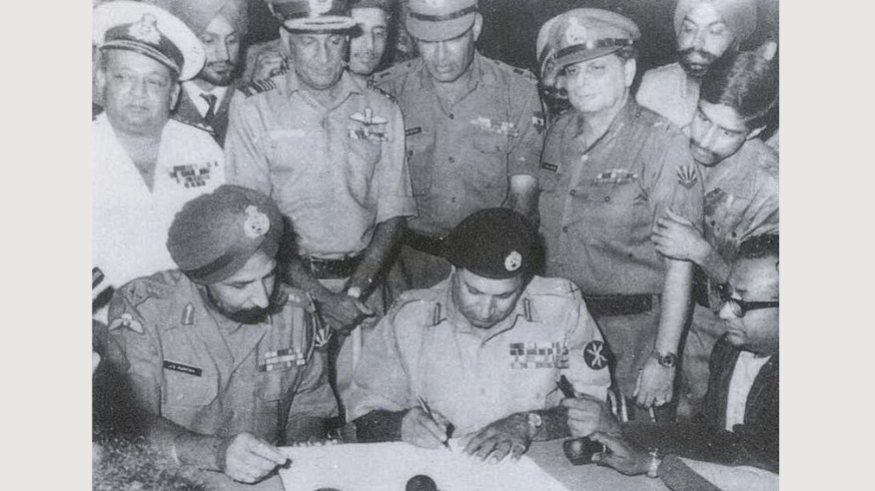
India’s role in liberating Bangladesh was extraordinary. Confronting genocide, mass refugee flows, and blatant denial of democracy, India intervened decisively in 1971—against global opposition led by the US and UK, and despite UN calls to halt military operations. A series of lightning thrusts by the army, navy and air force routed the entire East Pakistan military garrison. Over 93,000 Pakistanis, their entire garrison and civilian administrators, surrendered. This military feat that birthed a new nation is unmatched since the Second World War. India acted on the principles of humanitarian intervention before they were globally articulated.
Yet, within a few years, our strategic footprint vanished. Why did we feed and house 93,000 POWs for two years, only to let them return and revive anti-India rhetoric? Why weren’t there Nuremberg-style trials for war crimes? Why didn’t we secure the return of our own POWs or leverage resolution on Kashmir, border enclaves, and Chittagong port access?
India should have built institutional depth in the new state: an embedded military training mission, integration of civil services, and a shared narrative of liberation. Instead, we abandoned the space we created, and even the memorialization of Indian soldiers is absent in Bangladesh.
The irony: Korea is filled with monuments to even the smallest contributors— there is a memorial in Daegu to Indian diplomat Colonel MK Unni Nayar, the only Indian national killed in the Korean War and whose remains could not be brought back. Yet Bangladesh barely acknowledges the nation that birthed it.
Nepal and the Wounds of Blockades
Our neighborly ties with Nepal are another story of squandered goodwill. Once culturally and spiritually aligned with India, Nepal has grown distant. The 1989 blockade imposed by the Rajiv Gandhi government, reportedly triggered by strategic fears and personal slights, deeply scarred Nepali public memory. Another unofficial blockade in 2015 reinforced the image of India as an overbearing neighbor. Today, Chinese influence grows steadily, while India is viewed with suspicion.
Similar shifts are visible in Bhutan, Sri Lanka, and the Maldives—where despite generous aid, including during the COVID-19 crisis and repeated military rescues, loyalty remains elusive. We act as first responders, yet fail to follow through with long-term cultivation of influence.
Turkey: A case of strategic generosity gone unreciprocated
India’s decision to dispatch over 250 personnel and ₹ 7 crore worth of aid during Turkey’s recent earthquake—Operation Dost—was a display of humanitarian leadership. But what strategic return did it offer? Turkey has consistently backed Pakistan, opposed India’s NSG entry, and peddled the Kashmir narrative. While America would have extracted soft power mileage, we silently gave and moved on—again.
Shouldn't there be a task force to assess the cost-benefit of foreign humanitarian deployments? Especially when India itself grapples with development and healthcare deficits?
The deeper malady- short-term thinking and structural inertia
What explains this repeated failure to translate sacrifice into soft power and loyalty? India's foreign policy has long lacked a unifying, long-term vision. Departments work in silos, like the lions of the Ashoka pillar—looking outward in different directions, but failing to act in concert. Strategy is sacrificed for celebration. Bureaucratic infighting and political short-termism replace patient diplomacy and narrative shaping.
We shy away from hard conversations—whether on POWs from 1971, or the erosion of our Buddhist legacy.
Cultural Amnesia and Narrative Capture
China hosts Buddhist conferences and projects itself as the guardian of Asian spirituality, while India—the birthplace of Buddhism—often retreats in the name of secularism. When Thailand proposed a Sanskrit university, India refused funding, citing its secular character. This is a profound failure to understand soft power. In Korea, temples speak of Sanskrit and feature Indian deities. Yet new scholarship increasingly disconnects ancient Indian-Korean links, claiming Princess Heo’s tale is a myth or tracing Ayuta to Thailand. Even the Buddhist stupa made from Indian rocks in Korea is subject to revisionist denial. Worse, anti-India narratives are emerging on university campuses. A solidarity event for Palestine quickly morphed into a diatribe on "Indian occupation of Kashmir"—likely led by Pakistani students. Another event targets alleged beef discrimination in India, while ignoring the fact that pork, equally restricted in Islam, is rarely served in public for the same reason. These misrepresentations spread unchallenged.
What India Must Do: Reclaim our narrative and influence
1. Strategic Memorialization and Reciprocity
Work with countries like Bangladesh, Sri Lanka, and Korea to commemorate Indian sacrifices. No humanitarian assistance should be extended without assessing reciprocal goodwill or strategic return.
2. Cultural Diplomacy with Investment
Support Sanskrit universities, fund temples, host Indic knowledge conferences, and promote interfaith dialogue rooted in Indian traditions. Don’t leave our civilizational legacy to be repackaged by others.
3. Revamp Our Missions Abroad
Transform Indian embassies into active influence centers—not bureaucratic outposts. Engage diaspora, students, and host universities. Counter misinformation swiftly and assertively.
4. Unified Foreign Policy Architecture
Integrate military, economic, and diplomatic efforts. Petty objections—like denying other service officers' representation budgets—must end. National interest must trump bureaucratic turf wars.
5. Assert Strategic Leverage
The NDA government’s call to review the Indus Waters Treaty and transshipment deals is overdue. India must not hesitate to use its economic and geopolitical strengths to protect its interests.
Conclusion
India is not lacking in stories—we are lacking in storytellers. We do not lack heroes—we lack the will to honor them. Korea holds up a mirror. It shows us the power of remembrance, of narrative, and of sustained engagement.Let us stop being forgotten. Let us start becoming unforgettable.
Colonel (Dr) DPK Pillay (retd)
Col. DPK Pillay, a decorated war veteran and Research Fellow at MP-IDSA, is currently in Korea as a Korea Foundation Fellow. His research highlights India's significant contributions during and in ending the Korean War. Appointed as an International Advisor to the Korean War Memorial Organization, Col. Pillay's expertise in this field is recognized by Korea.



Comments