












Top Headlines: 5th January 2026

1. LCA Tejas marks 25th anniversary of its first flight
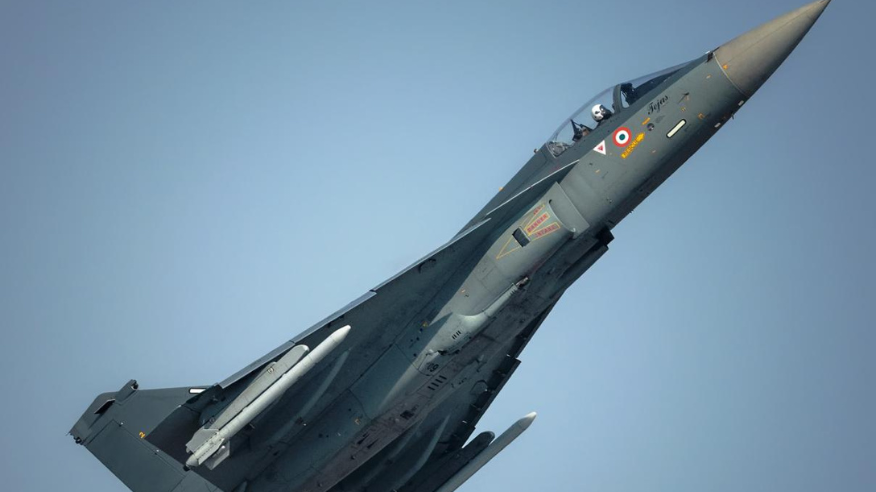
On the 25th anniversary of the LCA Tejas’ historic first flight, the Indian Air Force reflected on its enduring partnership in building the fighter aircraft. In a post on X, the IAF congratulated ADA’s innovative scientists, HAL’s skilled engineers, brave IAF and IN test pilots and engineers, and all IAF personnel who have championed self-reliance, stating that “the sky is the limit.” The LCA Tejas took its first flight on January 4, 2001.
Chief of the Air Staff, Air Chief Marshal A P Singh PVSM AVSM, inaugurated a national seminar titled “Aeronautics – 2047”, organised by ADA during January 4–5 in Bengaluru. The event was held in the presence of Dr Samir V Kamat, Secretary DDR&D and Chairman DRDO; Dr Kota Harinarayana, former Director ADA; Dr G Satheesh Reddy, President AeSI and former DRDO Chairman; and Dr V Narayanan, Chairman ISRO. On this occasion, Dr Kota Harinarayana, Chief Architect of Tejas; Wg Cdr (Retd) Rajiv Kothiyal, who flew the first Tejas sortie; Dr V K Aatre, former Scientific Adviser to the Raksha Mantri and DG ADA; Air Marshal (Retd) P Rajkumar, who played a pivotal role in flight testing; and Dr C G Krishnadas Nair, former HAL CMD, were felicitated for shaping the LCA into reality.
2. Indian Army signs deal with NIBE for Suryastra long-range rocket launchers
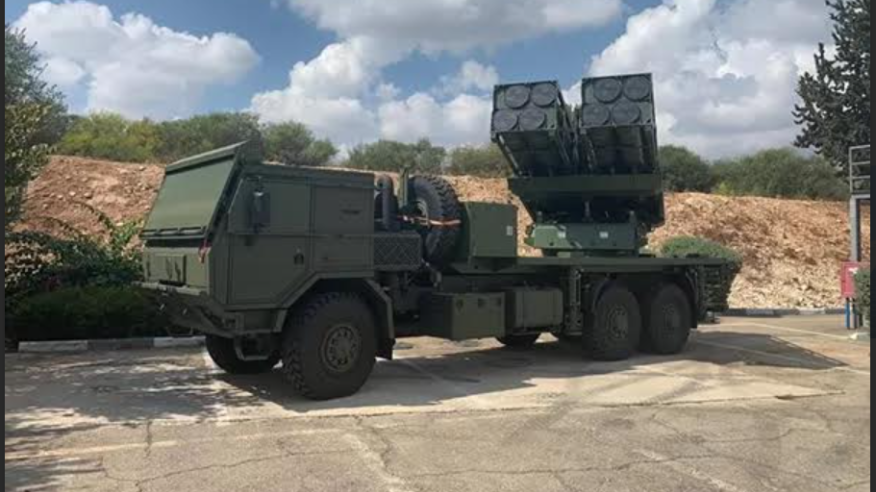
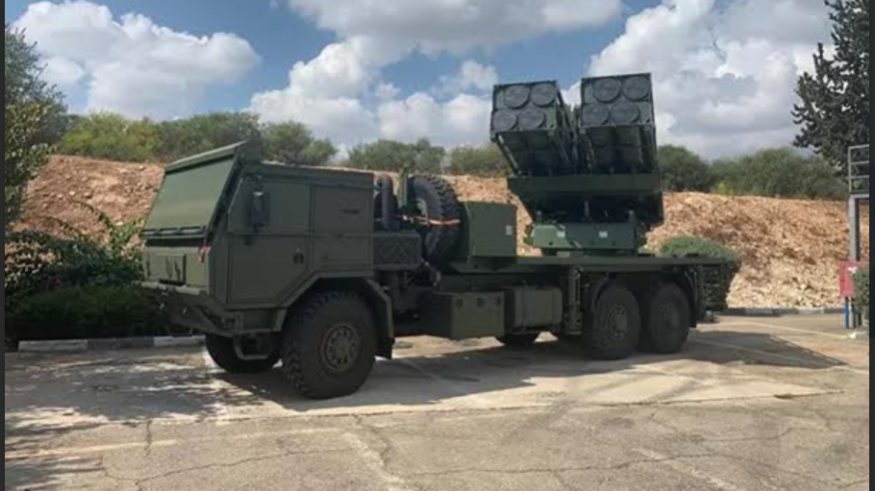
Under emergency procurement powers, the Indian Army has signed a ₹293 crore contract with private defence manufacturer NIBE Limited, in collaboration with Israeli firm Elbit Systems, for the supply of an advanced long-range rocket launcher system with strike capabilities of 150 km and 300 km. In July 2025, NIBE signed a Technology Collaboration Agreement (TCA) with Elbit Systems to manufacture the advanced universal rocket launcher system, SURYA, in India.
The system, named Suryastra, is India’s first Made-in-India universal multi-calibre rocket launcher, capable of executing precision surface-to-surface strikes at ranges of up to 300 km. Designed to engage multiple targets simultaneously at varying ranges, the system demonstrated a circular error probable (CEP) of less than five metres during trials. The launcher is also capable of firing loitering munitions up to a range of 100 km, enhancing operational flexibility.
3. Indian Coast Guard pollution control vessel Samudra Pratap to be commissioned today
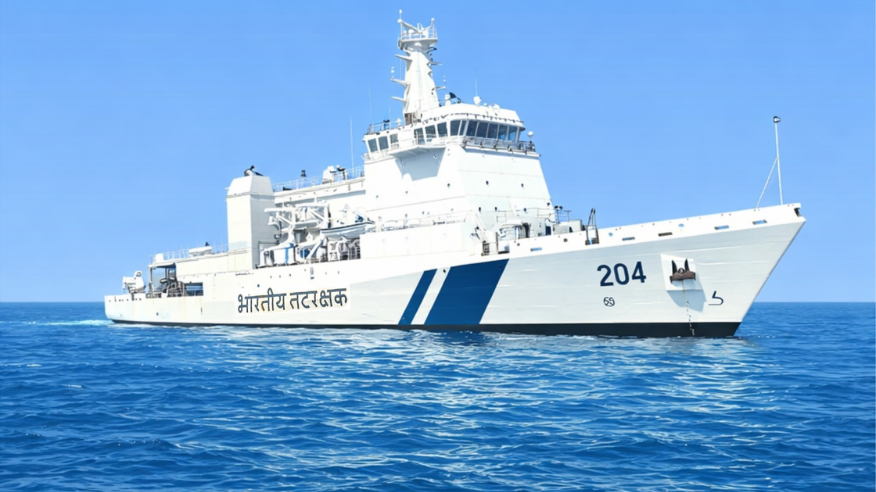
The Indian Coast Guard’s first indigenously designed and built pollution control vessel, Samudra Pratap, will be commissioned by Defence Minister Rajnath Singh in Goa today. The vessel will serve as a critical platform for enforcing marine pollution control regulations, maritime law enforcement, search and rescue operations, and safeguarding India’s Exclusive Economic Zone.
4. Venezuelan interim President offers to collaborate with the US after Trump warns of strikes

Venezuela's interim President Delcy Rodríguez has offered to collaborate with the US after President Trump warned of further strikes. The US conducted a military operation named Operation Absolute Resolve on January 3 in Venezuela. The operation culminated with the capture of Venezuelan President Nicolas Maduro and his wife Cilia Flores—a fortified compound raided by US Delta Forces and the 160th SOAR (Special Operations Aviation Regiment).
The mission was supported by intensive airstrikes from over 150 aircraft, including F-35 and F-22 fighters and B-1 bombers. Targets included military hubs like Fuerte Tiuna, airbases, and ports in Caracas and La Guairá. Reports indicate at least 80 people were killed, including 32 Cuban military and intelligence officers. Some civilian residential areas were also damaged. Maduro and Flores were captured and flown to New York City to face federal charges.
5. Türkiye receives additional SIPER air defence system
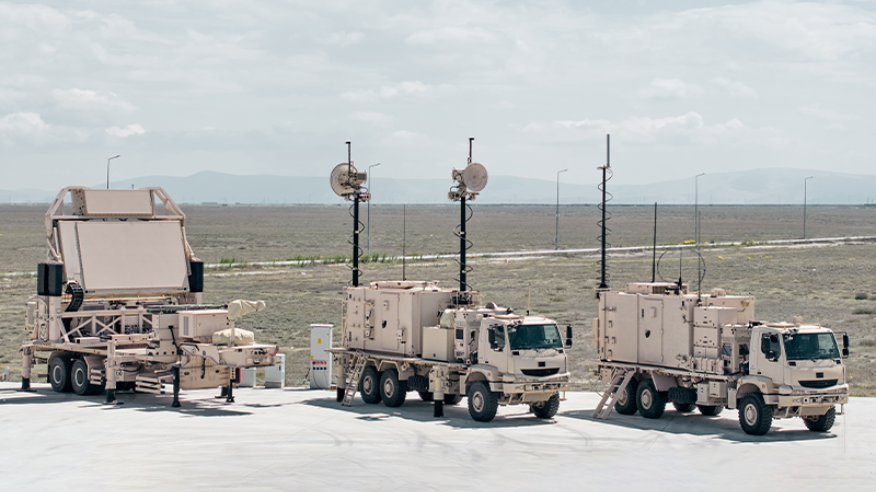
Türkiye has inducted another SIPER long-range air defence system into its integrated air defence architecture, Çelik Kubbe (Steel Dome), the Presidency of Defence Industries (SSB) announced. This brings the total number of SIPER systems in service to two, with the first system having entered service in 2024.
SSB President Haluk Görgün stated that deliveries continue without interruption and confirmed that an additional SIPER system has entered service. SIPER is Türkiye’s indigenous long-range surface-to-air missile system, forming the outer layer of the national Steel Dome architecture. Designed by Aselsan and Roketsan, the system is intended to counter threats such as fighter aircraft and cruise missiles at ranges exceeding 100 km, featuring autonomous engagement capability and active radar seekers.
Chakra Desk
Chakra News is a specialised digital media platform committed to in-depth coverage of India’s defence, national security, geopolitics, and critical technologies.



Comments