







Mass-produced Shaheds can plug capability gaps in Indian military
Dronery emerged since the Nagorno-Karabakh conflict in 2020. What we are seeing today is very interesting, and I'm looking at the Russia-Ukraine war in particular. As you heard, it's played out over three and a half years. Now, the first year of that conflict, 2022, was a conventional war. The Russians arrived with tanks, infantry, artillery, and air cover. Now the second year of the conflict in 2023, it was all about artillery, and the Russians were firing, if I recall, on an average of 20,000 rounds a day, 20,000 shells a day, rockets and artillery shells.
And to give you an idea, during the entire Kargil war, the Indian Army fired two and a half lakh rounds, so the Russians were firing that in 10 days. That is the kind of intense artillery you saw in the second year of conflict. Now, in 2024, the third year, something very interesting happened, and this is where drones come in.
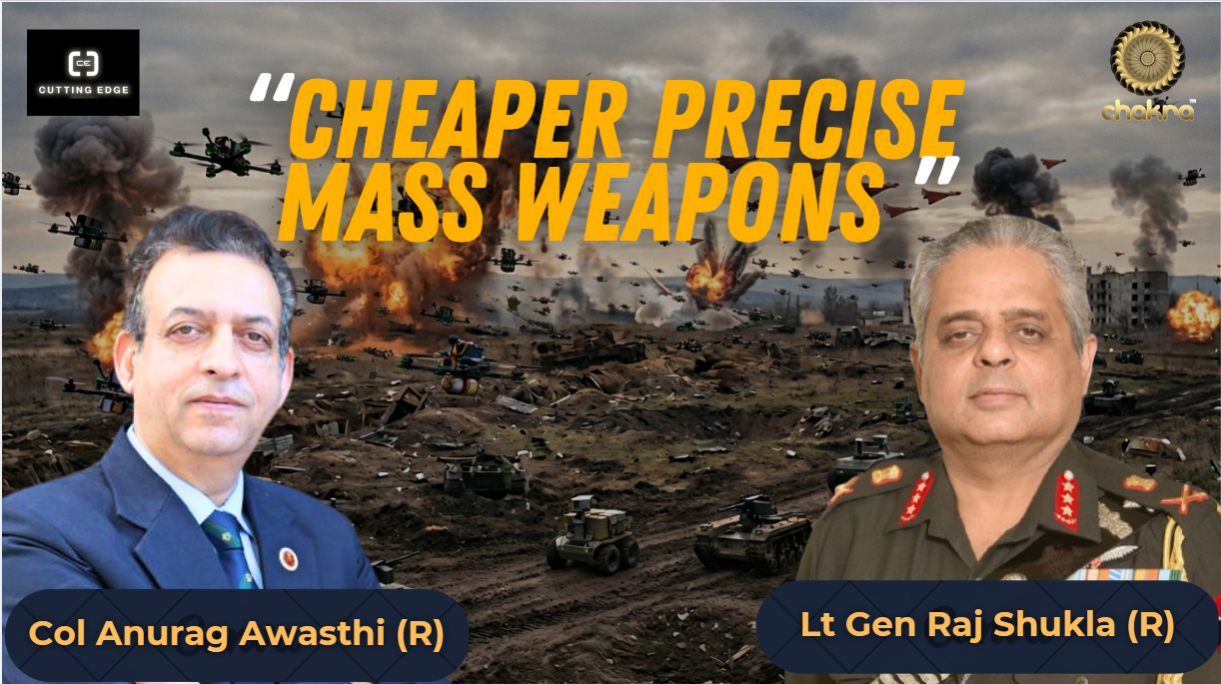
You're seeing drones replacing all of these platforms, literally all the aircraft, the artillery, the tanks, and even. Now, drones have become something like small arms, they've become artillery, they've become air defence, they've become long-range bombers. And you saw on the 7th of October, the Russian Federation launched a drone strike against Ukraine, where they fired 800 kamikaze drones.
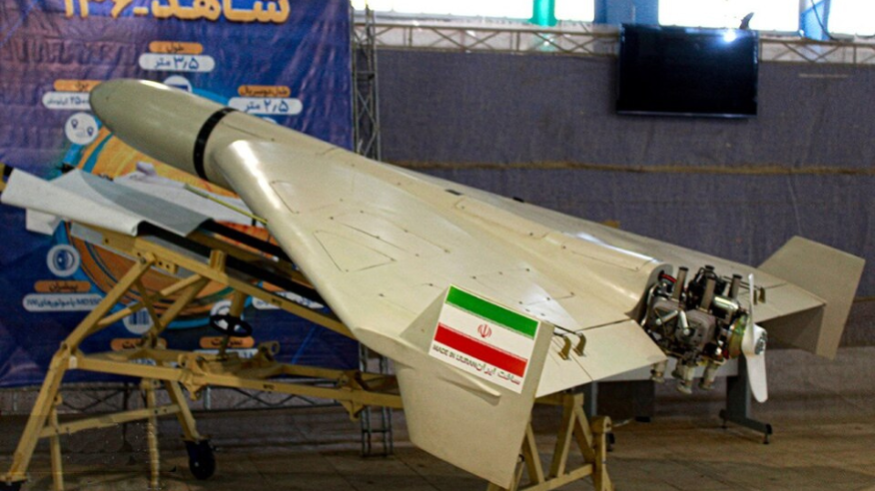
And what was that drone type that they fired? It's a very interesting type of weapon that they fired, and this is something that I think singularly is one of the most impactful platforms that we have seen in our time. It's the Geran-2, which the Russians call the Geran-2, a version of the Iranian Shahed 136. Now, if you look at it, it's a very distinctive-looking platform.
It's about 11 feet high, about 6 feet wide, and it's a very simple propeller. It carries about 50 kilograms of explosives and various other items. That is the Shahed 136 just behind you. It's a very simple, low-tech solution.
The Russians have taken it from the Iranians, and you know where the Iranians took it from? Guess who invented this platform? Believe it or not it was West Germany. It was designed in the 1990s by a company called Dornier, which is likely familiar to all of you, as it's an aircraft company. It was called the Drone Anti-Radar, D-A-R. Now, this was a very low-cost platform that the Germans had come up with to strike at Soviet radars; it was an anti-radiation missile basically. And they made it as a cheap, low-cost option, they built tens of thousands of them, they wanted to build it against and fire it against the Russians. Now look at the way geopolitics takes place. A German design goes to the Iranians in the early 21st century. The Iranians who don't have an air force and don't have a navy of consequence, adopt this low-cost technology and perfect it. And today they have helped the Russian Federation set up a plant in Tatarstan called Alabuga, where they are manufacturing these drones at the rate of 15 to 20 a day. These are very low-cost platforms, and the Russians are surging the production of this platform.
So, you look at the way technological churning, geopolitics, and the modern way of war fighting are actually like the old way of war fighting. Low-cost, very easily made platforms like this, which, believe it or not, this platform is today in use by, you heard it, by the Russians, the Iranians, the North Koreans and very recently the Americans too. They have got something called the Lucas, which looks exactly like this, which is a low-cost UAS solution.
India also has a version of the Geran, it's called the Harop, which is what the Israelis took, and they basically made it into an anti-radiation platform. So, this is actually, it's not the future of warfare, it's the present stage of the conflict that we are in. It costs just about $50,000 (approximately Rs 46 lakhs), which is very cheap.
So, to give you an idea of the different costs involved here, an artillery shell costs about 50,000 rupees, a 155mm shell that's made by the Indian Ordnance Factory, which is one of the cheapest in the world. This one costs about $50,000, and a BrahMos missile, which is the high-end of the thing, would cost about 30 crore, 35 crore. So, if you want to saturate the enemy's air defences, you want to hit several targets, this is the way forward. Drone warfare is high-tech; at the same time, it's low-tech, and many countries have gone in for that. So, if you see this, the way warfare has progressed in Russia and Ukraine, we have to kind of ask ourselves big questions on this. Now, why I come to it is that the fact is that we have a lot of gaps in our capabilities in India, and all of you are familiar with it.
The Air Force does not have enough fighter aircraft; they're asking for more squadrons. The Navy has a shortage in submarines and warships, the Army, of course, has a shortfall in artillery and tanks. So, my question is, could this not become the interim solution while you're transitioning to the next level of technology? If you mass-produce this in a way that China, North Korea, and the Russian Federation are doing, they're producing it in the tens of thousands. Could we not set up a plant like this to produce these at scale? And I'm sure given the technologies involved, it's a very simple thing.
If you look at the design, it's just about, like I said, 11 feet long, about 6 feet wide, it's got a simple propeller, it flies at about 200 kilometres an hour, but it has a range of more than a thousand kilometres, between a thousand and two thousand kilometres, and it carries 50 kilos of explosives. Now this is more or less enough to do what General Shukla and his colleagues would call ordnance on target, right? You fire hundreds of them, and some of them will be intercepted, many of them will be intercepted, but some of them will break through the enemy's AD cover and saturate him and hit his targets. This is exactly what we want for the present threats that we are facing on our borders.
Pakistan on the left, on your west and China on the north, right? These are our immediate threats and instead of going in for super expensive gold-plated technologies that I don't want to get into because my friends in the Air Force would be very worried, to say that could we not look at this as a low-cost option, a low-cost solution which we can build very quickly in India and we can build it at scale and we can master it in a way that we have done so many other technologies. Frugal engineering is basically in our DNA. We could do this.
The sad part is that we have not even begun, right? We have bought 50 or 60 of them from the Israelis. There are a few companies that are building them, but not enough. We don't have plants on the scale that the Russian Federation has set up.
The Iranians certainly have. So, I mean this was my limited point of talking about not about so much about the future of warfare but the present because everything that we're talking of you see in the papers whether it's your fighter squadrons or your warships or your nuclear-powered submarines are going to come decades from now and what we need is something that will serve our interests in the short term. This was just to give you an idea of how technology has matured, and we have to choose whether we want to be like Russia and Ukraine in 2022 or like Russia and Ukraine in 2025. Thank you.
— from a panel discussion on Geopolitical Churning, Technological Disruptions and Modern Warfare organised by the World Intellectual Foundation at the Ambedkar International Centre, September 16, 2025.
Sandeep Unnithan
Veteran journalist with 30+ years in media, Sandeep Unnithan is a national security expert and author of two acclaimed books, including Black Tornado, adapted into the web series State of Siege.



Comments