










Indigenise, export, master tech— three-steps to beat India’s arms import trap

The March 2026 report by the Stockholm International Peace Research Institute (SIPRI) says India is the world’s second-largest arms importer, accounting for 8.2 per cent of all global arms imports between 2021 and 2025. This is despite a 4 per cent drop in India’s arms imports as compared to 2016- 2020 due to domestic Make in India efforts.
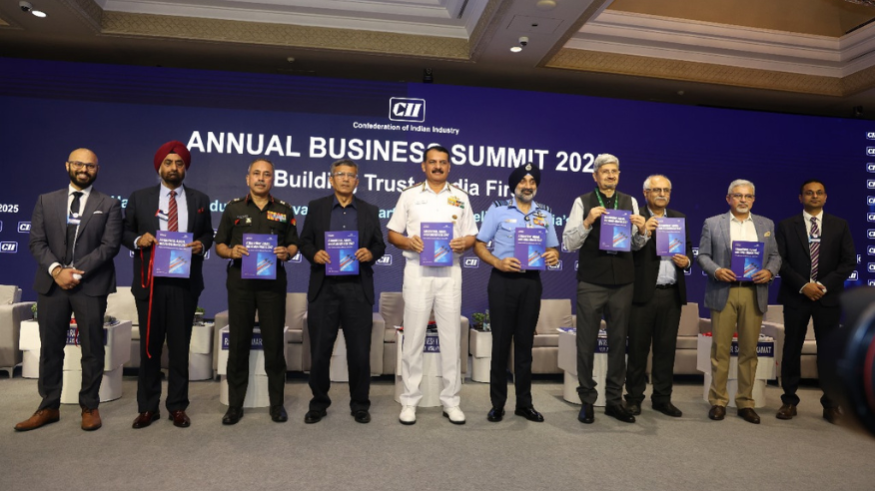
A KPMG and Confederation of Indian Industry (CII) report outlines a three-step formula for India to beat the arms import trap and become self-sufficient in weaponry.
The first milestone of the roadmap is 2032. The goal is indigenisation. Why is this critical? Because India’s defence ecosystem still relies heavily on imports for key platforms, subsystems, and components. Engines, sensors, and advanced electronics are often sourced externally. This creates strategic vulnerability. In a conflict, supply chains can be disrupted. By focusing on domestic manufacturing and R&D, India is trying to reduce this risk. But indigenisation is not just about assembling products locally. The real challenge is mastering core technologies.
The second milestone is 2038. The goal is scale and exports. India wants to enter the top five global defence exporters. This is where things get more complex. Exporting defence equipment is not just about manufacturing capability. It requires trust, geopolitical alignment, after-sales support, and competitive pricing. Countries buy weapons not just for performance, but for long-term partnerships. India will need to build a reputation for reliability. This means delivering on time, maintaining quality, and offering lifecycle support.
The third milestone is 2045. The goal is technological leadership. Future wars will not be fought only with tanks and aircraft. They will be shaped by artificial intelligence, cyber warfare, quantum systems, and hypersonic weapons. These are areas where traditional advantages matter less. Late entrants can still leapfrog. This is India’s opportunity. But it requires sustained investment in deep tech and a strong innovation ecosystem.
To achieve these goals, the report outlines six capability pillars. Each pillar addresses a structural gap.
R&D and innovation is the most critical pillar. India’s defence R&D spending has historically been limited and fragmented. Increasing spending is necessary. But efficiency matters more. This requires collaboration between academia, startups, and industry.
Talent development is equally important. Advanced defence technologies require highly skilled engineers and scientists. India produces talent at scale, but not always with the required specialisation. Bridging this gap will require targeted education and industry alignment.
Defence production and supply chains form another pillar. Manufacturing at scale requires robust supply chains. This includes MSMEs, component manufacturers, and logistics networks. Without this, large platforms cannot be built efficiently.
Regulatory and procurement reforms address one of the biggest bottlenecks. Defence procurement in India has often been slow and complex. Delays increase costs and discourage private participation. Faster decision-making is essential.
Strategic partnerships are also key. No country develops everything alone. Partnerships allow access to technology, markets, and expertise. But they must be structured to ensure knowledge transfer.
Infrastructure development supports all other pillars. Testing facilities, industrial corridors, and digital infrastructure are necessary to sustain growth.
The targets outlined in the report are ambitious. Defence production is expected to grow from ₹1.6 lakh crore to ₹8.8 lakh crore. That is a 450% increase. Exports are expected to jump from ₹30,000 crore to ₹2.8 lakh crore. That is an eightfold rise. The defence budget is projected to increase significantly as well. R&D spending is expected to rise to 8-10% of the defence budget. The defence share of GDP is targeted to reach 4-5%.
But can these targets be achieved?
The challenges are real. India still depends heavily on foreign technology. This is not just a supply issue. It is a capability gap. Building indigenous alternatives takes time and sustained effort.
R&D efficiency is another concern. Increasing funding alone will not solve the problem. The ecosystem must ensure that research translates into deployable systems. Private sector participation remains limited. Large public sector units still dominate. While they have strengths, innovation often comes from smaller, agile players. Encouraging startups and MSMEs is critical. Skill shortages in advanced technologies are also a bottleneck. Areas like AI, quantum computing, and semiconductor design require specialised expertise. Regulatory delays continue to slow progress. Red tape increases project timelines and costs. Global competitiveness is perhaps the hardest challenge. Competing with established defence exporters requires not just capability, but credibility.
The recommendations in the report address these issues. Increasing R&D spending to 10-15% over time ensures stability. Building a National Defence Technology and Innovation Framework can coordinate efforts across stakeholders. Promoting initiatives like iDEX and TDF can bring startups into the ecosystem. Expanding production capacity will support scale. Strengthening defence diplomacy will open export markets. Improving procurement processes will accelerate decision-making.
The underlying insight is clear. Defence is no longer just about military strength. It is an economic driver. It creates jobs. It drives innovation. It builds technological capability. It enhances strategic autonomy.
India’s Defence Vision 2047 is not just a plan. It is a statement of intent. The path will be difficult. The timelines are aggressive. But the direction is clear. At its core lies a clear idea. Build an “Atmanirbhar, Agrani, and Atulya Bharat”. In simple terms, become self-reliant, globally competitive, and technologically superior. The real question is not whether India can afford to pursue this vision. The real question is whether it can afford not to.
Ayaan Ahmad
Research Analyst in Chakra News. Ex NDA with 4 years of experience in Defence and Geopolitics. Have an affinity for writing and finding stories from data.




Comments