






India’s Plan Behind IFR 2026

A show of strength, a signal of strategy
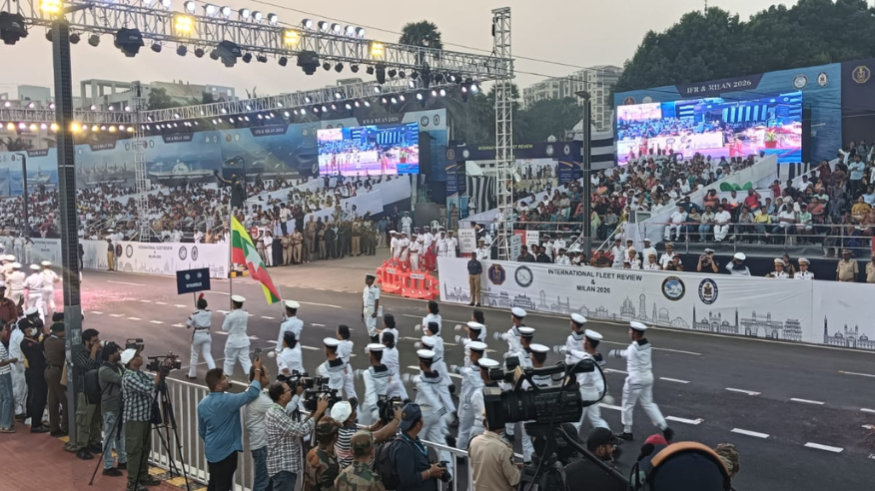
The scale of India’s International Fleet Review (IFR) 2026 off the coast of Visakhapatnam made one thing immediately clear - this was no ordinary naval spectacle. With warships, navies and delegations from around 70 countries, across associated events, it was among the largest maritime gatherings in recent years. The visual of dozens of warships anchored in formation was not just impressive, it was deliberate.
IFR 2026 was afterall only one part of a much larger design. India simultaneously hosted three major maritime engagements: the International Fleet Review, the Indian Ocean Naval Symposium (IONS) Conclave of Chiefs, and Exercise MILAN 2026. Together, these events were framed under India’s MAHASAGAR vision - Mutual and Holistic Advancement for Security and Growth Across Regions, that signals a shift from isolated engagements to a coherent maritime strategy.
IFR provided the optics, a visible demonstration of unity and capability. IONS served to bring together naval leadership for structured dialogue. MILAN added operational substance, enabling interoperability through exercises at sea.
The guest list itself sent a strong geopolitical message. Major powers including the United States, Russia, and Iran were present, reflecting India’s ability to engage across divides. At the same time, the absence of China, Pakistan, and Türkiye was equally telling. It underscored India’s approach of strategic autonomy, engaging widely, but on its own terms. This was not alliance-building in the traditional sense, but something more flexible and inclusive.
There was a clear rationale behind this convergence of events. Defence Minister Rajnath Singh emphasised the growing complexity of maritime threats, noting the need “to guard our waters from nefarious terrorist activities… threats to supply chains and natural disasters,” while stressing that cooperation among navies “is no longer an option, it is an imperative.”
He also underscored the broader geopolitical context, stating, “Today, we find that the established international order since the end of cold-war is witnessing an upheaval. The stability of last 60-70 years in international order has become uncertain. We are today in search of a more predictable and certain international system of governance.”
President Droupadi Murmu reinforced this message, describing the fleet review as a reflection of “unity, trust and mutual respect among nations,” and invoking the ancient Indian ethos of Vasudhaiva Kutumbakam - the world is one family - as the foundation of maritime cooperation.
Taken together, these elements point to a larger ambition. India is positioning itself not just as a naval power, but as a maritime convenor—a country capable of bringing diverse actors together in the Indian Ocean Region and beyond. And where India acts as both facilitator and anchor of regional security.
In doing so, India is also experimenting with a new model of order-building. As a middle power without formal alliance structures in the Indo-Pacific, it is creating flexible, networked frameworks that prioritise cooperation over rigid blocs.
As the Chief of Naval Staff noted, “today’s maritime challenges are complex, interconnected, and transnational… best addressed through cooperation and partnership.” IFR 2026 demonstrated how that cooperation can be staged, structured, and operationalised.
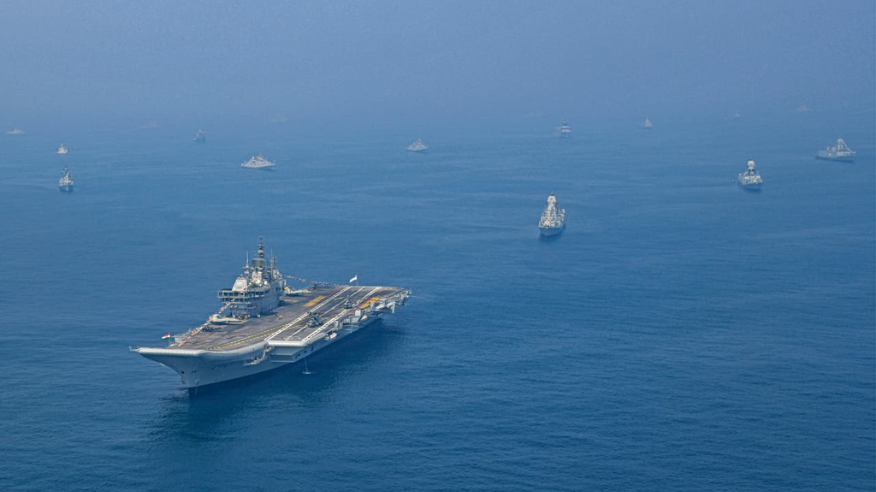
INS Vikrant along with 70 warships off the coast of Visakhapatnam for the International Fleet Review 2026
Deepak Bhadana
Over the past decade, Deepak Bhadana has built expertise in multimedia storytelling, with a focus on military conflicts, insurgencies, international relations, the defence industry, and occasionally, wildlife and environmental issues.


Comments