









"Not an attempt on Rajiv Rai’s life- had only planned to fire bullets outside his office": D-Company shooter
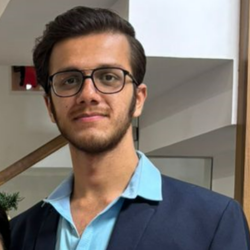
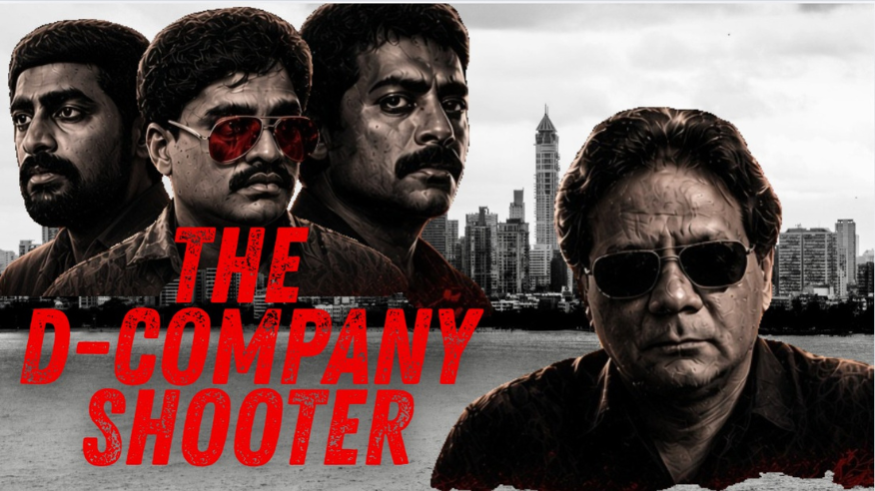
In 1997, Mumbai was rocked by two sensational incidents — an attempt on the life of producer-director Rajiv Rai and the murder of music company owner Gulshan Kumar. Both crimes were traced to the Abu Salem faction of the Dawood Ibrahim gang. Now, a former D-Company shooter has come out with a different version of the story. Speaking on The Sandeep Unnithan Show on Chakra News, his first-ever interview, Mohammad Arif Din Mohammed Shaikh, 50 said the gang had only planned to intimidate, not kill, Rai. Arif was captured by police outside Rai’s office and served a 2.5-year jail sentence.
Arif was part of a five-man team sent by key Dawood Ibrahim lieutenant Abu Salem, to force Rajiv Rai to pay extortion money. Rai, then among the most successful Bollywood producer-directors with the 1990s hit movies like Tridev, Mohra and Gupt, had allegedly refused to pay the Dawood Ibrahim gang Rs 20 lakhs in extortion money.
“We were not supposed to enter Rai’s office. We were to fire some shots outside his office and run away,” Arif said, explaining that the original plan was not for him to enter Rai's office. He said he was supposed to show the other shooters the location and leave after they shot him.
Arif, then 21, was to show other shooters the location and leave after they carried out the attack outside the office. On that day, an overconfident Arif decided to enter in himself and ended up being caught by the police. He had conducted a recce of Rai’s office about a week before the incident. On 31st July, 1997, he was called to Noorani Hotel in Tardeo, where pistols were handed over to the group.
On that day, Arif became overconfident and decided to enter the office himself. He went inside on the second floor of the Commerce Centre building located in the Tardeo area of South Mumbai. There, he found Rajiv Rai sitting in his cabin. Arif shouted at Rai that he would have to pay Rs 20 crore instead of Rs 20 lakh. What he didn’t know was that Rai had been given police protection and his Mumbai police bodyguards were already in the office. Arif panicked and escaped, with the police hot on his heels. He was shot in the hand and back during the chase and eventually entered a dead-end before being caught.
Ranjit Singh Sharma, the then Joint Commissioner of Police (Crime) termed the incident an attempt on Rai’s life.
Arif had entered the Dawood Ibrahim gang when he was 21 years old. Earlier, he worked as a waiter for a year in Saudi Arabia. He said he became involved after a friend got into trouble and he wanted to arrange money to help him.
He described how young men were gradually pulled into the gang. According to him, members were made to feel important. He later understood that the shooters were being used to create fear. “The shooter is always the fool,” he said while describing the role he believed shooters played in the underworld.
Arif said the Abu Salem faction with the Dawood Ibrahim gang had only around 15-20 gangsters at the time, within a wider network of around 150 operatives. The group included shooters, a hawala operative and some others. He said the shooters were central to the gang’s ability to intimidate people.
“If there were no shooters, there would be no gang,” he said. It was a remarkable phase in the Mumbai underworld where so-called ‘offshore dons’ used mobile phones to exercise control. The dons operated from Bangkok, Karachi and Dubai, terrorised builders, industrialists and Bollywood personalities. The shooter was key to these gangs.
“The main purpose of the shooter was to create fear,” Arif says. The reputation of the gang depended heavily on that fear. Rai escaped unscathed from the incident and left India for four years, but the 1997 incident catapulted Abu Salem into prominence.
Arif recalled how several former associates were later killed in police encounters, while some others eventually changed their lives. Reflecting on the underworld, Arif said the role of shooters has changed. The old system built around hitmen and street-level violence has declined, with criminal networks increasingly focused on money and businesses. “The era of shooters is over,” he said.
He also said that his association with Abu Salem ended after his release in 1999. Salem contacted him a few days later after his release sent him money and wanted him to travel to him. But Arif decided to cut off contact. Heeding his mother’s pleas not to get involved with the underworld, he turned instead to the property business. His own family also suffered because of his involvement. Court proceedings and legal expenses put a financial burden on the family. This was his final interview. Arif passed away in August 2026 after a long battle with cancer.
Watch the Full Podcast: https://youtu.be/KX2g0wT3B9k?si=cJ31SFPNJL7vr108
Savio Rodrigues
Savio Rodrigues is a Research Analyst at Escape Velocity MediaWorks Pvt Ltd and writes for Chakra News on Defence, Geopolitics, National Security. He holds a Master’s degree in International Relations from the University of Mumbai.




Comments