










Five cases where Starlink was more than a Satellite Internet Network

On October 08, Elon Musk asked on X if Reliance Industries chairman Mukesh Ambani was the “real boss of India”. A day later, he addressed Mukesh Ambani as “Prime Minister Ambani” and asked him to allow Starlink to compete in India. He has stepped up his criticism of the Government of India over the delay in launching Starlink, his satellite internet service Musk has argued that Starlink can connect people in remote areas and help during disasters.
The Government of India rejected his claims, stating that Starlink is at the same regulatory stage as other satellite operators, with security requirements still pending completion. The Government of India stated, "Security assessment as part of this process is currently under way in respect of all the three licensees. As and when this process is completed for a licensed entity, it may proceed to the next step of seeking assignment of spectrum. At present, all the three entities are at broadly the same regulatory stage. As such, the suggestion that the framework or its application is unfair or discriminatory is baseless and misconceived."
Users on X have turned the question back on Musk, addressing him as “President Elon Musk”, asking why the US does not allow Chinese EV giant BYD to compete freely with Tesla. They pointed to the national security concerns Washington itself has raised over Chinese connected vehicles, arguing that India can similarly cite security and digital sovereignty concerns when regulating a foreign-controlled satellite network such as Starlink.
Starlink is a satellite-based internet system operated by Elon Musk's SpaceX. Satellite internet is different from a normal internet connection. Starlink connects users directly to satellites in low Earth orbit. This allows it to work even when fibre networks, mobile towers or other conventional infrastructure are unavailable. In a conflict or during an internet shutdown, that capability can become strategically important.
Instance 1: Russia-Ukraine War and Battlefield Communications
Russia invaded Ukraine in February 2022. Starlink became an important communications network for Ukrainian forces after Russia's full-scale invasion in 2022. It was used for military communications and drone operations. In September 2022, Starlink service was reportedly shut down over parts of Ukraine during a Ukrainian counter-offensive. The disruption affected communications and drone operations. This episode serves an example of how access to a privately controlled satellite network could have direct consequences on a battlefield.
Instance 2: Myanmar Instability and Internet Restrictions
In Myanmar, After the military coup in 2021, authorities imposed repeated internet restrictions across the country. In conflict affected areas, conventional connectivity became unreliable or unavailable. Starlink terminals began appearing despite the service not being officially licensed in Myanmar. Rebel groups, aid workers, medics and civilians have used the service to stay connected. By 2024, Starlink had become an important alternative in parts of the country where internet access was heavily restricted.
Instance 3: Iran Protests and Internet Shutdown
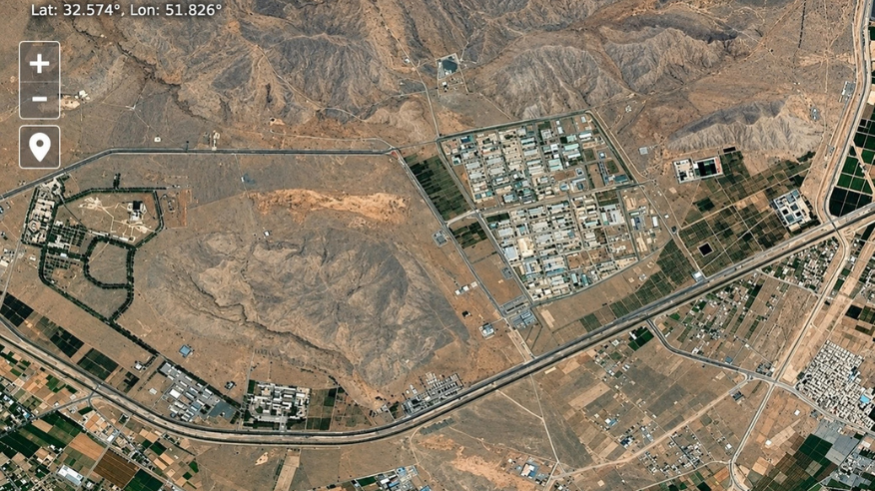
Iran has shown another side of the same capability. In January 2026, the Iranian government imposed a restriction on internet services during protests against the Shia-clerical regime. Non satellite internet connectivity fell to about 1% of normal levels. Yet some people inside Iran continued to access Starlink. Since the system connects directly to satellites, it was able to bypass the fibre and mobile networks affected by the shutdown. Starlink was not licensed in Iran, and authorities had sought to restrict its use.
Instance 4: Conflict in Manipur and Internet Restrictions
India has already encountered a similar security concern. In December 2024, Indian security forces seized equipment in Manipur bearing the Starlink logo. Reports later alleged that Starlink terminals smuggled from Myanmar were being used to bypass internet shutdowns in the conflict affected state. The allegations included claims of use by armed groups. Musk and Starlink denied that their service was operating in India, with Musk saying the satellite beams were switched off over the country. Nonetheless, this incident brought the issue directly into India's national security debate.
Instance 5: US Military Operations and Drone Warfare
Starlink's military relevance is also visible in the United States. During the 2026 US-Iran war, Starlink connectivity was reportedly used with the Low-Cost Uncrewed Combat Attack System, or LUCAS, which is a US suicide drone. Reuters reported that the Pentagon was using a premium SpaceX satellite service with LUCAS and similar other unmanned systems. The US military has also expanded its use of SpaceX's more secure Starshield system for government and defence requirements.
These cases show why Starlink cannot be viewed only as another internet provider. Its network has been used during war, conflict, internet shutdowns and military operations. It can provide connectivity when terrestrial networks are damaged or deliberately switched off. At the same time, control over such a control or the ‘kill switch’ of the network rests with a private company. This raises questions over the digital sovereignty of the country over which it operates.
For India, that makes the Starlink question larger than merely market competition. Satellite internet can bring connectivity to remote parts of the country, but the same capability could also be misused by hostile actors or operate beyond the reach of conventional communications controls. For India, ensuring that such a network operates within its security and regulatory framework is therefore a necessary condition before allowing widespread access.
Savio Rodrigues
Savio Rodrigues is a Research Analyst at Escape Velocity MediaWorks Pvt Ltd and writes for Chakra News on Defence, Geopolitics, National Security. He holds a Master’s degree in International Relations from the University of Mumbai.



Comments