








No Going Back From Sindoor

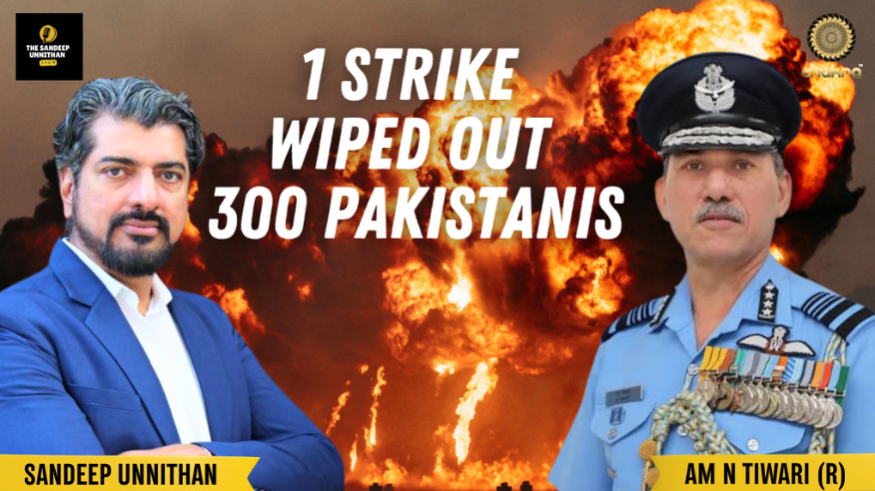
Sandeep Unnithan: Hello and welcome to the Sandeep Unnithan Show, your weekly dose of defence, geopolitics, and much more. Today I'm privileged to have with me at Chakra Studios, Air Chief Marshal RKS Bhadauria, former chief of the air staff. We're going to be talking about the Indian Air Force and the Indian military one year after Operation Sindoor. The 88 hours that changed strategy on the subcontinent. Chief Marshall Bhadauria, welcome to my show.
Air Chief Marshal R K S Bhadauria (Retd.): Thank you very much. Always great to interact with you.
Sandeep Unnithan: Sir, one year since Operation Sindoor, how do you assess the Indian Air Force's role in this very unusual 88-hour conflict?
Air Chief Marshal R K S Bhadauria: Oh, I think with every day that has passed post Sindoor, and as you look back where we are over Last year, what we did in Sindoor, the real realisation of what we achieved has only seeped in more. It makes us prouder by the day. So, as you look back, I think now everybody needs to realise how important it was and how effective it was on what was done. So, if you just look at Op Sindoor apart from the robust and very audacious political decision to select the kind of targets that were selected. Prime Minister Modi was very clear about the unimaginable punishment to terrorists and their backers, but the Targets and selecting Bahawalpur and Muridke, it was unthinkable. So, the choice of targets I think a very clear message to achieve those targets the kind of tri services effort that was done to achieve all nine targets against a fully prepared Pakistan after Balakot Pakistan knew there's no question the of air power not being used or deep penetration strike or targets being just on the LOC they were prepared but I don't think they were prepared even for Bahawalpur and Muridke in their mind the number of targets.
Sandeep Unnithan: The number of targets?
Air Chief Marshal R K S Bhadauria (Retd.): Yes, the number and the kind of target. So, to achieve that kind of target again in a very short time, a very coordinated, precise attack, and to hit Bahawalpur and Muridke with the accuracy and the kind of weapons that were chosen. It shows how much the air force had evolved, how much the air force had learned and prepared from Balakot, and what happened thereafter, a very calibrated, very calm and firm response over the next two days to drone attacks to launch huge disruptive attacks from Pakistan. So, it was responded but very intelligently some radars were taken off some SAM were taken off so it was all shaping the battlefield and when they really tried to attack our military and air bases etc substantial attempt at a ramp off I think Pakistan air force thought that they can do some massive attack and thereafter declare victory and that was not only responded we spiked and did that ninth and 10th what was done those 11 bases. So, I think that is the gold standard in terms of air force implementation of selection and targeting the kind of weapons getting all targets, doing the kind of damage to command centres, runways, the assets on ground, radars, so we got them blind in areas that we wanted and struck them with impunity, none of those strikes got intercepted, those weapons got intercepted. At the same time, don't forget we were able to prevent any of their strikes from being successful. We didn't allow them to penetrate. We didn't allow them to strike any of our targets, air force or military. So, I think it was from the air force perspective a huge achievement.
Sandeep Unnithan: Huge achievement indeed. Air Chief Marshal Bhadauria. But there's lots to unpack in what you just said. And the first thing that struck me was the political will that you mentioned. I authored this book on 26/11, and I remember some of the people who were present in that very tense CCS meeting after the attacks, where the Air Chief then Air Chief Marshal Fali Major, presented these options of striking at terrorist infrastructure in Pakistan that was not it was not greenlit. He was not given an okay for that. Do you think the political leadership has today, almost two decades later, understood air power in a way that it wasn't understood previously?
Air Chief Marshal R K S Bhadauria (Retd.): Oh, for sure. For sure. Everything starts with a political mindset and political leadership. And it's not only a question of understanding and utilising air power. It's a question of taking this cross-border issue of terrorism head-on. It's a statement of how the political leadership has evolved and how this government decided to act on it. So, this was a fundamental shift, I think a very important shift, and I think Uri was the first one. So, you start with surgical strikes, you start with Balakot. So, these were all stepping stones to this change of direction, which happened over time. Firstly, the zero tolerance policy, and when Pahalgam happened.
Sandeep Unnithan: You know this kind of thing?
Air Chief Marshal R K S Bhadauria (Retd.): Of course, all three services would have been ready; they would have expected, but even I'm sure services were surprised at the kind of free hand given and the kind of targets that were cleared to be hit, so that would have been a bit of a surprise for services because it was a very strong decision.
Sandeep Unnithan: Did you always intend to hit these targets?
Air Chief Marshal R K S Bhaduaria (Retd.): No, it is part of the target list that is always there.
Sandeep Unnithan: But Muridke and Bahawalpur have always been your target?
Air Chief Marshal R K S Bhaduaria (Retd.): number of targets, but to be able to decide on a peacetime situation against a cross-border terror act, we will choose these targets, that's not an easy decision, it is fraught with political risks. So, for the political leadership to decide it was highly audacious I've always said so it is a tremendous sign of political will and political resolve. earlier there was a dossier policy and we would send dossiers and we would be worried about nuclear threats and nuclear armed countries so what will happen so you kept getting stuck in what if loops it was no longer so just imagine the kind of change that has happened and everything starts with political direction and decision.
Sandeep Unnithan: Is that the most important thing when it comes to?
Air Chief Marshal R K S Bhadauria (Retd): I think that was fundamental, that was the most game-changing, that is most important, and it's a classic demonstration of how the political will and the political direction have doctrinal effects on how the defence services will fight. It has changed the way we fight. It has changed the way we need to think. It has changed our industry to a level of involvement in our own defence industrial complex. You see the flip given to our own industrial development. You see the kind of indigenous systems that were fielded in Op Sindoor and the kind of performance. So it has changed our trajectory for good. It's a huge doctrinal shift, okay it's absolute, people call it a big paradigm shift. I think it's gone much beyond that and it has drawn now the red lines now that PM Modi said that every cross border terror would be treated as an act of war again. see the implications of that message to Pakistan and the message to the world that we will no longer accept this. So that's a huge change, and for services again to be prepared to respond to this kind of thing, right, it's a huge ask, and services will never be found wanting. They will work towards it, they will ensure that the political mandate they deliver is in full and more than full.
Sandeep Unnithan: So, that's very interesting Air Chief Marshal Bhadauria the fact that you mentioned that there's been of course a doctrinal shift we've seen that and the prime minister mentioned it on the 12th of May but there is a school of thought which says that India does not have a nuclear does not have a defense strategy written down and we don't have a white paper yet. We are supposed to get a white paper, but you're saying that in the absence of a strategy itself, we've got very clear political directives and therefore, do you see whether you think that we don't really need a stated defence white paper to lay out our strategic plans?
Air Chief Marshal R K S Bhadauria (Retd): Defence white paper is not the only way to work. If you think that we don't have a defence strategy, I think everybody who says this is highly mistaken. It's highly mistaken that we have a very clear-cut policy; we have a strategy, and we have put the entire policy in place. The kind of actions that are being taken for integration is bottom-up. There are huge changes, and you saw the results of integration in the response to Op Sindoor itself. It was a highly integrated action that was taken, okay, so to say this that we don't have a white paper, I don't think this is just know chaff as far as I'm concerned, what strategy we have, what is our mindset,, what is our level of preparedness,, what is our capability have we evolved over the last 10 years 15 years. The results are here to show that we can undertake such a level of commitment, and we are able to deliver to the extent that when we terminate, believe me, with the kind of damages that we did and virtually zero damage against us. okay none of our bases was able to strike; none of our military installations is anybody's dream, any defence service's dream to end a conflict with. It's a huge achievement. People should understand this.
Sandeep Unnithan: So, this was again a big point of criticism. Why did you terminate the conflict when you were so ahead? Do you think, in hindsight, you've been proved right with that decision that was taken?
Air Chief Marshal R K S Bhadauria (Retd): Oh, the people were really excited, and I don't blame them at all when they started seeing the pictures of the 9th night and 10th morning of the strike over those 11 bases and the kind of damage done. So, all the pictures were still not out because the 10th strike was the last wave. I don't think the pictures were still on the media, but the air force did well, the Ministry of Defence did well until the moment there were pictures available to give out and show the results to the country. So, the people were expecting and they for them the announcement of ceasefire was too sudden okay it was too certain we were at the peak virtually and I don't blame them for not understanding why are we stopping now but let me tell you it was perfectly timed you must understand you cannot ignore that these are two nuclear capable countries in a nuclear capable two countries this kind of conflict where we are attacking their bases is the kind of control understanding of escalation letter and the kind of control demonstrated by our CDS and by our service chiefs. I think it's again a huge achievement. It is a huge achievement and within that escalation ladder to be able to strike their basis and do this escalation spike on the 10th and virtually force a termination, attacking a nuclear country, disabling nearly 11 kinds of bases, and this, we stuck with impunity across Pakistan, is unthinkable, and thereafter,, we virtually forced them to come to the ceasefire, and it was perfectly timed. People need to understand that our objectives are very clear. It was a terror target because they hit us militarily, we responded, and we responded robustly more than required in terms of their action and stopping at that time was very important. You cannot go on endlessly. That was never the objective. That was never the plan.
Sandeep Unnithan: You think that has to be understood for President Trump to take note of?
Air Chief Marshal R K S Bhadauria (Retd): Oh, it's for the world to take note of. And the world has taken note. Let me tell you, the entire analytical defence world has understood that despite the kind of narrative being attempted by Pakistan, they have really understood what India achieved, and that termination again is another feather in the cap. It shows how fused the political, military and civil institutions were to be able to do the kind of escalation that was required and stop at the right time; it was near seamless fusion again science of how we have evolved. okay and this is huge, I think it is the people should be proud, and people are understanding now exactly what was done, and we have to thank the Iran-Israel situation and the Iran-US.
Sandeep Unnithan: we've seen that in fact I was going to ask you that a few months after Op Sindoor you saw the 12-day war between Iran and Israel play out non-contact kinetic and then February 28th, the United States, Israel, and Iran again non-contact panic where you see for the first time possibly since the Korean war, American bases have been hit on a very large scale. Do you think that the Iranians took a playbook out of Operation Sindoor? They drew lessons from your operation.
Air Chief Marshal R K S Bhadauria (Retd): Yeah, they would have certainly seen and read and understood what we did. I don't think they were able to copy the playbook fully because their defence and their entire network to be able to defend themselves were disabled very quickly by the Air Force. They had an air force, they had a network, they had surface missiles, but obviously it was not taken to the level and not to the capability that we have, and therefore they were disabled very fast in the early stages of war itself by the US and Israeli air strikes. So that is where I think they went horribly wrong, or their capability was unable to stand at all. What they have done in GCC countries, I think, they have gained this fairly well for this kind of strikes by the US and Israel, that they started attacking the Gulf countries, where they were well within reach. They were in the reach of more of their ballistic missiles, and the kind of use of drones that they did was very cheap and very disruptive. The entire setup in the Gulf is very huge. A lot of weapons within the Gulf countries and a lot of American deployment, but they were all tailored towards highly capable technologically advanced threats.
Sandeep Unnithan: Conventional threats?
Air Chief Marshal R K S Bhadauria (Retd): Conventional threats and advanced threats ballistic missiles they were not fully yet ready for the disruptive attacks by drones they were not okay and that is the starting point of how why Iranians were able to disrupt a lot of things and that's a big lesson and that's a I think plus for how Iran used and of course their actions in Hormuz. So, I think they knew their strengths, they knew their weaknesses, but they utilised this strength in the area that gave them maximum benefit. If you just see the kind of targeting, they have done 50% of the targeting against the UAE, 49 odd%. 20% on Saudi and 20% against Israel. So, they were not firing only at Israel. They devoted a lot of attention to this, and that was because of not only American bases; they started attacking vital areas of the Gulf countries themselves, so they changed the focus itself, and they were able to achieve a lot.
Sandeep Unnithan: So, a lot of arguments are being made now in the light of Op Sindoor where the Indian air force didn't cross the border we stood off and we launched our weapons a non-contact kinetic Iran the Iran war you've seen that there's a case being made that rocket forces, artillery, long range artillery, precision missiles, drones are the way ahead rather than investing in only air force, you go for this. What's your take on this? Has warfare shifted entirely towards this non-kinetic means, or are man fighters still important?
Air Chief Marshal R K S Bhadauria (Retd): No, it is important. We have to have a mix. Okay, we should not draw long lessons wrong, right? You know, with drones alone, you cannot win a war. You can stretch a war.
Sandeep Unnithan: You think Iran showed you that?
Air Chief Marshal R K S Bhadauria (Retd): Yeah. They can stretch. But if you think that they have won a war against the US or Israel, it's not. So, you see the kind of destruction they have had to face. Iran's entire air force is gone. Their entire navy is practically gone. So, the impact of the destruction by US and Israeli air strikes on the critical targets is huge. It's a different matter that the objectives chosen of regime change, etc., are continuing. So, the war is getting protracted because of that. If it were only military objectives, they should have stopped in 10 days or 12 days maximum. Those objectives were achieved. They could have walked back. So, Iran, with all its ballistic missiles. Okay. Look at the real damage done in Israel despite the kind of cluster munitions later on used, etc. So, there are limitations of ballistic missiles always, and there are pluses and minuses on each side. Also, remember what has been done there; there's a lot of asymmetry in combat capability if you see the US and Israel versus Iran. okay so a lot that happens there is not directly applicable here for us. We are going to fight Pakistan or China. There it's a different kind of adversary, a highly competitive peer in terms of technology and weapons. If you look at China, they are technologically ahead in terms of weapons that are ahead. So, this is a totally different ballgame. You have to have the best of everything; it’s not without reason that China is developing its fifth generation, the number of aircraft that they have gone into. You think China doesn't have ballistic missiles; they have the maximum. So, look at that. So, there has to be a combination of ballistic capability. What the combat capability from aircraft gives you and the kind of flexibility, the kind of repeatability, a thousand hot strikes with four weapons, can you imagine 4,000 ballistic missiles being done over 10 days? okay so the kind of precision that airborne weapons give, how much they have evolved, so there are different core strengths. So, we need to develop, and drones have a lot of potential. The loitering mutations have a lot of potential. We need to expand on that. It's a huge disruptive force, very cheap. You need to capitalise on it. We need to have manned-unmanned teaming for sure. We need to have stealth. We need to have a stealth unmanned. We need to team up in the future. So, we have to develop holistically across the board. So, these debates are too narrow. I think we have to look at the larger picture and see what our requirements are. Looking at our landscape right now and developing accordingly.
Sandeep Unnithan: So, when we're talking about hardware, I was just thinking about how most of the hardware that was used during Op Sindoor, you've played a role in acquiring most of them, whether it's the S400 surface-to-air missile that we acquired at great opposition against the United States opposed that sale you have the Rafale of course the case that you drove but there's also another very interesting story that you were telling me a little while earlier about the air launched Brahmos which you worked with Dr. Pillai to make that happen. Tell us that story of how?
Air Chief Marshal R K S Bhadauria (Retd): No air-launched, the air force decided that we must have a version that we can put on the SU-30 MKI. This is very early in the program, so at that time, I was posted to headquarters and interacting with Dr Pillai. I was a two-star at that time, and the decision we took was that we would do the modification in-house with HAL. That was a very big step that we took because the Russian proposal was firstly very costly and secondly, we wanted the air force to be keen on the fact that we had seen what would happen if we upgraded ourselves indigenously. There are a lot of advantages. So, if the modification was done by us, we were looking at firstly the pace of modification, subsequently, and we were very keen that we do it ourselves. So, I had a separate meeting with HAL, and then we finally did the mod ourselves, which was a huge step. It was a very big missile. It was risky to do it ourselves. The Russians had told us not to do so. There was a lot of pressure, but everybody held ground, and we were able to succeed. I think that was a big, good show to HAL for being able to swing this and do it successfully and a big role played by Dr Pillai, he was the DG at that time, and he said yes we will, we will just do it.
Sandeep Unnithan: What is the understanding from all of these programs that you've driven, whether it's the Rafale or the LCA, also, of course, the LCA Tejas? Let's not forget that one of the Brahmos. What does this tell you about the weapons that India needs to fight and win wars?
Air Chief Marshal R K S Bhadauria (Retd): We have to first build indigenously. BrahMos is an example, but BrahMos is also in collaboration; it has already demonstrated what it can do with high-calibre weapons and precise long-range capabilities. We have to not only localise production, but also design and develop indigenously. A lot of good work has happened in the 100 km and 150 km class weapons already. A lot of DRDO projects are close to success. Those need to be converted to longer ranges. So, firstly, I think long-range precision weapons are very critical, and they should go on to a larger number of aircraft. We should do the modification ourselves indigenously. The next lot of aircraft that are coming in, be it LCA Mark II, be it AMCA, be it any, if there's talk of procuring more Rafale, our weapon suits and some of the sensors as much as possible, we should put indigenous.
Sandeep Unnithan: But the French aren't allowing us to put the source codes and all.
Air Chief Marshal R K S Bhadauria (Retd): The number of aircraft we are buying. No, we will have the modification ability. Don't go by what is coming out. The Air Force will never agree unless we get the ability to modify with our own weapons subsequently. If you have banned this number of aircraft, I think that should be a red line, and it will happen. you don't have to have the full source code it is more complex than that so there's no point getting into the detail but my larger picture is you should be able to to modify yourself we can do that on SU-30 because we have taken those integration on MiG-29 we have done it on Mirage 2000 we are doing it differently but we are already succeeding okay so we always look for this capability and it'll happen. On HAL on Jaguars, we are totally doing ourselves. So this is critical. We should be able to modify it. So it doesn't need the full source code. It needs the relevant clearances and relevant integration rigs, and that will happen. That will happen. Without that, I don't think this thing will be greenlit by the Air Force. An important thing is that we should develop the kind of weapons that we need to go on it. a lot of success in that area, but that needs to be expedited. Sensors, we should start putting our own. When you asked for development, I think, on loitering munitions and unmanned, we need to do a lot of I think development.
Sandeep Unnithan: The timelines for MUM-T, and this is a problem in our industry, we start a project, and it carries on.
Air Chief Marshal R K S Bhadauria (Retd): MUM-T was launched a good six to seven years back, and I'm talking HAL initiative in MUM-T, good well ahead of its time, but it's taken a fair amount of time
Sandeep Unnithan: Why do you think
Air Chief Marshal R K S Bhadauria (Retd): Again it's an issue of how much focus and how much money we are putting in, and I think all that needs to be done is the kind of reforms that come in. If we are asking for something, it is given, so we need to really put our energies into it.
Sandeep Unnithan: You're saying we're not putting our energy?
Air Chief Marshal R K S Bhadauria (Retd): no we need to put four. I won't. I won't say we're not putting that will be incorrect, but I think the time has come that we really need to put more energy into giving more visibility. We need to be proactive in services to give the kind of visibility into requirements. No, not visibility, a confirmation that I want so many scores of this upfront, those discussions should go up. So we need to kind of be proactive on all fronts to make this happen.
Sandeep Unnithan: But the air force has been very proactive, as in the MUM-T we launched a long time back.
Air Chief Marshal R K S Bhadauria (Retd): So, we have been proactive, but the kind of time that is taking to design and this huge thing, we need to cut that, and for that also there is effort required from everybody concerned, okay, so this entire mindset and ecosystem involved in this needs to change the trajectory.
Sandeep Unnithan: So, while we are on the first anniversary of Op Sindoor, there is also that very worrying prospect of shrinking squadrons of the Indian Air Force fighter squadrons coming down. One hears that there are 30 squadrons. They could go down to 29 even. Is that something that worries you a lot as a former air chief? You've actually seen.
Air Chief Marshal R K S Bhadauria (Retd): No, it is a cause of worry. It's a cause of worry. But it's not good enough to just worry about it. Whether actions have been taken, let me assure you that a lot of actions have been taken. It's not without reason. The government has ordered the next LCA squadrons given clearance to Mark-2. A lot of support is being given by the MOD. AMCA now has a lot of support. I think the kind of energy that you see within the private sector startup, and this innovation world that needs to now plug into this ecosystem, needs to change, and I think DRDO labs and DPSUs play a big role in that. To me, these are the people with real core strengths and core capabilities. They need to handle the private sector and startups and transition to a more transparent ecosystem, which is more cohesive, more synergistic, right, so I think that needs to happen, that needs to really happen, we have to. They talk of silos in defence services. I think we should look at silos that are there in the industry; those need to be broken and really synergise. I think this change, and especially with the government that is giving you everything, kind of reforms that are coming, you project a problem that you are supporting. So, it's all a question for the industry to take up what else the industry wants from the government. It'll all come. Then I think the onus is on the industry, and the DRDO labs and DPSU have a big role to play. Industry itself, the big industrial players have a big role to play. The startup also, no point carrying on crying, you have to start demonstrating, you have to start working, you have to synergise yourself with and develop, you can't have very optimistic promises and timelines.
Sandeep Unnithan: From the service?
Air Chief Marshal R K S Bhadauria (Retd): From the startup side, that also happens, so services, of course, we need to change the pace at which we procure the kind of reforms required. All that is happening. I'm aware that MoD is taking a lot of proactive action on this.
Sandeep Unnithan: So you were earlier mentioning this point about jointness among the services. You saw that political-military fusion, in a sense, if you can call it that, while executing operations in Sindoor. There is also, in the backdrop, you have theatre commands being talked about, the jointness war fighting, all of that is a function of that jointness that you've been talking about for so many years. Do you think Op Sindoor will actually accelerate what you think theatre commands are the way forward to fight future wars?
Air Chief Marshal R K S Bhadauria (Retd): yeah see the integration, it is essential, it is inevitable, it will happen. Okay, it is the online signs that you saw within Op Sindoor. That's the point I was making. It was a highly synergistic operation, totally discussed, totally integrated. So, the kind of integration work that has already happened in the services is there to see. Okay. And it's only a matter of time before the structural reforms will start taking shape further. But whether within the services, this has happened operationally; you've seen what has happened. So it's very important to have a joint plan to have a totally transparent way of working to see what is done, put the right force in the right place, and totally coordinate everything that was done. Everything was done, and you see the kind of results, so I think the services are well aware they are working very well towards it. I'm just going by the signs that have shown and some talks that I attended from CDS. I do not doubt that we're doing good work in that direction.
Sandeep Unnithan: How will Theaterization change our responses to something like what happened in Pahalgam? Will it swiften hasten the retaliation?
Air Chief Marshal R K S Bhadauria (Retd): No. See the template would remain similar to what you did in Op Sindoor, and the same thing needs to be taken into account if you come up once you come up with theatres, whichever is assigned to the theatre or the concerned theatre would execute similarly. So it is important that what you have seen in Op Sindoor and the kind of speed and scale with which decision-making was done, and implementation was done, that template follows. So it is very important to get the template right. Just remember, we don't have unlimited resources. You can't look at the US or China, and their theatres and their resources are different. Their way of functioning is different. We have to look at our resources and have the right structure, and how you will function within that structure, and how you will maximise the use of resources. You cannot lock resources. Air Force in particular, but I would say even for the army and the navy, it's equally important. You cannot have resources locked up in sectors. So, there have to be ways and means of how you will execute, and those flexibilities and operational things should be part of whatever restructuring you do, which I'm sure is happening, which everybody is sanguine about these things, and I'm sure they are more intelligent than I, and they would do the needful.
Sandeep Unnithan: So like I was just recalling what you said about Op Sindoor, as in it answered a problem that had been looking at you in the face for several decades, which is Pakistan's sponsorship of terror and how to respond to it militarily given the fact that you're in a nuclear environment, two nuclear weapon states and Pakistan has used what is called nuclear weapons-enabled terrorism. Sindoor has given you an answer to that there is also another paradigm, which has been there for much longer than that from the 60s, which is the two-front war, the collusion between Pakistan and China. do you believe that the template that you've worked out in Op Sindoor which is a swift series of attacks driven by the air force and by elements from the ground precision strikes etc that gives you a template for fighting a two-front war with China and Pakistan where you have the ability now using the air force and the navy and the army to completely hold one front which is Pakistan and then focus on fighting China.
Air Chief Marshal R K S Bhadauria (Retd): yeah see two-front war has many connotations I would say firstly any conflict with Pakistan even small conflict if you say of Sindoor kind of situation we have to be rest assured that there is background collusion from China collusion in terms of supplying information supplying weapons quickly supplying hastening whatever is left or supplying even if it is not ordered we saw that and you saw that happening there and that I think is to be presumed that that will happen so we need to be prepared. We were aware of it. We need to be even more prepared, and getting even real-time ISR from a host of Chinese satellites to Pakistan gives them a big capability in terms of what they have, how much they can see in depth across us. Okay. So that is one important thing. If you're fighting a conflict with China, my own view is that China will never allow Pakistan to come up proactively to join them and aid them and help them to fight India. I think it is the day they do that; I think they have already lost the war. So I don't think that practically, if there is a conflict with China, China will allow Pakistan to be proactively involved in the conflict. But war with China, collusion from Pakistan and providing all help, they'll go running, and they'll be sitting, and they'll provide all kinds of background help for sure. So, collusion, you have to get up. But the final, you don't know how geopolitics move, and we cannot ignore the fact that there is a possibility that both China and Pakistan are more likely to initiate by Pakistan, that we could be fighting them, that's the last end state, and we need to be prepared, and I think that's what you are asking. Yes. So first is the probability of that it is the last end state kind of situation is one of the probability to me probability is less but we need to be prepared and in that case what you are saying is the kind of philosophy we would need to work that time firstly we are working towards resources looking at China it gives us more capability for the future Pakistan would have to be held off and rapidly tackled and I think air power will play a very effective role to disable their bases and their capability to interfere rapidly and concentrate on China. So, it's not an easy situation to tackle, but it's a situation that, should the need arise, I'm sure will be tackled. You don't work these kinds of capabilities in defence services and shy away from any possibility. Okay. Should that arise, even that would be tackled.
Sandeep Unnithan: And, that's heartening to hear that Chief Marshal Bhadauria, the fact that you've war gamed all of this and clearly in Op Sindoor is something that had been in the pipeline as well for several years, starting from Balakot and possibly even before that. But, interestingly, the prime minister chose to address the 15th of August last year to mention the Sudarshan Chakra air defence system. Tell us what your understanding of this is. How does it leverage capabilities that we've already developed in-house? We've not discussed the IACCS.
Air Chief Marshal R K S Bhadauria (Retd): Oh yes, that is the heart of what our capability is for our air defence network. IACCS is totally indigenous, totally conceptualised by the air force and developed by BEL. It was a joint team that worked on it. It's a huge, successful initial program of 8 to 10 years of development. Thereafter, we have done a massive upgrade, and that is what is getting implemented. So we are implementing against 10 nodes gives us huge capability a totally worked environment and results you saw in Op Sindoor integrated with weapons every aircraft that flies is integrated with it every combat today is done on this network okay so entire conduct of war in Op Sindoor in terms of assets in space or defence against anything was conducted from there so this is very important this will become the heart of Sudarshan that you're talking of. The Air Force IACCS is complemented by the Army AKASHTEER. AKASHTEER is their network which networks their entire radar and their weapon system so at borders looking into this so that gets worked that is what will and I think their further strengthening needs to be done in counter UAS systems even in to some extent in IACCS but there it will get factored to develop that to tackle that kind of threat so with This is AKASHTEER integrated in IACCS the networks gets completed in relevant areas along with naval networks too right. okay the we should not forget that so this gives us the basic defensive and within this defensive the offensive net that means all your samps are indicated all your aircraft with offensive capability also are part of it and we have to go to the next level I think if you if I read Sudarshan we have to integrate our ballistic missile defences our assets in space needs to now that's the next level of integration that needs to come into this. So the entire space sensor network needs to get integrated somewhere into the space situational awareness, which will initially be separate, but the relevant parts of that need to get integrated into this network. So, overall, our network needs to go to that level with a near-persistent ISR and every single other weapon integrated. So that is when Sudarshan will reach its end state. So the elements are already there. The basics, I think, are that there is an indigenous capability to do it. I think that's a great announcement by the prime minister, and we need to work on that, indigenously, to expand this current. The heart of that is already there. So we need to expand this ICCS to undertake all this, integrate everything else, first call it with a new name, whatever you want to do, but integrate further.
Sandeep Unnithan: You think the timelines for this are too far in the future? 2035 is the deadline that he had given for that, but given the threats that we face on our western and northern borders. Do you think it needs to be expedited?
Air Chief Marshal R K S Bhadauria (Retd): No, it needs to be worked in phases. If there are elements of it which will take time, elements when you talk of space, and you talk of real, the ballistic missile defence fully gets integrated into other issues. But we need to do it in phases. So, the core concepts and the core capability already exist there. Large capability exists. So we build from there and start integrating and start putting further layers and start putting further modifications, like even IACCS, even without waiting for the space assets, and virtually every sensor in the air and space needs to feed into it in real time, right, so in the decision loop, the situational awareness has to go multifold. That is only when the persistent ISR has any meaning.
Sandeep Unnithan: That calls for more investment in space assets.
Air Chief Marshal R K S Bhadauria (Retd): that calls for investment in space assets which is going to happen but integration of those assets within IACCS and indirectly it'll get integrated with AKASHTEER IACCS integrated so everybody in the decision in the in the leadership role will have the right information the real time information of what he needs right in in the very next so this needs to happen immediately and so these elements need to keep expanding and give the final solution
Sandeep Unnithan: And it has to happen in phases.
Air Chief Marshal R K S Bhadauria (Retd): It has to happen in phases. So, so, so I think that is the best way and the fastest way and the fastest way. If you launch an independent program, at times, how programs work, they don't look at the existing one, and they develop and reinvent many of the things that reinvent the wheel.
Sandeep Unnithan: Reinvent the wheel. In our case, it would be the Sudarshan Chakra.
Air Chief Marshal R K S Bhadauria (Retd): So, we need to take what we have and develop hugely, and we can do it rapidly. It's a huge task given by the prime minister to whoever is working on it. DRDO services, they need to really work proactively and do it right.
Sandeep Unnithan: What are the other capabilities that Air Chief Marshal Bhadauria that we need to look at in the years ahead that are going to be critical? The Chief of Defence Staff, General Chauhan, mentioned recently that the security environment of the world was such that countries are now resorting to force to achieve their political objectives in such a volatile global environment. What kind of capabilities would you like India to develop in the years ahead very rapidly?
Air Chief Marshal R K S Bhadauria (Retd): Yeah. I would start with what we don't have or what we should get. I mentioned persistent ISR. I think our capabilities of sensors in space are indigenous when I talking I'm talking, indigenous needs to come up, needs to come up really fast, so SPS programs that are coming it should have capabilities of indigenous design and developed sensors on that okay across the board all kind of sensors those need to get integrated in our networks in in all the whichever way the tri services network is progressing versions of IACCS in the future IC combined okay so that is one so persistent ISR is I most important thereafter integrating all existing communications securing our communication with quantum tech okay I think AI is a field where we haven't started real work in terms of developing systems and capabilities to be able to support our not only decision-m loop but in the moment it goes to super intelligence I think the AI needs to come into design of the next generation we wipers a faster design cycle, quick implementation cheaper and more capable weapons for the future. At the moment, we are looking at what we already discussed, so I won't repeat, longer range, longer precision sensor, etc. But, using ASI building towards the use of ASI for design, I think, is the next step. In terms of weapons platforms capability,, I think we know enough that all that needs to be expedited, whether it is stealth, whether it is unmanned capabilities for all three services, whether it is naval evolution of naval platform submarines or the unmanned portion in particular. so the which direction should army develop hugely based on sensors the kind of employment of drones, the kind of design development required in drones that meet the army requirement for the future the ability to absorb technology fast otherwise technology get developed it's obsolete by the time you order okay so we have to get out of this loop somehow. So procedurally, we have to work. So I would say these are things that I want to see for the future. There are standard things, let's say hypersonic missiles, hypersonic weapons, of course, those are.
Sandeep Unnithan: Those are all?
Air Chief Marshal R K S Bhadauria (Retd): Those are all there in the plan.
Sandeep Unnithan: Lastly, Sir, what is the lasting lesson, according to you, from Op Sindoor? Why do you think it is such a landmark in India's defence strategic culture?
Air Chief Marshal R K S Bhadauria (Retd): To me, the most important lesson is that you need to decide what we need to do, so there is a political will to take hard decisions. Hard results were delivered to everybody in the system. So to me, the biggest lesson of Sindoor is that we need to continue with this mindset. Our mindset has already changed. Our psyche has changed. We need to maintain it for the future. And to me, I am firmly of the view that whatever these red lines that have been drawn are there to stay. They are not going to go away. Anybody in the future, the nation will not accept any less from anybody in the future in a situation like this. So the defence services need to keep that in mind. I am sure they need to be further prepared. Our industry needs to see and meet the requirements of the defence services. Okay. You see geopolitically what is happening. So, we need to just translate into our own weapons, our own military capability and this change that has happened that needs to be continued. So the direction has changed. The direction cannot change back. The trajectory may go a little up and down. To me, the future will remain. So we need to work towards it.
Sandeep Unnithan: These red lines are here to stay. That's heartening to hear Air Chief Marshal Bhadauria, someone who's covered Pakistani-sponsored terrorism for 20 years, and I never thought I'd actually see the day when India would bomb Bahawalpur and Muridke and inflict the kind of damage to raise the cost of Pakistan's sponsorship of terror. But what you've just said is so heartening to hear, the fact that these red lines are here to stay, and also, most importantly, Indian solutions for Indian wars. Thank you so much for your time and for your thoughts, Air Chief Marshal Bhadauria.
Air Chief Marshal R K S Bhadauria (Retd): Thank you. Always a pleasure talking to you.
Sandeep Unnithan: Thank you, Sir.
Watch the full podcast: https://www.youtube.com/watch?v=rOWvB3sBFbQ.
Chakra Desk
Chakra News is a specialised digital media platform committed to in-depth coverage of India’s defence, national security, geopolitics, and critical technologies.


Comments