









Bangladesh's Textile Crisis Exposes Its Dependence on India

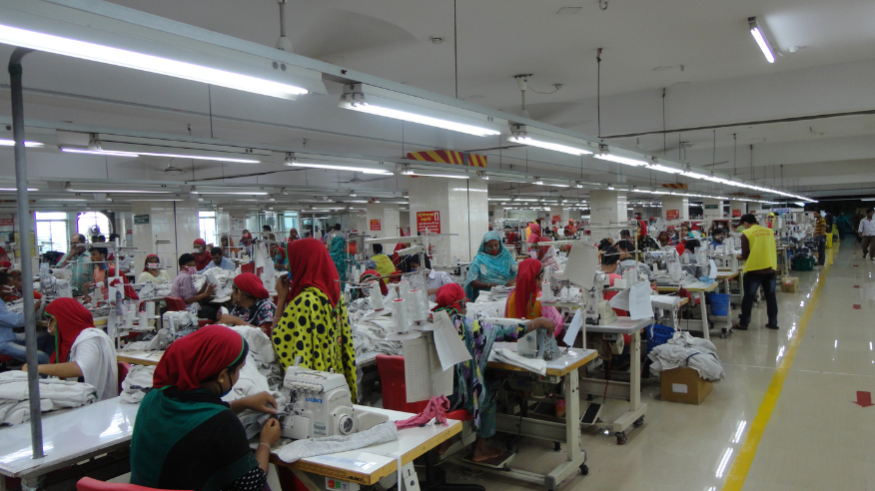
Bangladesh's garment industry is facing widespread labour unrest. Nearly 1 million workers left their workplaces during protests to demand higher wages. The demonstrations have led to factory shutdowns, road blockades and clashes with police in Dhaka, Gazipur and Ashulia.
On November 1, the Bangladesh Garment Manufacturers and Exporters Association (BGMEA) reported disruptions at 529 garment factories, involving 987,190 workers. The key demand of the protesters is to demand a minimum monthly wage of 30,000 taka, which is more than double the existing minimum of 12,500 taka.
Police used tear gas and water cannons to disperse protestors while they set fire to a police vehicle and vandalised several factories and public facilities. Between November 02-03, renewed clashes had forced several factories to suspend production and many factories in the Ashulia industrial area declared holidays as demonstrations continued.
The Bangladesh government has formed a six-member wage board to review workers' demands. Prime Minister Tarique Rahman has also directed officials to ensure factory operations and protect lives and property amid the unrest.
Bangladesh's ready-made garment (RMG) sector employs around four million workers. It generates more than 80% of the country's export earnings and contributes around 10% of Bangladesh's GDP and makes the country the world's second-largest garment exporter after China. For the status-quo to continue, it depends on India for raw material and other inputs. Its factories supply major international brands, including H&M, Zara, Walmart and Primark. Any prolonged disruption will thus carry consequences for employment, foreign exchange earnings and Bangladesh's export competitiveness.
Bangladesh's textile industry depends heavily on imported raw materials, particularly cotton yarn. India is one of its most important suppliers. According to the US Department of Agriculture's Foreign Agricultural Service, India accounted for around 85% of Bangladesh's cotton yarn imports in 2024. It imported approximately 1.13 million tonnes of yarn worth US$3.27 billion during the period covered by the report. Indian supplies remain competitive because of lower prices, shorter transportation routes and the ability to deliver large consignments on time.
As per the Ministry of Commerce and Industry, India exported cotton yarn worth US$1.7 billion to Bangladesh in FY 2024-25. Bangladesh accounted for 49.22% of India's total cotton yarn exports in 2024-25. It is therefore a major export market for Indian textile manufacturers. Beyond cotton yarn, Bangladesh also depends on India for around 15% imports of raw cotton and finished fabrics in order to support its garment production.
On December 5, Ruhul Kabir Rizvi, Senior Joint Secretary General of the Bangladesh Nationalist Party (BNP), publicly burned an Indian saree belonging to his wife. The incident took place outside the National Press Club in Dhaka during a campaign titled 'Buy Local Products, Be Proud and Prosperous'. Rizvi called for a boycott of Indian products and urged Bangladeshis to purchase locally manufactured goods.
However, the broader commercial relationship between the two countries has continued despite the political tensions. Bangladesh imported US$10.96 billion worth of goods from India in financial year 2025-26, compared with US$9.62 billion in the previous year. Its exports to India stood at approximately US$1.75 billion. The continued movement of Indian textile inputs into Bangladesh highlights the economic realities behind calls for a boycott.
Bangladesh's textile industry is already facing multiple challenges — Labour unrest, energy shortages, factory closures and rising production costs are putting pressure on its export competitiveness. According to Bangladesh's industry data reported in July 2026, 256 garment factories had closed over three years, while more than 19,000 workers had lost their jobs in the preceding six months. The current wage protests have added to these difficulties, raising concerns over production schedules and international orders.
The anti-India rhetoric adopted by Bangladesh's political discourse has often been used to mobilise domestic sentiment amid strained bilateral relations with India. However, such campaigns cannot replace the economic relationship that supports Bangladesh's manufacturing sector. Its continued dependence on Indian cotton yarn, raw cotton and other textile inputs highlights the widening gap between political messaging and industrial realities.
A boycott of Indian products will serve political interests but will not help Bangladesh’s economy which is heading roads to doldrums owing to mounting turmoil, marked by raw material shortages, persistent power and gas deficits, labour unrest and widespread factory disruptions.
Savio Rodrigues
Savio Rodrigues is a Research Analyst at Escape Velocity MediaWorks Pvt Ltd and writes for Chakra News on Defence, Geopolitics, National Security. He holds a Master’s degree in International Relations from the University of Mumbai.



Comments