







Pakistan’s Identity Crisis continues to shape its Politics and Economy: Prasenjit Basu
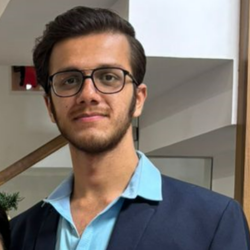
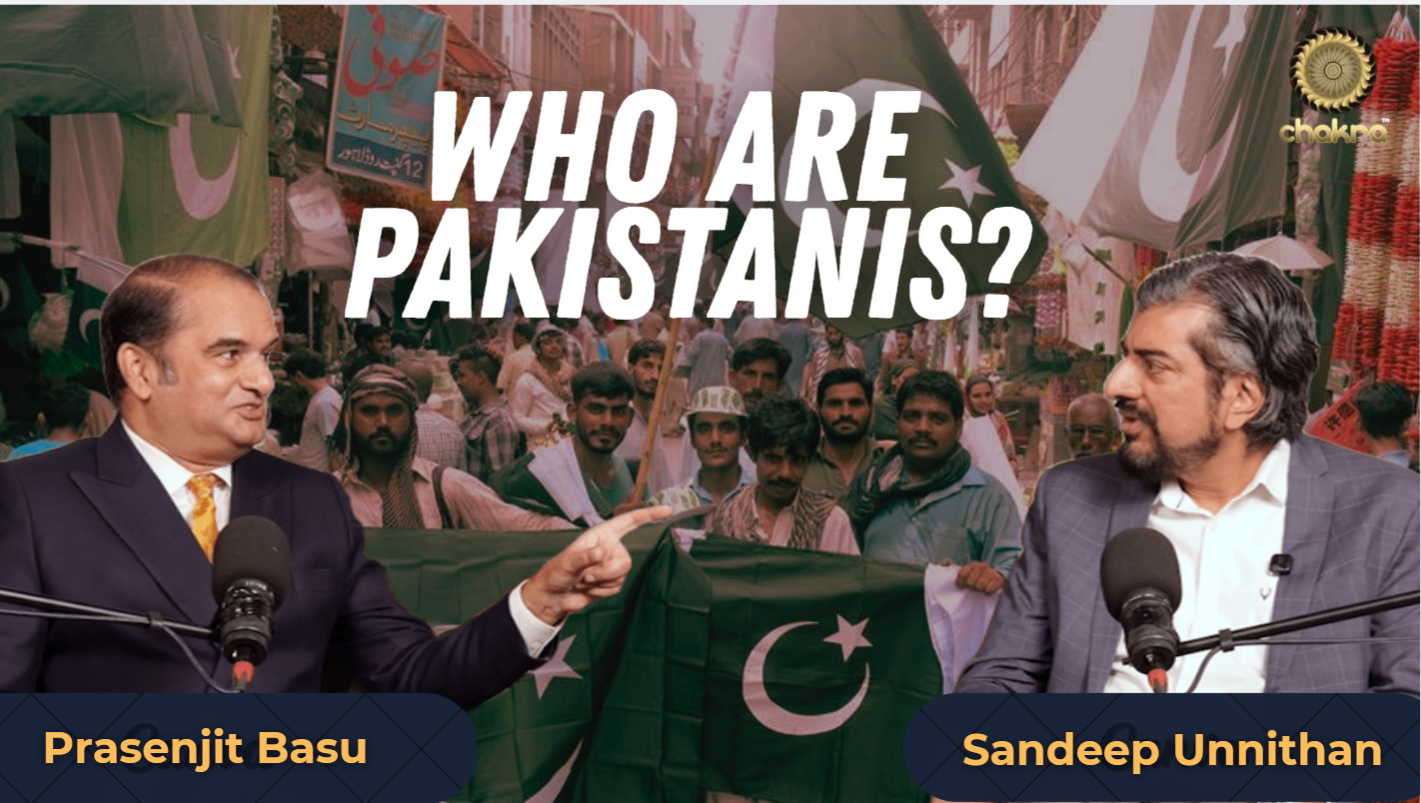
Pakistan continues to struggle with an identity crisis rooted in its attempt to separate itself from its Indian civilizational past, economist and historian Prasenjit K. Basu said speaking at The Sandeep Unnithan Show at Chakra News. Prasenjit Basu is former Chief Economist of India and Southeast Asia at Credit Suisse First Boston and Chief Asia Economist at Daiwa Securities.
Basu, author of the book India Reborn, said Pakistan's identity has remained contested since its creation in 1947. He said the country has repeatedly tried to define itself through Arab, Persian, Turkish and Islamic identities, while distancing itself from its Indic roots. “Their Indic, Indian, Hindu past is something that they want to get away from,” Basu said.
He pointed to language as one of the clearest examples of this identity crisis. Urdu is Pakistan's national language, but most Pakistanis speak Punjabi, Sindhi, Balochi, Pashto or other regional languages at home. Basu said the imposition of Urdu also became one of the factors behind the political break between East and West Pakistan. The Bengali language movement eventually became an important part of the developments that led to the creation of Bangladesh in 1971.
Basu said the same problem continues in Pakistan's four major provinces. Sindh developed a separatist political current under G.M. Syed, while Baloch and Pashtun political movements have also challenged the idea of a single Pakistani identity. He said the situation became visible soon after independence, with several regional political forces gaining support before Pakistan's first general election was eventually held only in 1970.
The 1970 election exposed the problem. Sheikh Mujibur Rahman's Awami League won a majority of seats across Pakistan, giving him a constitutional claim to become prime minister. But the military establishment and Zulfikar Ali Bhutto opposed the transfer of power. Basu said this crisis ultimately led to the breakup of Pakistan and the creation of Bangladesh.
Basu also linked Pakistan's identity debate to the treatment of minorities. He pointed to the exclusion of Ahmadiyya Muslims and the decline of Hindu and Sikh populations in areas that became Pakistan. The Ahmadiyyas are a Muslim minority community that follows the teachings of Mirza Ghulam Ahmad, but Pakistan legally classifies them as ‘Non-Muslims’. He argued that the attempt to define Pakistan as a land of religious purity has narrowed the country's national identity. “If you begin to become so intolerant that you don't even accept your own as Islamic or Muslim enough, then you're going to be in trouble,” he said.
Speaking on Pakistan’s economic woes, he said this identity crisis also affected Pakistan's economic development. Pakistan has gone through around 25 IMF programmes till date and remains heavily dependent on external financial support. Basu said Pakistan initially performed better than India in agriculture, but India began to pull away from around 1980, with the gap becoming much larger post 1991.
Basu also highlighted the growing role of the Pakistani military in the economy. He said military-linked businesses and institutions now control a large part of Pakistan's economic activity. This, he argued, has reinforced the description of Pakistan as “an army with a country rather than a country with an army.”
Despite Pakistan's internal problems, Basu does not see an imminent collapse. He said the United States has historically viewed Pakistan as strategically useful, while China now has major interests in maintaining Pakistan's territorial integrity, particularly because of Gwadar port and its wider strategic value for them.
For Basu, Pakistan's central problem therefore remains unresolved. Its political, linguistic and regional divisions continue to co-exist with an effort to construct a single Islamic national identity. That tension, he argued, has shaped Pakistan's politics since 1947 and continues to influence its economic and strategic choices today.
Watch the Full Podcast: https://youtu.be/4cmyGffnxLI?si=RqkBlU63QvX7HNLI
Savio Rodrigues
Savio Rodrigues is a Research Analyst at Escape Velocity MediaWorks Pvt Ltd and writes for Chakra News on Defence, Geopolitics, National Security. He holds a Master’s degree in International Relations from the University of Mumbai.


Comments