












Why Iran’s Gulf Islands Matter

On November 02, the United States carried out limited “defensive” strikes on Iran’s Qeshm Island, according to US officials. The strikes targeted Iranian positions after Iranian forces used surface to air missiles against US assets, officials said. Iranian state media also reported explosions on the island.
Iran has more than 30 such islands in the Persian Gulf, several of them clustered around the Strait of Hormuz. They include the likes of Qeshm, Larak, Hormuz, Hengam, Abu Musa, the Greater and Lesser Tunbs, Kharg, Lavan and Sirri.
These islands support Iran’s military presence in the Gulf, forming part of a much larger Iranian network spread across the region. Some islands also host major oil export facilities. A Takshashila Institution analysis said Iranian facilities on these islands can monitor and control shipping lanes that pass close to them.
Qeshm is the largest island in the Persian Gulf. It lies close to Iran’s southern coast, the port city of Bandar Abbas and the Strait of Hormuz. Its location gives Iran a position close to one of the world’s most important shipping routes. Iran has military infrastructure on and around Qeshm. The island also has ports, industrial facilities and energy infrastructure. Its oil terminal began operations in 2020 with storage capacity of 3.2 million barrels.
Larak is particularly important because of its location near the eastern entrance of the Strait. The island is close to Bandar Abbas and sits between the Iranian mainland and Oman. Its position allows Iran to monitor ships moving through the waterway.
The US had also struck targets on Larak Island in August. US Central Command said Iranian forces there were preparing to launch rockets carrying mines into the Strait. Hormuz Island lies close to Larak and the Strait. It is smaller than Qeshm but occupies another position near the waterway. Together, Qeshm, Larak and Hormuz give Iran several points from which to observe maritime traffic around the Strait.
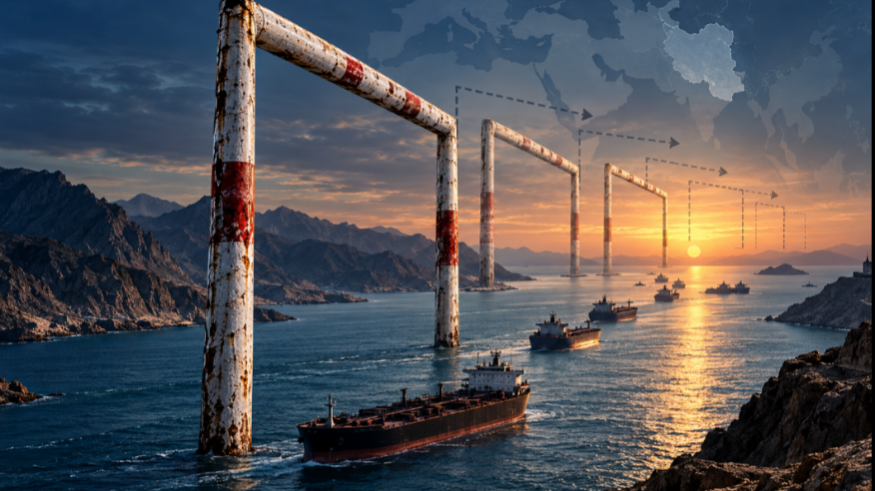
The Strait of Hormuz is critical to global energy supplies. Large volumes of oil and gas normally pass through the waterway between Iran and Oman. This makes the islands around it important in any military confrontation involving the Strait.
Further west are Abu Musa, Greater Tunb and Lesser Tunb. Iran controls all three islands. The United Arab Emirates also claims sovereignty over them. Their location near the Strait gives them military importance beyond their small size.
Iran’s strategic islands are not limited to the Strait of Hormuz. Kharg Island, farther north in the Persian Gulf, is the country’s main crude oil export hub. Around 90% of Iran’s crude exports pass through Kharg, according to the Council on Foreign Relations.
Kharg has deepwater terminals that can handle large oil tankers. The island has therefore been a critical part of Iran’s oil export system for decades. Two other islands, Lavan and Sirri, also support Iran’s oil exports. The US Energy Information Administration says the terminals on Kharg, Lavan and Sirri handle almost all of Iran’s crude oil exports.
This gives Iran’s islands two major strategic roles — The islands around Hormuz support military and maritime operations and the islands farther inside the Gulf support the country’s oil industry.
The geography also gives Iran multiple positions around the Strait. Qeshm and Larak are close to the main maritime routes. Abu Musa and the Tunb islands sit near the approaches to the Strait. Kharg, Lavan and Sirri connect the island network to Iran’s oil exports.
The US strike on Qeshm therefore comes at a time when the Strait of Hormuz remains at the centre of the conflict.
Savio Rodrigues
Savio Rodrigues is a Research Analyst at Escape Velocity MediaWorks Pvt Ltd and writes for Chakra News on Defence, Geopolitics, National Security. He holds a Master’s degree in International Relations from the University of Mumbai.



Comments