












Why the IAF is keeping its enigmatic S-UMS Sureshastra under wraps

Russia publicly unveiled its new Geran-5 jet-powered kamikaze drone during the May 9 Victory Day parade in Moscow. The Geran-5, derived from the Iranian Shahed-136, is faster and harder to intercept, and closer in capability to a cruise missile than a traditional loitering munition.
India, interestingly, already has a Geran-5 analogue — the S-UMS Sureshastra Mk1— the first units of which were delivered to the Indian Air Force in April 2026. The jet-powered kamikaze drone can fly over 500 kilometres and precisely destroy targets ranging from airfields, parked aircraft, radar systems, and command and control posts. This is a rare instance of India possessing an unmanned system that’s in line with the best in the world.
The Sureshastra Smart Unmanned Munitions System (S-UMS) was developed by an Indian defence firm, Veda Aeronautics, in close collaboration with the IAF. The first orders for 200 Sureshastras worth Rs 300 crore was placed on August 15, 2023, after successful trials in the Thar Desert.
This remains, till date, the largest orders for loitering munitions placed by the Indian military on the private sector.
The S-UMS project is a spin-off of the IAF’s Mehar Baba Swarm Drone contest launched in 2018. The contest aimed at encouraging academia, industry, start-ups and entrepreneurs to indigenously develop niche technology.
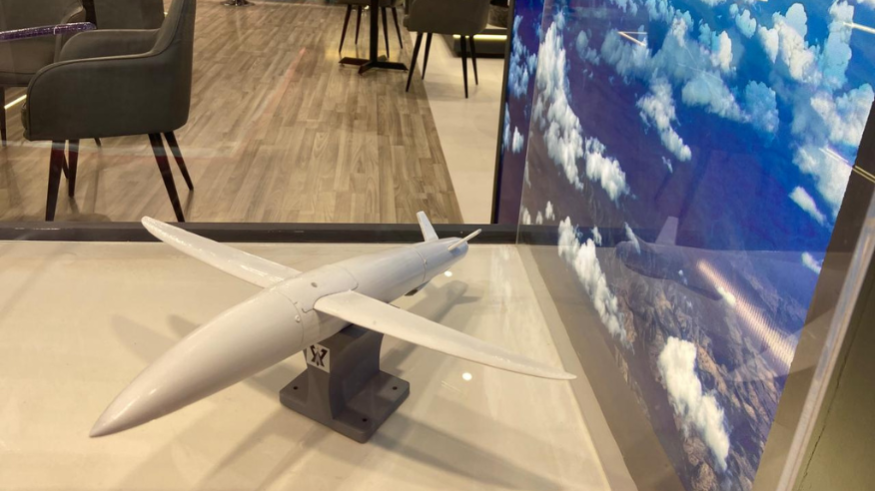
Unlike the Geran-5, the Sureshastra has never been seen in public. Its developers have not given any media interviews. No footage of its trials in the Thar desert or photographs of the weapon have been released either, indicating this is one capability the IAF wants to keep under wraps.
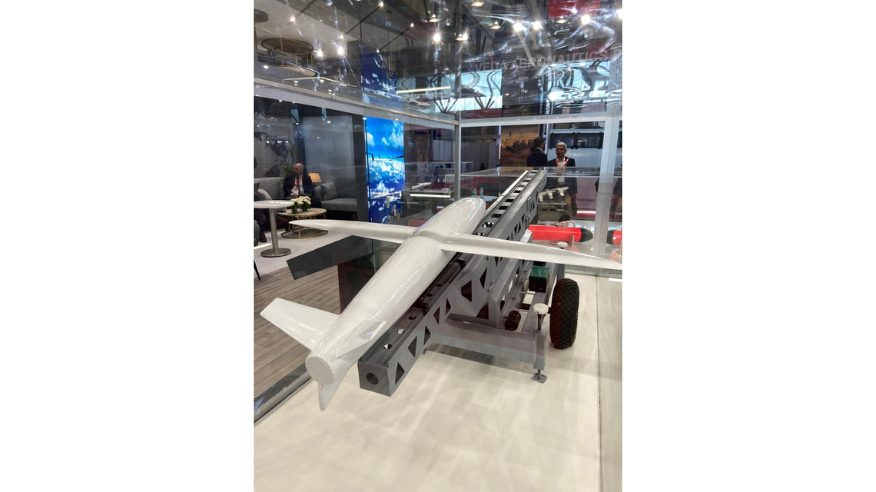
What we know of this weapon is based on models displayed at exhibitions by Veda Aeronautics or through experts who have seen the trials. The Sureshastra is rail-launched. It is relatively compact for a jet-powered system — around 3.5 metres long with a 3-metre wingspan and has a weight of roughly 90 kgs. Carrying a 30–40 kg high-explosive warhead, Sureshastra reportedly cruises at 350–400 km/h, and uses a low-observable V-tail design to reduce radar visibility. The land-launched version has a strike range exceeding 500 km.
More than 20 drones can reportedly coordinate autonomously, share targeting data, operate in GPS-denied environments, and overwhelm enemy air defences simultaneously.
Sureshastra is also modular. Beyond pure strike missions, it can reportedly carry ISR payloads, operate as a decoy target, or conduct electronic warfare-style missions. And future variants appear even more ambitious. Veda Aeronautics is reportedly working on air-launched and canister-launched versions, including concepts capable of being deployed from transport aircraft— the advanced Air-Dropped Canisterised Swarm variants which could exceed 500 km when launched from aircraft such as the Boeing C-17 Globemaster III or Lockheed Martin C-130J Super Hercules. There are variants being planned for the Indian Army’s BMP-II infantry fighting vehicles. Some reports suggest future air-launched swarm variants could reach targets nearly 1,000 km away. The Sureshastra reflects the lessons India learnt from the Russia–Ukraine War, and it's one more step towards’ India's mass precision strike' capability at scale.
Arjun Dev Singh
Arjun Dev Singh has a deep interest in defence, security, and strategic affairs. With a strong analytical lens and a passion for military and geopolitical developments, Arjun strives to bring clarity and context to complex national and international issues.




Comments