









Ukraine war a living lab, Indian Army adapting for modern conflict

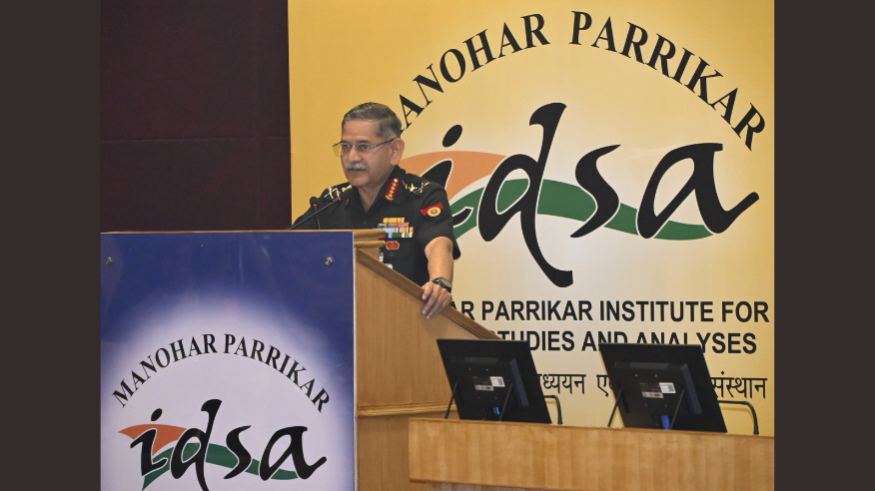
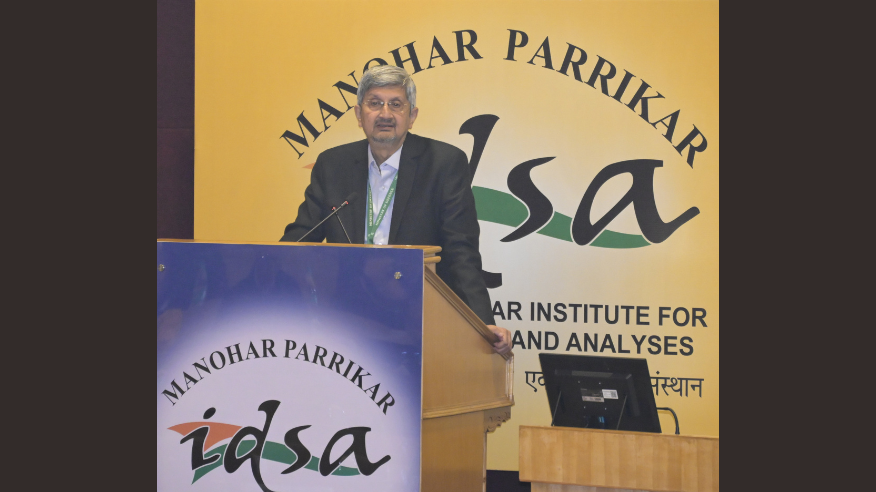
Army Chief General Upendra Dwivedi called the ongoing Russia-Ukraine war a ‘living laboratory of conflict demonstrating the decisive power of drone warfare, sophisticated jamming, and long-range precision. Speaking at the second Delhi Defence Dialogue, held at the Manohar Parrikar Institute for Defence Studies and Analyses (MP-IDSA) General Dwivedi said the Indian military is facing a formidable two-and-a-half front challenge. The Indian Army is undergoing a decade of transformation driven by the three Ds: Democratization, Diffusion, and Disruption. The core philosophy, the General stressed, is a "mélange of technology and geography." “Land will remain the currency of victory for India. Our strength will always lie in our soldiers – amplified by AI, not replaced by it.”
He painted a portrait of a world embroiled in an "era of jostling and competition," citing over 50 ongoing global conflicts. Yet, amid the technological frenzy, General Dwivedi offered a grounding principle. While technology "is reshaping the character of warfare," he affirmed, "geography and human leadership will continue to determine its outcome.”
The Army Chief unveiled a “5Ps Action Plan”—Procedures, Processes, Patents, People, and Partnerships—a roadmap designed to fast-track innovation through deep collaboration with industry and academia. The Army is actively aligning its development with national missions in space, quantum computing, and 6G to build data-driven, human-centric capabilities for multi-domain operations.
DRDO Chairman Dr. Samir V. Kamat amplified the call for a technological revolution. He saw India emerging as a "strong and confident pole" in a shifting multipolar world, emphasizing that disruptive technologies have a disproportionate impact on military might. His central mandate was clear: India must shift "from technology adoption to technology leadership." Dr. Kamat provided compelling evidence of this shift, proudly noting that over 90 per cent of defence orders in 2024 have been placed for indigenous systems, a monumental leap from India’s historical dependence on imports.
The Invisible Fulcrum of Future Warfare
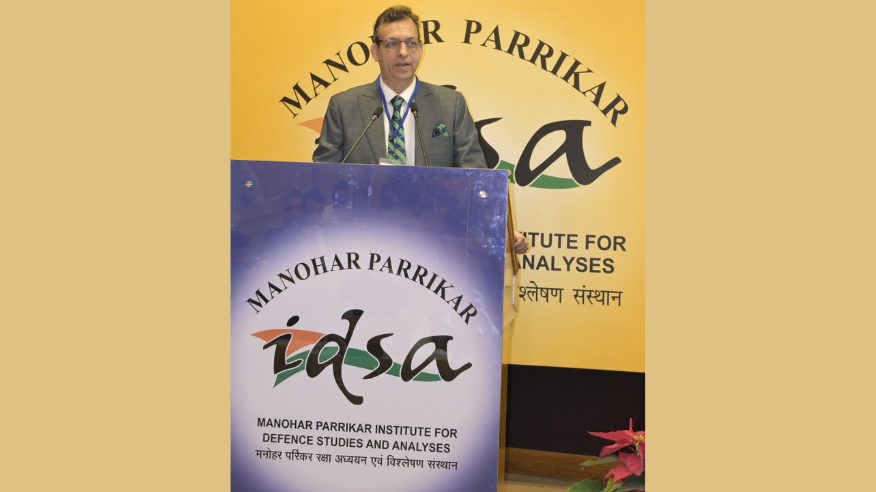
Reinforcing the shift to indigenous technology, Col. Anurag Awasthi (retd), CEO of Escape Velocity Mediaworks, drew attention to the invisible, yet critical, components of modern defence. He flagged chips as the battlefield fulcrum, where the capabilities of AI, the Internet of Military Things (IoMT), autonomous systems, missiles, and space all fuse.
He emphasized that achieving technological superiority hinges on mastering specialized electronic components. He highlighted the importance of indigenous development in RFICs (Radio-Frequency Integrated Circuits), MMICs (Monolithic Microwave Integrated Circuits), and FPGAs (Field-Programmable Gate Arrays), coupled with the rollout of 6G technology. Furthermore, he championed the critical concept of commercial-military convergence, stressing that rapid defence innovation requires leveraging the speed and scale of the civilian tech sector.
Arjun Dev Singh
Arjun Dev Singh has a deep interest in defence, security, and strategic affairs. With a strong analytical lens and a passion for military and geopolitical developments, Arjun strives to bring clarity and context to complex national and international issues.




Comments