






LeT meets ISKP: Munir’s new Lashkar for Balochistan and Afghanistan

Pakistan’s terror nursery is back in the news. A new intelligence dossier from the Government of India has revealed that Pakistan sponsored terror group Lashkar-e-Taiba (LeT) is joining hands with the Islamic State Khorasan Province (ISKP). The alliance between these two seemingly disparate groups has been midwifed by the Gen Asim Munir led-Pakistan establishment and marks a turning point in Pakistan’s long standing policy of arming islamic militants and fomenting terror in pursuit of state goals. With LeT’s organisational strength and ISKP’s ideological influence, this nexus could ignite sectarian violence within Pakistan, destabilise Afghanistan by undermining the Taliban, and revive militancy in Kashmir under ISKP’s cover — a hybrid terror front serving Pakistan’s regional ambitions.
A New Hybrid War
According to the dossier, the Pakistan establishment has facilitated a partnership between the LeT and ISKP. Founded in Afghanistan during the Afghan-Soviet war, the Lashkar operates largely in Kashmir. The Islamic State of Khorasan-Province on the other hand aims to create an Islamic State in historical Khorasan, a region comprising parts of Iran, Central Asia and Afghanistan. Combined, these groups will be used to counter the Baloch resistance in Balochistan and the anit-Pakistan elements in the Pashtun population in Khyber-Pakhtuunkhwa.
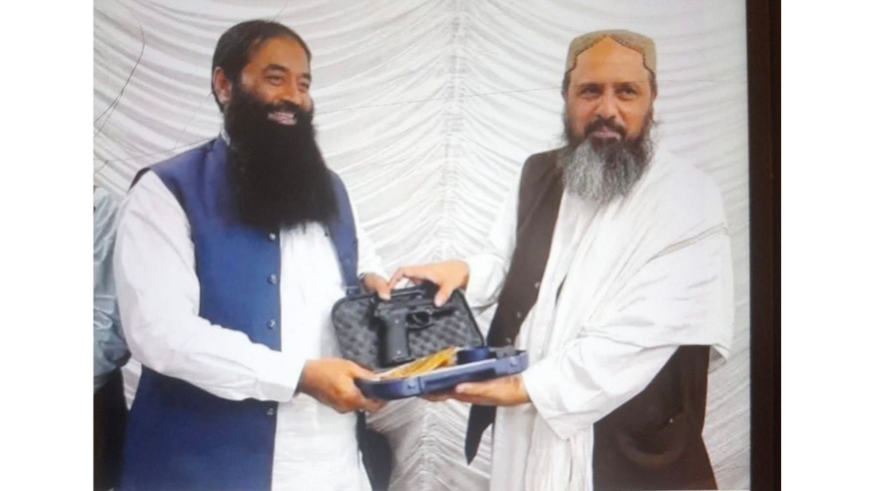
The most striking piece of evidence of this partnership is a now viral photograph which shows a beaming Mir Shafiq Mengel, ISKP’s Balochistan coordinator gifting a pistol to Rana Mohammad Ashfaq, the Nazim-e-Ala of the Lashkar-e-Taiba. Another video shows Mengel and Ashfaq training together.
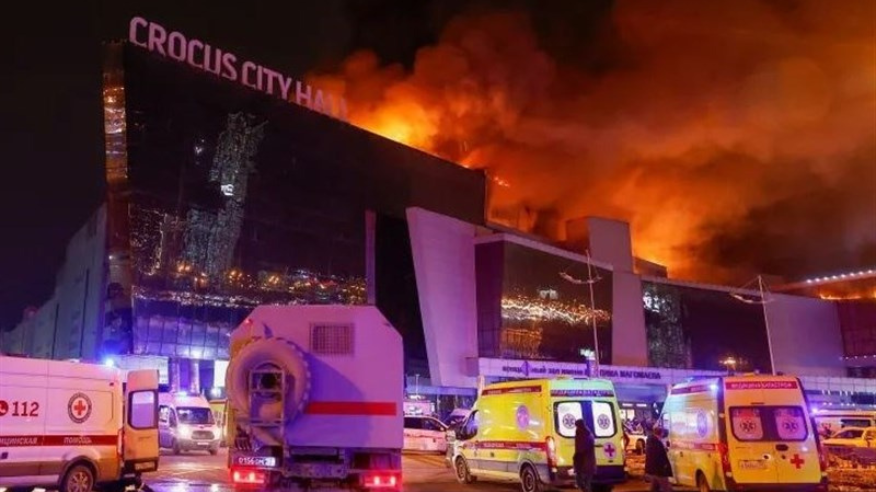
In March 2024, four Tajik ISIS–K gunmen launched an attack on a concert hall in Krasnogorsk, Russia, killing 145 and marking the group's first attack beyond Afghanistan's neighbors.
Pakistan’s ISIS Card
ISKP first arrived in the subcontinent in the wake of the rise of the Islamic State in Syria.
In line with the Islamic State’s ideology, ISKP declared Pakistan an “apostate” state and carrierd a series of deadly attacks on Pakistani soil. The following are some of the deadliest of those attacks:
November 2016: The Shah Noorani shrine bombing in Balochistan (claimed by ISIS).
February 2017: The Lal Shahbaz Qalandar shrine attack in Sehwan, Sindh — over 80 killed.
April 2019: The Quetta Hazarganji market bombing, targeting Shia Hazara civilians.
November 2018: The Orakzai market bombing in the Khyber region, killing over 30.
But by 2019 something had changed.
Open-source data shows that since 2019, ISKP attacks in Pakistan dipped drastically and Afghanistan became the new target for the terror group. Here ISKP took on both the US aided-Afghan government and the Taliban. Analysts believe that this sea-change was not due to some great military success and a consequent ISKP collapse in Pakistan. Instead, this was probably the result of a detente between the Pakistan deep state and the ISKP.
Open source data shows that while Pakistan witnessed some 10 ISKP attacks in Pakistan over the last five years. Afghanistan saw hundreds of attacks in the same period.
LeT: From Kashmir to Balochistan
The LeT is Pakistan’s most reliable anti-India asset. The group was behind the deadly 26/11 Mumbai attacks and is still active in Kashmir by way of a proxy - The Resistance Front.
Notably, while LeT propaganda calls for endless jihad and fought against the Americans in Afghanistan, the group has never spoken against the Pakistan establishment. Even in the years following 9/11 when Pakistan joined the war on terror, LeT was steadfast in its support for the Pakistan Army. Today, the group remains Pakistan’s most well organized, well funded terror asset and functions as paramilitary for the Pakistan Army in Kashmir.
According to reports, after an ISKP base in Balochistan’s Mastung region was attacked and 30 ISKP militants were killed. Pakistan brought LeT cadres to Balochistan where Islamic militant organisations stand as a counter to Baloch nationalism. In June 2025, LeT’s Rana Mohammad Ashfaq and deputy Saifullah Kasuri convened a jigra (council) in Balochistan and declared a jihad not against infidels but against anti-Pakistan forces.
Pakistan’s Propaganda: The Afghanistan Bogey
For decades, GHQ Rawalpindi has relied on terror as a state policy to exert pressure on India under the unclear umbrella. A cursory glance at the bloody history of terrorism shows the handiwork of the Inter Services Intelligence - from ethnic cleansing of Hindus in Kashmir, the attack on the Indian Parliament in 2001, the Bombings in Delhi and Mumbai in the mid-2000s, the 26/11 attacks in Mumbai and the attacks in Pulwama and Pahalgam.
The Pakistan Establishment was sure that their nukes would deter India and Pakistan could continue its ruthless campaign of low intensity violence in the subcontinent. This finally changed with Balakot and Op Sindoor when India declared that “Talks and Terror cannot go together.”
In an Afghanistan tormented by decades of war and instability, Pakistan used terrorists as leverage against Kandahar. In the 1970s, Pakistan created a whole cohort of radicals who fought against the governments in Kabul, in post-soviet Afghanista Pakistan backed the Taliban and now that the Taliban are in power, Islamabad champions the ISKP. The Pakistani message to the Afghans has always been clear - play ball or prepare for destabilisation and civil war.
When Kabul fell in 2021, the Pakistan Establishment was jubilant. Then Pakistan Prime Minister declared that Afghanistan had “broken the chains of slavery” and the then ISI Chief, Lt Gen Faiz Hameed was photographed drinking tea in Kabul’s Serena Hotel at a time when the US led coalition were fleeing Afghanistan and the Taliban were marching into Kabul.
For strategists in Islamabad, Pakistan had finally found a friendly regime in Afghanistan and with it the strategic depth for a future war against India. They also hoped that a pliant and grateful Taliban would recognise the Durand Line - something that no Afghan government has ever done.
The hopes came to nothing and a jilted Pakistan soon proclaimed the Taliban-led Afghanistan a rogue nation. Pakistan routinely accused Kabul of aiding ISKP fighters and allowing cross-border attacks inside Pakistan, but the facts tell a different story.
Most ISKP attacks in Pakistan have historically originated from Pakistani soil itself — in Sindh, Balochistan, and Khyber Pakhtunkhwa — rather than from across the Durand Line. The 2023 Bajaur JUI-F rally bombing, one of the deadliest in Pakistan’s history, was planned and executed locally, according to Pakistani media outlet Dawn. Furthermore where ISKP attacks in Pakistan have gone down to single digits, attacks in Afghanistan number in the hundreds.
Pakistan’s accusations against Afghanistan serve several purposes:
It deflects blame from Pakistan’s own internal radicalisation and ISI manipulation of jihadist groups.
It paints the Taliban regime as culprits and isolates Afghanistan as the fount of terror attacks in Central Asia and Russia.
Pakistan is thus able to appeal to the West for aid and military supplies and presents itself as an ally in the war against the Islamic State
Implications of the new nexus
The new alliance will bring together ISKP’s ideological reach and transnational networks, and
LeT’s cadre and organisation under the ISI command structure.
In Balochistan and Khyber Pakhtunkhwa, the alliance will launch a new wave of sectarian violence and counter anti-Pakistan elements.
In Afghanistan, the alliance will unleash a new insurgency that will destabilise Afghanistan and the Taliban.
In India, a new low intensity conflict in Kashmir — one that has the plausible deniability lent by ISKP’s black flag and yet directed and controlled by handlers in Pakistan.
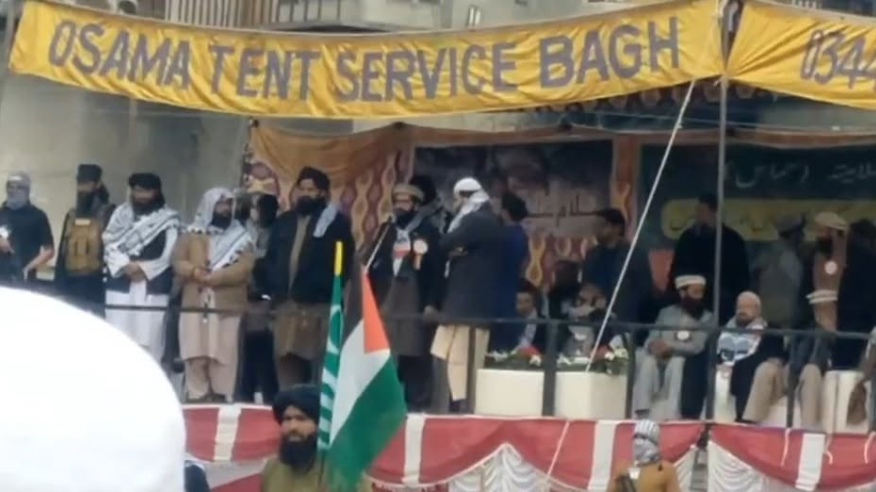
Hamas members at a terror-linked rally in Pakistan-occupied Kashmir (PoK) along with leaders from LeT and Jaish-e-Mohammed (JeM)
Deepak Bhadana
Over the past decade, Deepak Bhadana has built expertise in multimedia storytelling, with a focus on military conflicts, insurgencies, international relations, the defence industry, and occasionally, wildlife and environmental issues.


Comments