









‘Software Is Now the Source of War Winning Lethality’: Raj Shukla Calls for India to Rethink Defence Procurement

Addressing the inaugural edition of the ‘CHAKRAVIEW’ symposium: ‘The Algorithmic Battlefield’ on August 6 at United Services Institution, New Delhi, Lt Gen Raj Shukla, former Army Commander and Member, Union Public Service Commission, said artificial intelligence, military autonomy and algorithmic warfare are no longer just technologies of the future, but are already reshaping combat operations and India must radically accelerate its adaptation to remain prepared for future conflicts.
Speaking on “Adapting Indian Combat to the Technological Trinity”, Gen Shukla said the emerging combination of AI, military autonomy and algorithmic warfare is fundamentally altering intelligence, surveillance, targeting, fire, manoeuvre and command and control. “AI has already been sent into combat. It is happening across the theatres of conflict. It is nothing about the future,” Shukla said.
According to him, the transformation represents a new “Manhattan moment” for military technology, requiring the kind of collaboration between government, military, industry, academia and research institutions that characterised the US effort to develop the atomic bomb. He said that this technological transformation would not happen overnight. The US precision warfare revolution took around 15 years to mature, while technologies such as night vision took several decades to develop. India, therefore, needs sustained investment and institutional changes rather than expecting immediate results.
Gen Shukla argued that one of the most important changes in modern warfare is the shift in the source of military advantage from hardware to software. “The source of war winning lethality today, which was once hardware, is now software,” he said. He pointed to AI enabled military systems being developed and employed in the Russia Ukraine conflict, particularly platforms such as Ukraine's Delta system and the US Project Maven, as examples of how software is increasingly connecting sensors, data and weapons.
According to him, these systems are not simply about drones. Their effectiveness comes from years of collecting, labelling and refining data, training algorithms and then integrating them with networks connecting drones, ships, submarines and other military assets. He said this is turning defence organisations increasingly into software entities, challenging traditional procurement models built around physical platforms. “Software cannot be procured. It has to be built in the formations,” Shukla said, arguing that conventional procurement cycles cannot keep pace with battlefield software that may need to be modified within hours.
Gen Shukla said the fundamental challenge for military organisations is now the speed of adaptation.
He called for India's defence procurement framework to be substantially reworked to accommodate rapidly changing AI, drone and software technologies. The transformation, he said, is already changing the nature of combat. Across land, air, sea, undersea, space, cyber and the electromagnetic spectrum, sensors and weapons are increasingly being connected through data links and algorithms. The result is a battlefield where tactical developments can produce strategic effects.
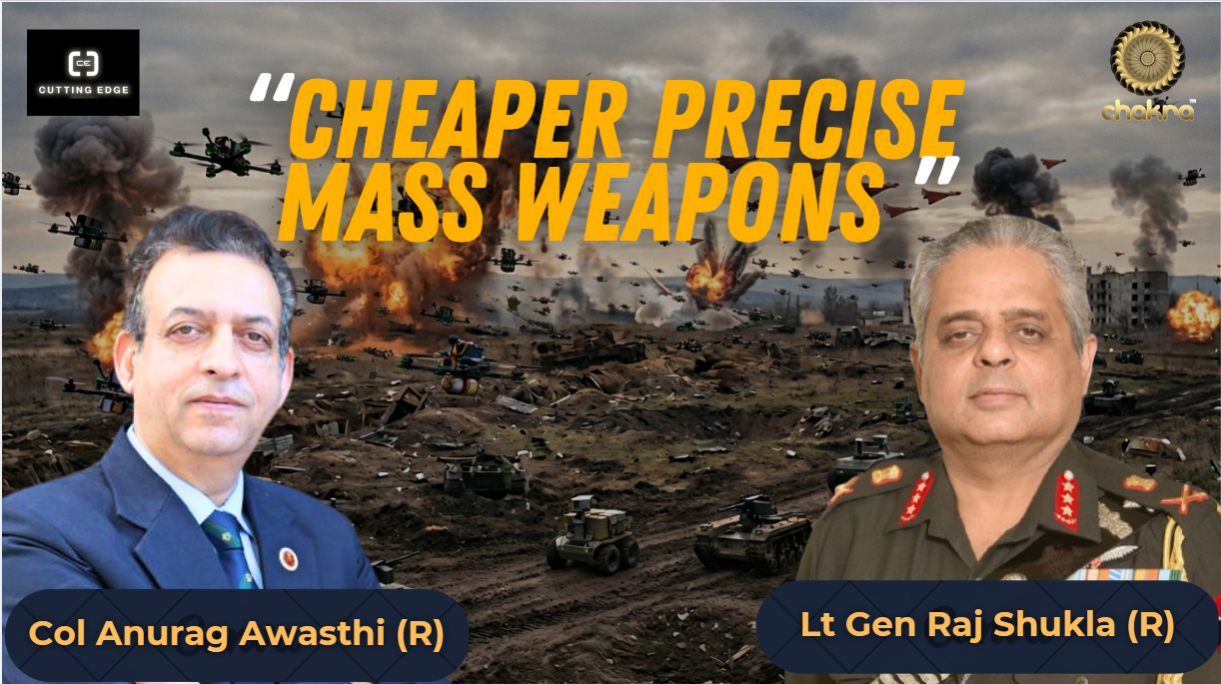
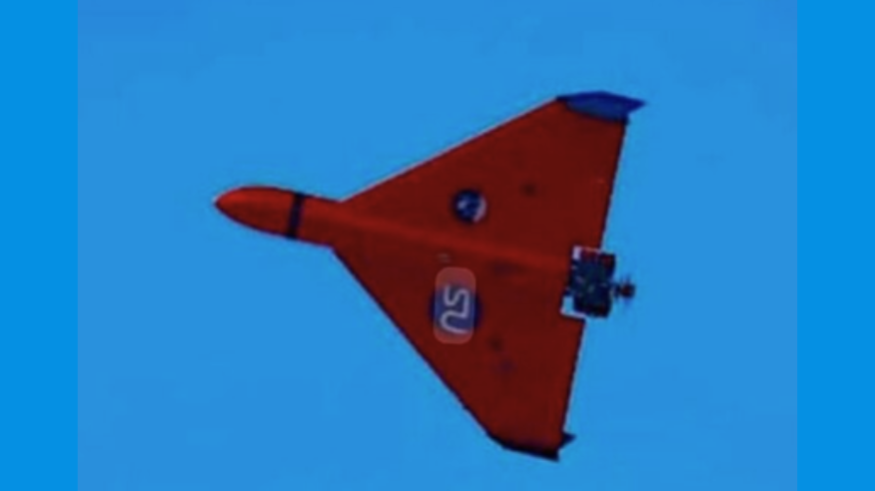
Gen Shukla pointed to Ukraine's extensive use of drones and autonomous systems as an example, arguing that relatively inexpensive unmanned systems are increasingly capable of affecting artillery, armour, logistics, energy infrastructure and strategic assets. “Dronery is king and queen,” he said, while stressing that its effectiveness depends heavily on the software, data and networks supporting it. India needs an indigenous military AI ecosystem Shukla said India must build its own versions of the AI and software systems that are increasingly shaping warfare elsewhere.
He also stressed the importance of talent, arguing that India must aggressively identify and absorb its brightest scientists, engineers and students into the national security ecosystem. “If USA is doing it, if China is doing it, Ukraine is doing it, we will have to do it,” he said, pointing to India's performance in international science and physics competitions as an untapped source of technological talent.
Shukla also called for a major expansion of India's space based military capabilities, particularly in low Earth orbit. He argued that a larger constellation of satellites would enable persistent surveillance and strengthen India's intelligence, surveillance and reconnaissance capabilities. “Unless you proliferate the LEO, you are not getting persistent surveillance,” he said, stressing that space based ISR would increasingly underpin precision targeting and military decision making.
The rapid development of autonomous drones, Shukla argued, is also changing the traditional understanding of air power. Drones and missiles can now provide precision effects across distances ranging from tactical ranges to thousands of kilometres, creating a new layer of air power that complements rather than necessarily replaces manned platforms. He warned that the compression of decision and targeting cycles could eventually make human intervention during certain tactical engagements a disadvantage. “Humans in the loop or on the loop will soon be a tactical liability,” he said, while acknowledging that the ethical dimension of autonomous warfare remains a separate and important question.
Shukla proposed five broad priorities for India: developing new concepts and doctrines for autonomous warfare, investing in large scale military AI and software capabilities, substantially expanding space-based surveillance, accelerating institutional adaptation, and establishing measurable benchmarks for military transformation. He suggested that future military exercises should increasingly demonstrate integrated capabilities involving drones, ISR, missiles, air power and autonomous systems rather than focusing exclusively on conventional firepower. He also argued that India's defence budgets should reflect the changing technological character of warfare, with greater attention to data readiness, cloud infrastructure, encryption, computing and the cost of training AI systems alongside conventional platforms. “If Budget 2027 is also about tanks, ships... but if it is not about data readiness, if it is not about cloud infra, if it is not about encryptors, if it is not about costs of training AI algorithms, we are preparing for the last war and not the next war,” Shukla said.
He concluded that India needs a robust C4ISR ecosystem, modern autonomous structures, new approaches to air defence and a revamped doctrinal framework to take its deterrence and war fighting capabilities to the next level. The emerging technological transformation, he argued, is not merely about acquiring new weapons but about fundamentally changing how military organisations sense, decide, adapt and fight.
Chakra Desk
Chakra News is a specialised digital media platform committed to in-depth coverage of India’s defence, national security, geopolitics, and critical technologies.




Comments