











NEVER HEARD BEFORE | “They Got It Completely Wrong”: IAF Kargil Veteran Flags Netflix’s ‘Operation Safed Sagar’

The role of the Indian Air Force in the 1999 Kargil War is back in focus, following the release of Netflix’s Series ‘Operation Safed Sagar’ on 7th August 2026. A key officer involved in the operation says the series got an important part of the story wrong and has called for a clarification from the makers.
Air Marshal Narmdeshwar Tiwari, Vice Chief of the Air Staff until December 2025 was closely involved in the integration and operational deployment of the Mirage 2000’s Israeli Litening targeting pod during Operation Safed Sagar in May 1999.
The series tells the story of the Number 17 “Golden Arrows” squadron flying MiG-21s which was tasked with ISR. But crucially it misses out on the role played by the Mirage 2000s of the No 7 “Battle Axes” Squadron.
“I’m sorry that they really missed out the facts on the Mirage 2000 and Litening integration. They got it completely wrong,” he said. According to Air Marshal Tiwari, it’s work had begun years before the Kargil War and was being undertaken by the Air Force’s Aircraft and Systems Testing Establishment (ASTE), with Air Marshal Tiwari himself serving as the lead test pilot.
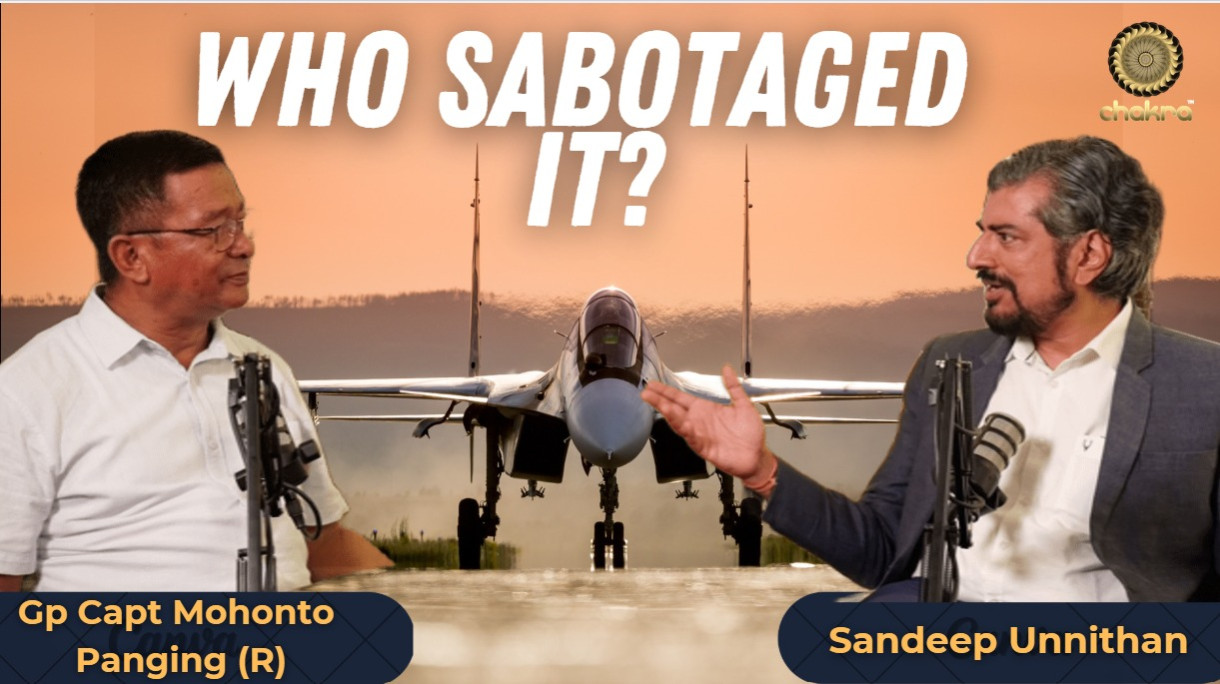
Speaking on The Sandeep Unnithan Show, Air Marshal Tiwari said that the series inaccurately portrayed the timeline and personnel involved in integrating the Mirage 2000 and Litening pod during the Kargil conflict.
The Litening pod programme had begun around 1996, with the objective of giving both the Mirage 2000 and Jaguar a modern day and night targeting capability. By March 1999, approximately 95% of the Mirage 2000 integration had already been completed. However, when the Kargil conflict broke out, only two of the six available pods had the latest software configuration. The crisis exposed another problem. While the pod was largely ready, there were insufficient numbers of compatible bomb fuses. Air Marshal Tiwari and thus, his team had to simultaneously standardise the pod software and find an alternative fuse that could be used with the laser guided weapons.
The team located suitable fuses at Kanpur and worked around the clock to integrate them. Between May 30 and June 3, the team completed the modifications and trials. On June 4, Air Marshal Tiwari flew from Gwalior to Jodhpur, and carried out a live weapon test at Pokhran and returned to Gwalior, completing the entire process within hours. By June 5, he had moved to Udhampur, where the Mirage Squadron No. 1 (Tigerrand Squadron No. 7 (Battle Axes) was already deployed. Training and familiarisation with the Litening pod and the new weapons then began alongside other ongoing combat operations.
One of its most significant applications came during the attack on one the Munto Dhalo logistics camp. Initial intelligence had provided inaccurate coordinates, leading to repeated bombing missions without confirmation of the target's destruction. The Litening pod subsequently helped locate the actual camp, which had expanded from around 10-15 huts to nearly 100 structures. The discovery allowed 4 Mirage 2000s to attack the camp with conventional bombs, while the Litening pod was used to confirm and record the destruction. Air Marshal Tiwari described the operation as, in his view, the most important air mission of the Kargil conflict, arguing that the destruction of the logistics hub significantly weakened Pakistani forces in the Batalik sector.
Air Marshal Tiwari, thus seeks clarification from the Netflix series makers. He said the series captured several aspects of Air Force life well, but its portrayal of the Mirage 2000 and Litening integration requires correction. “The squadron was not involved at all in this integration. This was all happening in Bangalore. And even in Gwalior, it was the ASTE team which was doing it,” he said, stressing that this contribution “must be acknowledged.”
He also rejected the impression created by the series that the Mirage 2000 and Litening combination arrived very late in the conflict. According to his account, once the decision was made to operationalise the system, the entire process from final integration to deployment at Udhampur took roughly a week.
“I thought there should be a clarification because I think the acknowledgement, which is due in the right place, it should be put out even in this series,” Air Marshal Tiwari said. “They should get the facts right. I think that’s important.”
The account also highlights how rapidly the IAF adapted technology under wartime pressure. Air Marshal Tiwari recalled flying multiple sorties a day with very little sleep, saying that the motivation across the team came from the understanding that years of training were ultimately meant for precisely such a moment. He said the experience also shaped the evolution of Indian air power. From Safed Sagar to Balakot and subsequently, the recent ‘Operation Sindoor’, lessons from Kargil helped strengthen targeting, intelligence and precision strike capabilities. “The kind of work that goes on behind, that is what really determines whether the strike will be successful or not,” Air Marshal Tiwari said, pointing to the years of preparation behind modern precision air strikes.
Savio Rodrigues
Savio Rodrigues is a Research Analyst at Escape Velocity MediaWorks Pvt Ltd and writes for Chakra News on Defence, Geopolitics, National Security. He holds a Master’s degree in International Relations from the University of Mumbai.



Comments