









Investigation Underway for Possible ISI Links in Nepal Violence

A preliminary investigation into the recent communal violence spread in Nepal is examining a possible connection to Pakistan’s Inter-Services Intelligence (ISI), which is raising fresh concerns in India over the possible exploitation of Nepal’s open border by foreign intelligence networks.
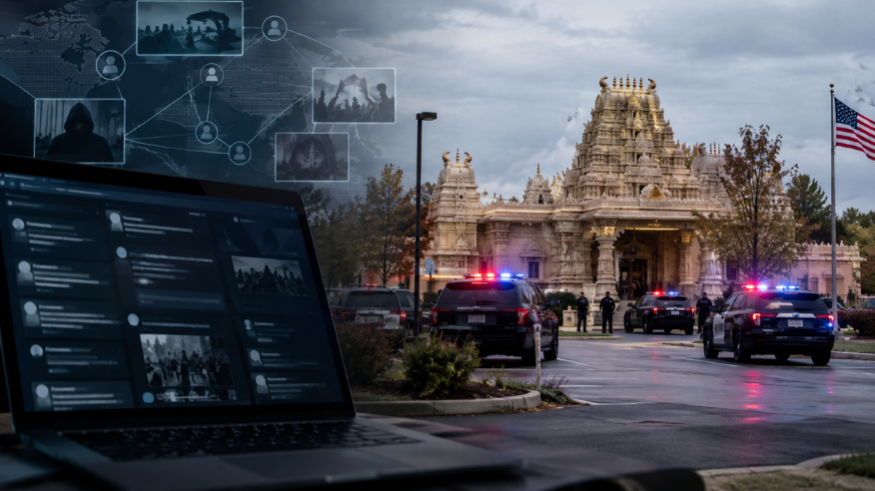
The violence began on July 26 following a dispute during a religious procession in Kaptanganj in Nepal’s Sunsari district over loudspeakers and religious flags. The confrontation then escalated into stone pelting and clashes, prompting the police to open fire. 1 person was killed and several others were injured. The unrest subsequently spread across parts of Nepal’s southern Terai, including Siraha, Saptari and Dhanusha. Investigators have also pointed out that social media played a key role, where rumours and misleading images allegedly contributed to the escalation of tensions.
However, Nepal’s National Investigation Department is examining whether the violence was purely spontaneous or whether external actors attempted to exploit a pre-existing local dispute. According to reports, a preliminary report submitted to Nepal’s Home Ministry has flagged a possible connection with Pakistan’s ISI. Investigators are reportedly examining the activities of Mohammad Ilyas Ghuman, a Pakistani origin cleric based in Turkey, who allegedly stayed at a mosque in Dewanganj shortly before the violence. He was reportedly accompanied by Mufti Abu Bakr Qasmi, the Imam of Kathmandu’s Jama Masjid. The investigation is also looking into their meetings with local clerics and movements through sensitive border districts. Authorities are also reportedly examining the presence of 9 Bangladeshi clerics who entered Nepal shortly before the unrest, along with alleged funding channels involving Pakistan, Turkey, Qatar and other countries. However, the allegations remain under investigation and have not been conclusively established.
The developments are being closely watched in India because of the long and largely open India Nepal border, which has previously been exploited by Pakistan-linked militant and extremist networks. The vulnerability has historical precedents. In the 1990s, Khalistani extremist Ranjit Singh alias Neeta reportedly built a Khalistan Zindabad Force network in Nepal. Lakhbir Singh was later arrested in Kathmandu with explosives, while Indian Mujahideen founder Yasin Bhatkal and Lashkar e Taiba linked operative Abdul Karim Tunda were also arrested in the vicinity of the Nepal border. The 1999 hijacking of Indian Airlines flight IC 814 further highlighted the security challenges associated with the Nepal route.
The latest investigation has thus raised concerns, that the threat could be evolving from direct creation of violence to the exploitation of existing local grievances. Foreign intelligence networks could potentially exploit communal tensions, amplify them through disinformation and use local networks to turn an isolated confrontation into broader instability.
If the suspected external links are eventually substantiated, the Nepal violence could represent more than a local communal clash. It could point to a broader attempt to exploit Nepal’s internal fault lines and its open border with India for strategic and security purposes by our adversaries.
Watch the YouTube Short here: https://youtube.com/shorts/iw_TxVVIGGU
Chakra Desk
Chakra News is a specialised digital media platform committed to in-depth coverage of India’s defence, national security, geopolitics, and critical technologies.




Comments