











India’s stalled Rs 1000-crore naval dream

A ghost building with computers, lecture halls and conference halls on a 40-acre plot is the only evidence of India’s unrealised dream to set up a world-class shipbuilding certification institute.
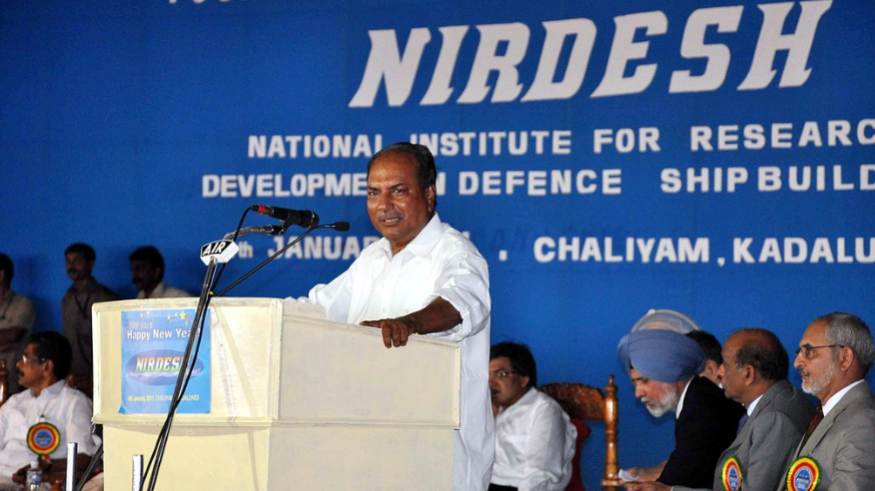
The National Institute for Research and Development in Defence Shipbuilding (NIRDESH) is yet another government project launched with fanfare but stuck in red tape and ultimately shelved. NIRDESH was launched by Defence Minister AK Antony and taken forward by his successor Manohar Parrikar. Parrikar’s exit from the defence ministry froze an ambitious project to make India self-sufficient in shipbuilding certification.
“The Indian Navy builds blue water platforms like the aircraft carrier INS Vikrant, but has to take its designs abroad for testing, verification and certification,” said Captain Ramesh Babu (retired), former Executive Director of Mazagon Docks Ltd (MDL) on The Sandeep Unnithan show on Chakra News.
In 2011, India set up NIRDESH This was meant to be India’s first centre for research and development in defence shipbuilding. The centre was established at Chaliyam in Kozhikode district. The location was hugely symbolic— it is located near Beypore, an erstwhile centre of Indian shipbuilding.
NIRDESH was meant to be an oversight body which would oversee the strategic direction of Indian shipbuilding. It would prioritise research in naval architecture and coordinate with the shipyards, research agencies and defence labs, and promote ancillary industries. Ultimately, it would become the nodal centre for India’s defence shipbuilding industry.
Captain Babu was appointed project director of Nirdesh in 2011. That year, the MDL invested over Rs 2 crores to refurbish a pre-existing building on the location.
The NIRDESH concept was mooted by Gyanesh Kumar, then Joint Secretary, Shipyards in the MoD. He prepared the concept in consultation with Indian PSU shipyards. The land was offered by the government of Kerala free of cost. The government of India gave 40 acres of land free of cost.
The project enthused shipbuilding agencies from across the globe. The Krylov Institute in Russia, the American Bureau of Shipping, and the Italian shipbuilding industry wanted to know NIRDESH’s charter and ways to collaborate. The project enthused academia within the country— the IIT Madras and IIT Guwahati, NIITs, engineering and management institutions had agreed to participate.
The institution was jointly funded by four defence shipyards, MDL Ltd, Garden Reach Shipyard, the Goa Shipyard, and the Hindustan Shipyard. Cochin Shipyard was an invited member of the executive committee. The DRDO, the Indian Navy and the Coast Guard were all members of this society. Unfortunately, the project did not get funding from the government of India because of a critical loophole— the then defence minister AK Antony did not get cabinet approval for the project before it began.
Still, the project took off with the four shipyards providing the initial funding. It was crippled because it did not get the Rs 600 crore envisaged. When Manohar Parrikar took over as defence minister in 2014, he realised the strategic utility of the project. He pitched it as an Rs 1000 crore project and had even prepared a cabinet note for its approval. But his move back to Goa as Chief Minister in 2017, and his untimely death in 2019, killed the project. Cut to 2026, a rising power India is fully self-sufficient in shipbuilding and builds everything from aircraft carriers to nuclear submarines. It still lacks an organisation to certify designs for its future nuclear-powered attack submarines, aircraft carriers, frigates and destroyers.
Watch the full episode: https://www.youtube.com/watch?v=kTErnZ-bj7U
Arjun Dev Singh
Arjun Dev Singh has a deep interest in defence, security, and strategic affairs. With a strong analytical lens and a passion for military and geopolitical developments, Arjun strives to bring clarity and context to complex national and international issues.




Comments