








Trump’s Gift to Xi has an Indian SSB Connection
On September 24, US President Donald Trump gifted Chinese President Xi Jinping a sculpture of a bald eagle during a state dinner at the White House. Trump described the sculpture as a symbol of American freedom. Trump also told the Chinese president that he and his wife, Melania, had been involved in designing the sculpture with an American artist.
The sculpture has also drawn attention in India because of its visual resemblance to the insignia associated with the Sashastra Seema Bal, or SSB.
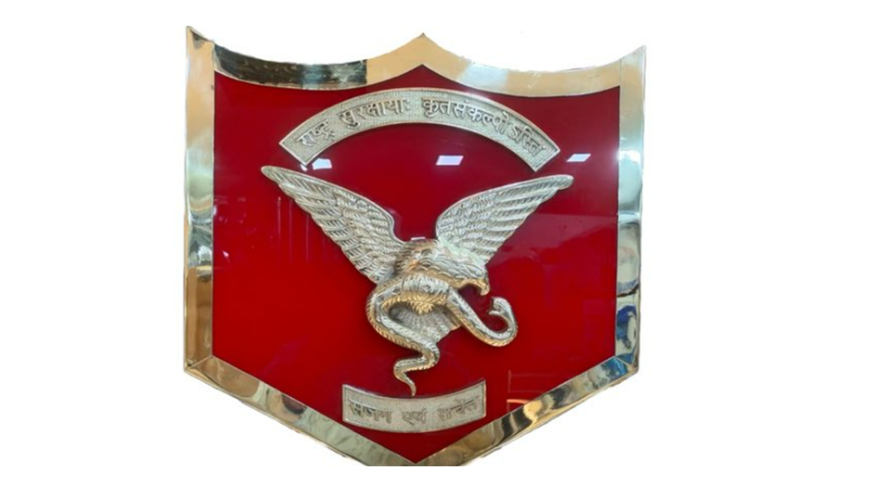
The Operational Insignia of the 10th and 25th Battalions of the SSB comprises of a silver-finished eagle and a snake along with its upper motto "राष्ट्र सुरक्षाया कृतसंकल्पो अस्मि" (Rashtra Surakshaya Krutsankalpo Asmi) in Sanskrit, which translates to: "I am deeply committed to the security of the nation" and its lower motto, which reads "सजग एवं सचेत" (Sajag Evam Sacheto) meaning "Vigilant and Alert."
The SSB was originally established with the name ‘Special Service Bureau’ in May 1963. It was formed as a force for mobilising and organising border populations against Chinese aggression, with the support of the CIA, providing training and other assistance. Its early role included intelligence, counterintelligence and covert operations. The organisation was raised after the 1962 war and was intended to provide a first line of defence against a possible Chinese advance.
After the 1962 Sino-Indian War, the CIA was running a separate covert programme supporting Tibetan resistance against Chinese rule. The Special Service Bureau was also part of a larger security structure that emerged during this period. The structure included the Special Frontier Force, the Aviation Research Centre and the Special Service Bureau. These organisations were later brought under the Directorate General of Security in the Cabinet Secretariat. In January 2001, the force came under the Home Ministry. It was subsequently assigned the India Nepal border and later the India Bhutan border. Indian court records also identify the Special Service Bureau, Aviation Research Centre and Special Frontier Force as units that operated under this structure.
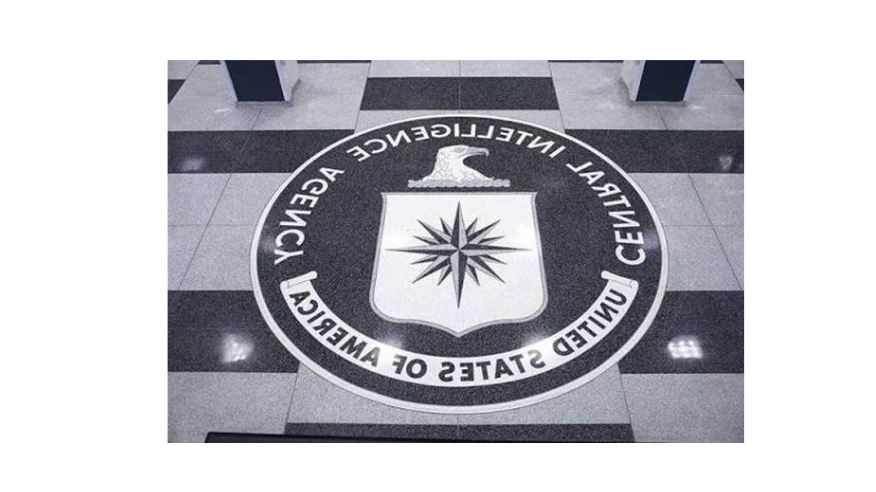
The visual comparison with the CIA is also worth noting. The CIA's official seal features an eagle, a shield and a 16-point compass star. CIA says the eagle represents strength and alertness, while the compass star represents the convergence of intelligence from around the world. The SSB emerged from the post-1962 environment in which India was developing new intelligence and covert capabilities against China, while the CIA was running its own Tibetan operations in cooperation with Indian intelligence units.
Declassified US documents provide evidence of the CIA’s increasing undercover operations in Tibet beginning in the year 1964 onwards. The document specifically records plans for 20 resident agents inside Tibet: two road-watch teams and six border-watch communications teams, in which the SSB's people and networks were positioned among the population. The Aviation Research Centre (ARC) provided aerial intelligence and support and the CIA provided training, money, equipment and operational expertise to the Tibetan resistance network. This continued till the late 1960s as the India-US intelligence relationship around Tibet continued for years after the 1962 war.
Later in the 1970s, The US shifted from confronting China through covert support to the Tibetan resistance to pursuing diplomatic rapprochement with Beijing, culminating in Nixon’s 1972 visit to China and the opening of US-China relations. With this policy change, the CIA’s Tibetan programme eventually ended.
The SSB was formally made a Border Guarding Force under the Ministry of Home Affairs on 15th January, 2001. Its charter was amended from its earlier resistance and preparedness role to border guarding and was officially renamed Sashastra Seema Bal, reflecting its new role in 2003. At present, the SSB is charged with the responsibility for the 1,751 km India-Nepal and 699 km India-Bhutan borders and is designated the Lead Intelligence Agency for these borders.
The eagle sculpture gifted by Trump to Xi Jinping was meant to symbolise American freedom. For India, it serves as a reminder of India-US joint intelligence operations against China, decades ago during the Cold War.
Savio Rodrigues
Savio Rodrigues is a Research Analyst at Escape Velocity MediaWorks Pvt Ltd and writes for Chakra News on Defence, Geopolitics, National Security. He holds a Master’s degree in International Relations from the University of Mumbai.


Comments