






The Week at Chakra News

How does a fourth regiment of the S-400 alter the balance of power in the Indian subcontinent? Why does South Korea want nuclear submarines? And what's happening with President Donald Trump's forever war in Iran? This week on Chakra, Sandeep Unnithan unpacks what these developments mean and why the world is watching closely.
S400 for India
India received its fourth S-400 regiment on June 3, according to an ANI report. The S-400 was used in combat for the first time during Operation Sindoor, where it reportedly took out a Pakistani Saab 2000 Erieye AWACS aircraft at a distance of over 300 kilometres, making it the world's longest ground-based air defence kill.
India signed the $5.43 billion contract with Russia for five squadrons of the S-400 Triumf air defence system on October 5, 2018. The first three squadrons were delivered on schedule, but the fourth and fifth were delayed by the Russia-Ukraine war. With the fourth regiment now arriving and the fifth expected in 2027, India's air defence network continues to expand. On March 27, 2026, the Defence Acquisition Council (DAC) also cleared the procurement of five additional squadrons.
China operates both the S-300 and S-400 air defence systems. Pakistan fields China's HQ-16, also known as the LY-80, often described as the Chinese equivalent of the S-300. During Operation Sindoor, these systems failed to stop BrahMos missile strikes.
South Korea’s nuclear submarine
Meanwhile, South Korea's Ministry of National Defence (MND) has formally unveiled plans to develop and build a domestically produced nuclear-powered submarine by the mid-2030s. Known as the Jang Bogo-N, the submarine will use low-enriched uranium fuel designed for long operational cycles, reducing the need for refuelling. The MND published its "Basic Plan for the Development of Nuclear Submarines for the Republic of Korea" on May 26, 2026, outlining the key features of the programme.
Interestingly, on October 29, 2025, US President Donald Trump wrote on Truth Social: "South Korea will be building its Nuclear Powered Submarine in the Philadelphia Shipyards, right here in the good ol' U.S.A. Shipbuilding in our Country will soon be making a BIG COMEBACK."
South Korea's interest in nuclear-powered submarines is driven largely by North Korea. Pyongyang's own nuclear-powered submarine is currently under construction. State media claims the vessel will have a displacement of 8,700 tonnes, and it was shown publicly for the first time on March 8, 2025.
The Trump Trap
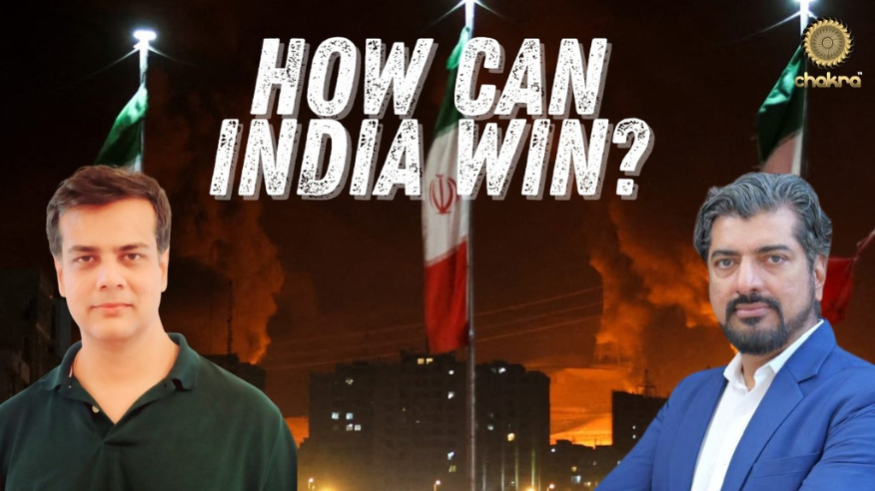
On the other hand, the United States believed the Iran war would be over within days. Instead, the conflict has stretched into its fourth month after beginning on February 28. Trump now finds himself confronting the same reality that has challenged great powers throughout history: military technology alone cannot deliver strategic success.
The war has highlighted the limits of smart weapons, AI-enabled targeting, drones and precision missiles when they are not backed by a clearly defined political objective. Today, every military wants more drones, more missiles and more AI-enabled systems. Yet the fundamental question remains unchanged: what happens after the opening strikes?
If the assumption is that decapitating a regime will cause it to collapse like a pack of cards, history suggests otherwise. In many ways, the United States risks repeating lessons it should have learned from Vietnam. The Vietnam War lasted from November 1, 1955, to April 30, 1975, and demonstrated that overwhelming military power does not automatically translate into strategic success.
As the United States approaches its 250th Independence Day on July 4, 2026, it faces difficult questions about how to end its involvement in Iran. The United States remains the world's most powerful military force, but Iran has demonstrated that a determined adversary can still absorb punishment, resist and impose costs.
Chakra Desk
Chakra News is a specialised digital media platform committed to in-depth coverage of India’s defence, national security, geopolitics, and critical technologies.


Comments