


The New CDS and India's Unfinished Military Reform Agenda

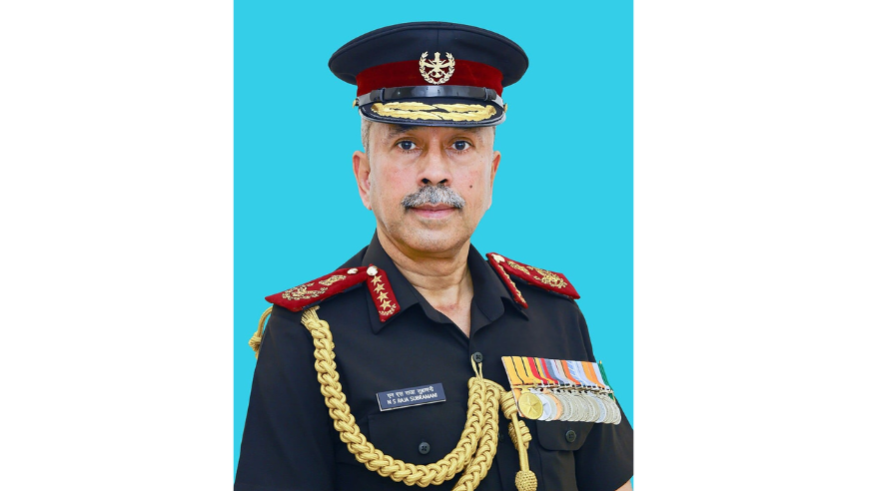
The appointment of General N.S. Raja Subramani as India's third Chief of Defence Staff comes at a critical stage in India's military transformation. Unlike a Service Chief, the CDS sits at the intersection of defence reforms, capability development, and civil-military decision-making. Though he will start sitting in office at 31st May there are several untied - UNRESOLVED? issues that has not burnt/ADDRESSED? in Gen Chahuan tenure.
Having now spent nearly four years working in the defence think-tank community and closely following debates surrounding military reforms and military education, I believe General Subramani inherits a position carrying both enormous responsibilities and challenges.
In my opinion, at least seven major issues are likely to dominate his tenure.
The first challenge is adapting India's military establishment to the changing character of warfare. General Subramani himself has previously spoken at the Manekshaw Centre about the need to prepare for the entire spectrum of conflict, ranging from grey-zone activities and sub-conventional operations to conventional military engagements. The challenge now is no longer merely recognising these threats but ensuring that the armed forces are institutionally prepared for them.
Closely linked to this is the Second challenge of Multi-Domain Operations (MDO). Every defence conclave or seminar today speaks about cyber, space, information warfare and emerging technologies. However, the real question is whether India's operational concepts are keeping pace?
Cyber and space remain areas where India has capability but not yet fully integrated warfighting command structures that match the operational tempo these domains demand. Info warfare, including perception management and the weaponisation of the social media environment, is still handled with something between caution and improvisation. We have already measured our preparedness in Op Sindoor and therefore we shall not discuss it further here.
Though General Raja with his background in operational command and strategic advisory roles, is well-positioned to push this agenda. But pushing this will require lot of institutional courage as well as political vision.
The Third challenge I am concerned about is military doctrine. In Aug 2025 and then in this year April-May 2026, HQ-IDS declassified several doctrinal publications. This is a positive development. However, doctrine cannot remain static in a rapidly changing security environment.
Future conflict will demand doctrines that are continuously reviewed, tested and updated. The CDS is perhaps best positioned to drive that conversation across all three services.
The CDS Mandate: Six Years On, What Has Been Achieved?
The fourth and perhaps most visible challenge is the unfinished project of jointness and theatre commands.
Progress has undoubtedly been made. The Inter-Services Organisations Rules, 2025, have strengthened integrated structures and theatre command discussions have advanced considerably. Yet the reality is that the culture of jointness still has some distance to travel.
General Subramani will need to act as a consensus-builder while ensuring momentum is not lost.
I wrote about this last year too, and I stand by that assessment. But six years on, it is important to ask honestly, where does the project of jointness actually stand?
This leads to what I consider, the key purpose of the CDS system that is theatre commands. Questions regarding command relationships, asset allocation and operational responsibilities remain under unanswered.
The challenge before General Subramani is not merely creating theatre commands but ensuring that they genuinely improve warfighting effectiveness rather than becoming another administrative layer with all consensuses.
Fifth challenge lies in civil-military relations and defence decision-making. Although the creation of the DMA has given the military a greater voice in defence management, issues concerning bureaucratic processes, acquisition timelines and institutional coordination continue to attract discussion within strategic circles.
I want to address something that continues to be spoken around in polite company rather than confronted directly. That challenge lies in the soldier-babu equation, a friction that has existed for decades.
The creation of the DMA has certainly brought the military closer to the decision-making table, but many officers would argue that old habits of civilian (IAS) babugiri, red tape and file culture continue to slow the system.
Procurement files move from desk to desk, approvals pass through multiple layers and urgent military requirements can sometimes get caught in a maze of procedures.
As CDS and Secretary of the DMA, General Raja Subramani will sit right at the centre of this tug of war. He will have to ensure that military priorities do not disappear into note sheets, committees and endless consultations.
Put bluntly, one of his biggest challenges will be cutting through the red tape without upsetting the delicate balance of civil-military relations.
And sixth, Questions relating to HR like career progression, transparency and the long-term implications of the Agni veer scheme. They directly affect morale & institutional confidence of the armed forces.
Finally, seventh i.e there is the challenge of Professional Military Education. This is a subject close to me, having spent years associated with military courses, examinations and staff work. In my view, this remains one of the most under-discussed issues in India's defence reforms.
Today, much of military education is still dominated by tactics, map exercises and routine staff procedures. These fundamentals matter, but the battlefield has moved far beyond maps and manoeuvres. Future officers will have to understand more on drones, information operations, & space.
From what I have observed, PME needs serious course correction. It needs more intellectual rigour and better staff work. The objective should not be limited to producing officers who can write good staff papers; it should be to develop leaders who can think, question, innovate and anticipate future challenges.
For the new CDS, this is a critical challenge. India's military cannot prepare for tomorrow's wars with yesterday's syllabus.
Noise From Other Corners
Lastly, there is some noise in a section of the media and strategic community regarding the appointment of General Raja Subramani. Some commentators have raised questions about the selection process, seniority norms and the broader implications of appointing a retired officer to the post.
However, these debates should not overshadow the larger issue. Questions of jointness, theatre commands, force modernisation and professional military education are far more consequential for India's future military effectiveness than the controversy surrounding any individual appointment.
Frankly, The problem is that despite years of discussion, theatre commands remain unfinished, joint structures remain incomplete and service-centric approaches continue to influence military decision-making. If the appointment of a retired officer was by itself sufficient to weaken the institution, then the debate would have been settled long ago.
Instead, the real obstacles have been institutional inertia, competing service priorities and the sheer complexity of integrating one of the world's largest armed forces. If anything, India's longstanding challenge has been insufficient integration between military and national security decision-making, not excessive integration.
Ultimately, General Raja Subramani should not be judged by the route through which he arrived in office. He should be judged by whether he succeeds where the system has struggled for years: As it is said, outcomes matter far more than the administrative circumstances surrounding just appointment.
Gaurav Kumar
Gaurav Kumar is a New Delhi based journalist and researcher currently working with the United Service Institution of India (USI), India’s oldest military and national security think tank. His reporting focuses on conflict and its humanitarian consequences in South Asia.
Kumar has previously contributed analysis on Manipur to South Asian Voices (Stimson Center) under the editorial guidance of Professor Alex Waterman. His work has also appeared in The Indian Express, South China Morning Post, Firstpost, Fair Observer, Small Wars Journal, and South Asia Journal.


Comments