





Oil Shortages Will Outlast the Strait of Hormuz Crisis

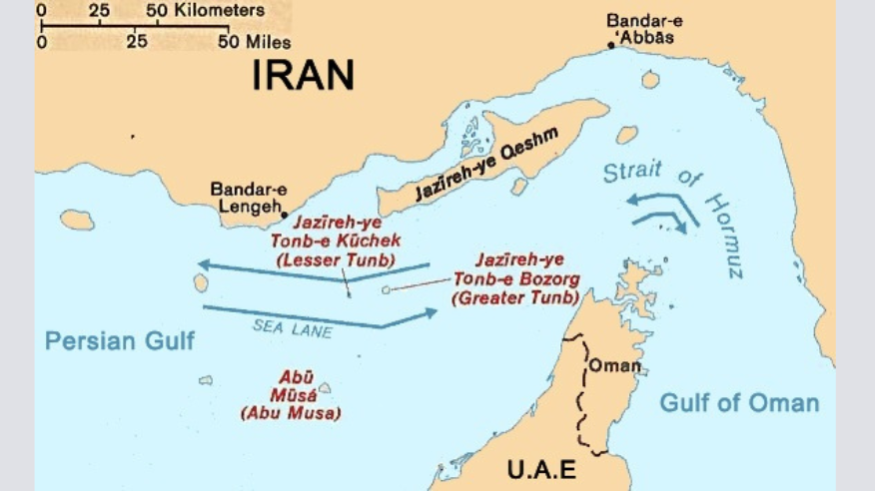
What began as a war between Israel and the US against Iran has now turned into a full-scale global crisis, with Iran blocking the Strait of Hormuz, through which 20 per cent of the world’s oil and natural gas flows. My six takeaways on the developing situation.
Indian Navy Won’t Enter the Persian Gulf
On March 18 and 19, the International Maritime Organisation called for an extraordinary meeting to discuss the Gulf issue. India, being a council member at the IMO, has carefully articulated its position. India continues to advocate collaborative maritime security in the Indian Ocean region.
It is clear that India does not want its naval assets to enter the Persian Gulf. The Indian delegation at the IMO has highlighted proactive measures under the SAGAR (Security and Growth for All in the Region) initiative, commenced on 16 March 2026. India’s stance appears prudent. There is no compelling reason to deploy naval ships inside the Persian Gulf. Indian vessels are instead being safely escorted outside the Gulf, in the Gulf of Oman, just what the Doctor ordered.
USS Tripoli ARG – Echoes of the Dardanelles Crisis?
The USS Tripoli amphibious assault ship passed Singapore on March 20. It is accompanied by USS San Diego and USS New Orleans, both landing platform dock ships. The Tripoli Amphibious Ready Group (ARG) embarks a 2,000-strong Marine Expeditionary Unit.
The ARG is steaming at approximately 20–22 knots and is expected to reach the Persian Gulf region around March 23–24. Whether it enters the Gulf remains uncertain.
This situation bears some resemblance to the Dardanelles campaign of World War I. In 1915, Winston Churchill ordered naval forces to attack the enemy by entering the Dardanelles straits, a passage which is much narrower than Hormuz, without fully realising that the waters had been heavily mined by the Ottoman empire forces. This led to heavy losses of Allied naval ships. Then the allies dropped ground forces, this too failed. As per historical records the Allies lost more than 50,000 men in the campaign.
Oil Shortages Will Continue Even After the War Stops
Real oil and gas shortages may persist for weeks or months even after hostilities cease, as upstream infrastructure across GCC countries and Iran has been damaged and could take months to be fixed up.
India is not insulated from these developments. If the war continues for another four to six weeks, the global impact will be significant. Oil prices are likely to rise sharply, affecting industries, aviation, and shipping. Fuel shortages may lead to rationing as countries attempt to conserve resources. I hope the Indian Govt does initiate some stringent measures particularly in the car and transport system. This becomes more important in the context of recent reports of two ballistic missiles fired by Iran towards Diego Garcia, a US naval base in the Indian Ocean. One missile reportedly failed mid-flight, while the other was reportedly intercepted by US forces.
Another major development is the effective closure of Ras Tanura port, now considered a “no-go” area. Saudi Arabia is redirecting supplies through Yanbu on its Red Sea coast, shipping approximately 4 million barrels per day, about half of its total daily output.
Around 30 tankers are reportedly heading to Yanbu for loading. However, these vessels are likely to transit the Bab el-Mandeb Strait, which the Houthis had effectively blocked between late 2023 and late 2025. During that period, ships were rerouted via the Cape of Good Hope.
The Bab el-Mandeb Strait is significantly narrower than the Strait of Hormuz, measuring only about 3 to 4 miles at its narrowest point. If attack by the Houthis resumes in the Bab el-Mandeb straits, shipowners and insurers may again avoid this route. The alternative then, is via the Suez Canal. While tankers can transit Suez in ballast condition, fully laden VLCCs may not be able to return due to draft limitations of approximately 20 metres.
Iran’s Plan B for Kharg Island
Kharg Island, roughly the size of Panaji at about 25 square kilometres, was developed in the 1960s by the American oil company Amoco, which later merged with BP.
It is Iran’s most critical oil terminal, handling about 95% of its 1.4 million barrels per day production. The facility includes extensive storage and loading infrastructure, enabling a VLCC to load approximately 350,000 tonnes in less than 24 hours.
Although recent missile strikes reportedly damaged the airstrip, the oil facilities supposedly remain intact since tankers are loading and sailing out from Kharg. However, if the island were to be incapacitated, then Iran would likely divert exports to alternative terminals such as Lavan Island or Siri Island and even perhaps Jask, located outside the Gulf through other means such as STS Ship to Ship transfer.
Insurance Premiums Are Rising
Over the past 21 days of conflict, Iran is estimated to have exported approximately 28 million barrels, generating around USD 100 million per day.
War risk insurance premiums have increased significantly. Before the conflict, premiums ranged between 0.15% and 0.2% of a vessel’s hull value. They have now risen to approximately 0.8% to 1.4%.
For neutral countries such as India and China, this increase remains manageable. However, for vessels linked to the US, Israel, or the UK, premiums have surged dramatically—from around 0.8% to between 8% and 10%.
For example, a VLCC valued at USD 130 million may now face an additional war risk insurance costs of up to USD 13 million for a single voyage entry into the Persian Gulf.
This sharp increase has driven up charter rates. A 300,000 DWT VLCC, which earned around USD 130,000 per day in 2025, is now commanding rates of approximately USD 400,000 per day—reflecting pure a supply-demand dynamics or is it the cost the owner pays for heightened risk?
Capt Naveen Singhal
Master Mariner with 19 years (1976-1995) sailing experience, 5 years as a Captain. Free-lance Management System Consultant since 1995. Founder of JAG Consultants Pte Ltd, a Singapore based, Marine Consultancy Company.




Comments