


Asim Munir’s 2026 Plans
How will Pakistan handle high-stakes diplomacy built on fragile foundations
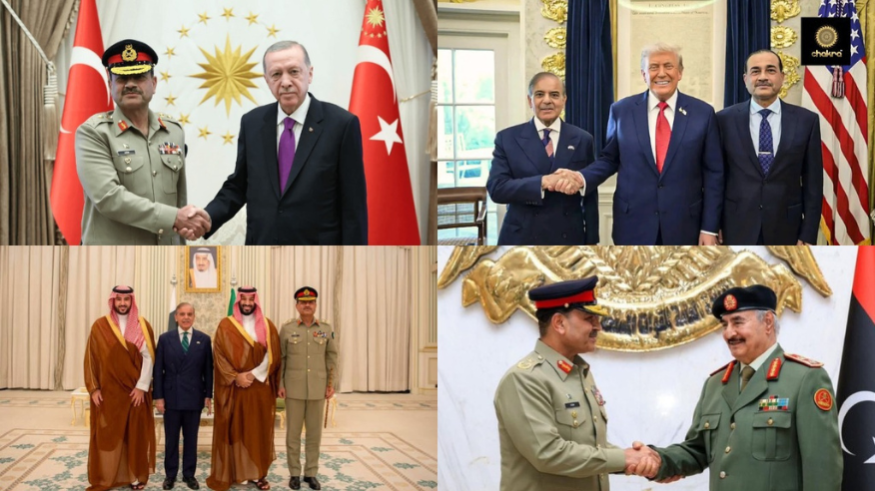
2025 saw Pakistan hard at work, trying to burnish the failing nation’s image with a newfound strategic relevance on the global stage. Pakistan went on to sign a string of deals to curry favour with US President Donald Trump. Indeed the U.S. magazine The Diplomat described Pakistan as returning to “global attention.” Then came the proposal for stationing Pakistani troops in Gaza and a Strategic Mutual Defence Agreement with Saudi Arabia. Islamabad also privatised major state entities like Pakistan International Airlines (PIA) and is selling stock in the Pak Army’s Fauji Foundation.
But Pakistan remains the sick man of Asia. A nation in the grips of a failing economy, insurgencies and sectarian violence. And the newfound “relevance” comes with its own set of issues. Pakistan may have bit more than it can chew.
Courting the US
Even as the Indian Air Force decimated Pakistan’s air defence umbrella and put at least 11 major air bases out of action, grounding the entire PAF, the Pakistan Army was hard at work currying favour with the United States of America.
First came Pakistani investment in Trump family-backed crypto firm, Pakistan also nominated Trump for the Nobel prize. Then there was a deal for rare earths, and a proposal for American investment in oil exploration followed. Each U.S.-linked deal soon ran into trouble.
The Nobel nomination backfired amid protests and Pakistan’s own criticism of U.S. strikes on Iran. The rare-earth minerals agreement stalled after independent surveys exposed exaggerated reserve estimates and worsening violence in Balochistan scared off investors. The crypto deal triggered domestic and international scrutiny over conflicts of interest and military involvement, leaving implementation uncertain and now Bilal Bin Saqib, the man behind the crypto deal and special assistant to Prime Minister Shehbaz Sharif has been removed from his post. The oil and trade deal, though announced, remained largely aspirational, with partners and timelines still undefined.
The Mediator of the Islamic World
For years, Pakistan has actively positioned itself as a mouthpiece of global Islam. In 2025,
Pakistan joined a group of Muslim and Arab states (including Qatar, UAE, Saudi Arabia and Turkey) supporting a U.N. proposal for an international stabilisation force in Gaza. A joint foreign ministers’ statement featuring Pakistan, the UAE, Saudi Arabia, Qatar and Türkiye underscored collective engagement on ending the war and delivering humanitarian aid.
Foreign Minister Ishaq Dar has stated that Pakistan is "definitely ready" to participate but strictly for peacekeeping, not "peace enforcement". Pakistan has also refused to have anything to do with Hamas and called for a clear international mandate. As of now there is no specific mandate, no idea about where the funding will come from and what will be the rules of engagement.
The proposal remains highly controversial within Pakistan and the Pak establishment will be bracing for the backlash that is inevitable. The question is: Can the Pakistani state handle that and at what cost?
Caught in the crosshairs in the Middle-East
In September 2025 Islamabad concluded an unprecedented Strategic Mutual Defence Agreement with Saudi Arabia, treating an attack on either state as an attack on both. Widely interpreted as Riyadh seeking alternatives to exclusive Western security guarantees, the pact seemingly elevated Pakistan’s role. Pakistanis hoped that now Saudi Arabia would Pakistanb in any conflict but when skirmishes happened on the Af-Pak border, help was nowhere to be found.
Ties with the United Arab Emirates largely revolved around economics rather than security. Pakistan hoped for much needed investment from Abu Dhabi. But instead it has been caught in UAE’s ambitions. The recently concluded $4 billion arms deal with Libya’s eastern LNA faction, was a result of this entanglement. Officially Pakistan does not recognise the LNA faction. In fact the UN-recognized Tripoli-based government has diplomatic relations with Islamabad. But under the influence from the Gulf, Pakistan will sell weapons to Khalifa Belqasim Haftar, the libyan warlord who will allegedly supply the same to UAE backed RSF in South Sudan. This in turn will only anger the Saudis and Qatar.
Pakistan has traditionally been on the same page with Qatar. Doha-based Al Jazeera Network has routinely pushed Pakistani narratives. But the growing closeness between Pakistan and UAE/Saudi Arabia has apparently soured relations with Qatar. This has been evident in the recent backlash against Al Jazeera on part of the ISPR.
Qatar and Turkey in fact mediated the ceasefire between the Taliban and Pakistan, but Pakistan has been dissatisfied with the neutrality of the mediators and Al Jazeera coverage of Pakistan has suddenly taken a turn for the worse.
Uncertain Future
To say that the future is uncertain is a cliche with Pakistan. The flurry of diplomatic activity and deal-making has managed to alter Pakistan’s image for the short term. But how long before the veneer falls off. How long before the endless contradictions come to confront the Pak Establishment.
To be sure, the Generals in Rawalpindi will already working on what they can and will do. So stay tuned for another year in which Pakistan will shine on the global stage, even as the edifice cracks, the people suffer and the General plunder the state and leave for the West with their spoils after retirement.
Deepak Bhadana
Over the past decade, Deepak Bhadana has built expertise in multimedia storytelling, with a focus on military conflicts, insurgencies, international relations, the defence industry, and occasionally, wildlife and environmental issues.



Comments