








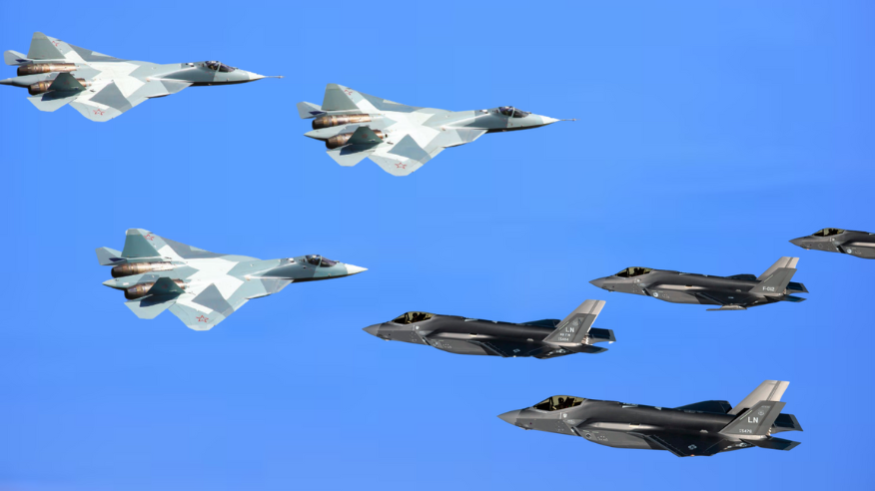
Why the Russian Sukhoi Su-57 is a Better Option for India than the F-35

As the Indian Air Force (IAF) faces a growing shortfall in fighter squadrons — operating only 31 against a sanctioned strength of 42.5 — the need for immediate and capable fifth-generation platforms is pressing. While indigenous projects like the Tejas Mk1A and the Advanced Medium Combat Aircraft (AMCA) are in the pipeline, their timelines stretch into the next decade. In this critical period, India must choose between two platforms — the
Russian Su-57 and the American F-35.
The PAKFA Su-57
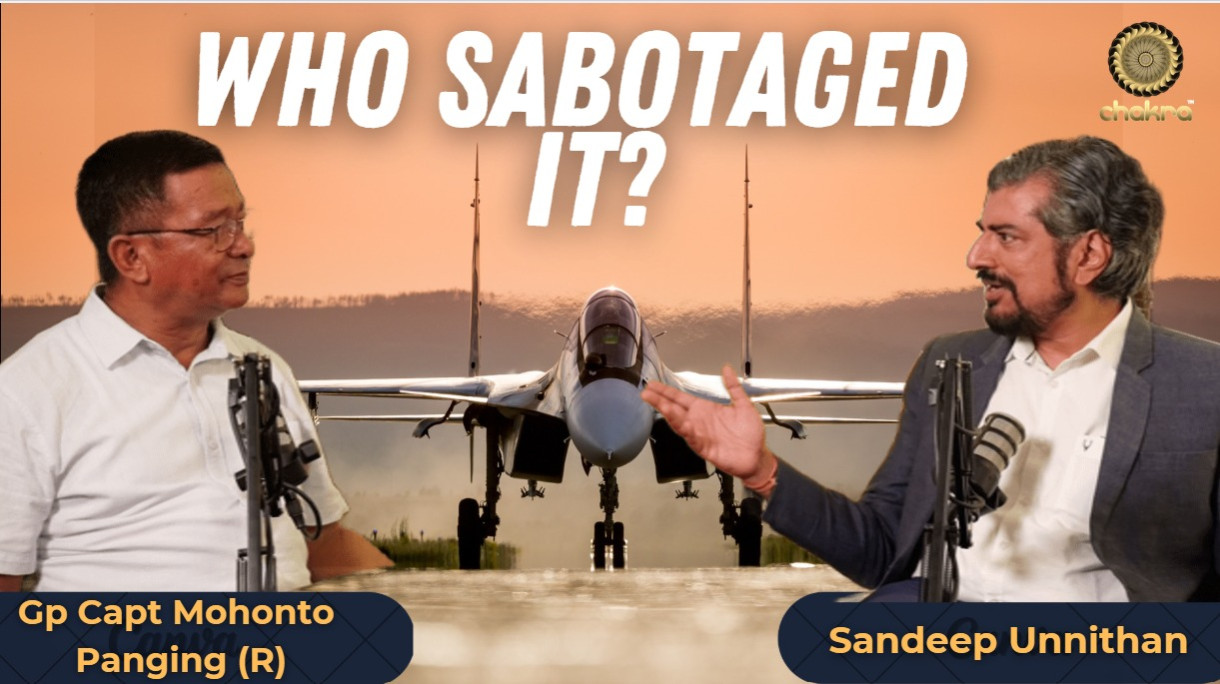
Russia’s Su-57 is a fifth-generation stealth multirole fighter developed under the PAK FA program. It combines advanced stealth shaping, supercruise, internal weapon bays, and a high degree of maneuverability — a hallmark of Russian combat aviation. It is powered by twin Saturn AL-41F1 engines (with future models expected to feature the more advanced Izdeliye 30) and achieves speeds over Mach 2. Its range of 3,500 km on internal fuel offers operational depth without refueling. The Su-57 also integrates AESA radar, electronic warfare systems, and Infrared Search and Track (IRST), allowing it to detect stealthy aircraft and survive in high-threat environments. It can carry a full range of air-to-air, air-to-ground, and anti-radiation missiles — either internally for stealth missions or externally when stealth is less critical.
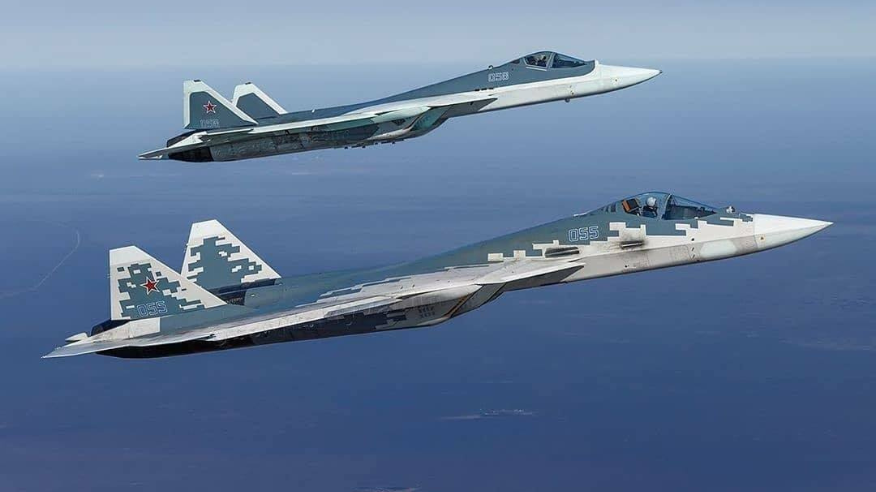
The Su-57 offers critical synergy with India’s Su-30MKI fleet, easing the transition in terms of pilot training, logistics, and base infrastructure. A customised Su-57MKI variant, similar to the Su-30MKI program, could provide India with a tailored fifth-generation platform.
Lockheed Martin F-35
The F-35 Lightning II, developed by Lockheed Martin, is the most widely deployed fifth-generation fighter. It boasts high-end stealth, advanced sensor fusion, and seamless data-sharing across platforms, particularly within NATO. The aircraft’s Distributed Aperture System (DAS) and helmet-mounted display allow unparalleled situational awareness. However, these advantages come with significant limitations.
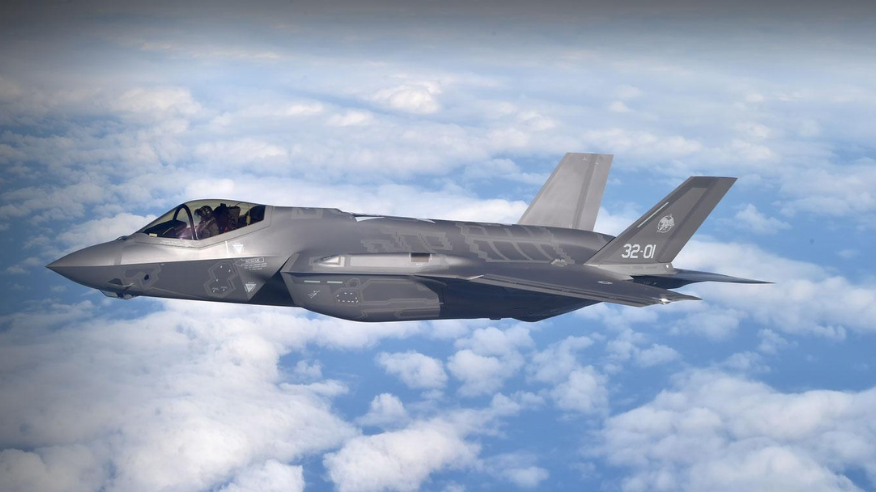
The F-35 has suffered from poor mission availability, with only 51% of its fleet operational as of 2024. It has seen at least 12 crashes in seven years, often tied to technical issues and maintenance delays. Moreover, its lifecycle sustainment costs are projected at nearly $2 trillion — the most expensive military program in history. The aircraft also requires dedicated infrastructure, specialized maintenance tools, and strict adherence to U.S. control over software updates, weapons integration, and usage protocols.
For India, which values operational independence, this tightly controlled architecture poses major constraints. Modifying the F-35 or integrating indigenous weapons like Astra or BrahMos would require lengthy U.S. approvals. Additionally, the U.S. retains the right to restrict deployment in certain scenarios — a red flag for a non-NATO country that prioritizes strategic autonomy.
But despite all its faults, the F-35 still stood as a strong contender for the Indian Air Force. That was until the recent social media rants by US President Donald Trump. The India-US relationship is decades old, but for long it was marred by cold war calculus and support for a terrorist-harbouring Pakistan. It took over two decades of continuous efforts by three different US Presidents and Indian Prime Ministers Manmohan Singh and Narendra Modi to bring about what many have called the greatest strategic alliance of the 21st century.
This was however torched by Trump’s rants and threats to sanction India for buying Russian oil. While MAGA acolytes rushed to find old grievances with India, Indians have come to recall the reasons behind India’s historical skepticism of American assurances. This most of all harms the F-35’s chances.
Su-57 vs F-35
India faces a unique set of challenges — a two-front threat from China and Pakistan, a mixed fleet of Russian, European, and indigenous aircraft, and a deep commitment to self-reliance in defense. The Su-57 aligns better with this environment.
Strategically, the Su-57 shares design heritage with the Su-30MKI, which simplifies integration into the IAF’s doctrine, infrastructure, and training systems. With China already fielding the J-20 and Pakistan likely to acquire advanced fighters from Turkey or China, India needs a comparable platform that can be inducted quickly and without political caveats.
The Su-57 also offers greater room for indigenous customisation. Russia has expressed willingness to co-develop a variant tailored for India — the Su-57IE — similar to the successful Su-30MKI project. This allows for integration of Indian munitions like Astra, SAAW, Rudram, and even BrahMos-NG, along with potential for local production and technology transfer — benefits the F-35 simply does not offer.
Operational autonomy is another decisive factor. The F-35’s reliance on U.S.-led networks and command structures limits its appeal for a country like India, which maintains diversified platforms and prefers to avoid operational dependencies. The Su-57 allows India to define its own doctrine, mission parameters, and weapons use — free from foreign oversight.
In terms of cost, the F-35A alone costs $82–100 million per unit, with extensive sustainment and infrastructure overheads. In contrast, the Su-57 offers better lifecycle economics, especially when factoring in existing logistics chains, technician experience, and spare part inventories from India’s large Russian fleet.
A Stepping Stone to AMCA
At this point, it is important to remember that India's long-term vision rests on the AMCA, a fully indigenous fifth-generation platform. But until the AMCA comes of age, acquiring the Su-57MKI can fill the capability gap while simultaneously preparing Indian industry and the IAF for AMCA’s eventual induction. Lessons in stealth integration, systems development, and production from the Su-57 program could directly accelerate AMCA's success.
The F-35 is undoubtedly a proven and capable aircraft. But for India, it is a platform that comes with operational constraints, political strings, and infrastructural burdens. The Su-57, on the other hand, aligns with India’s need for a capable, sovereign, and cost-effective fifth-generation fighter that complements existing assets and future ambitions. As India strengthens its air power in an increasingly contested region, the Su-57 stands not just as a fighter — but as a strategic bridge to greater autonomy.
Arjun Dev Singh
Arjun Dev Singh has a deep interest in defence, security, and strategic affairs. With a strong analytical lens and a passion for military and geopolitical developments, Arjun strives to bring clarity and context to complex national and international issues.



Comments