












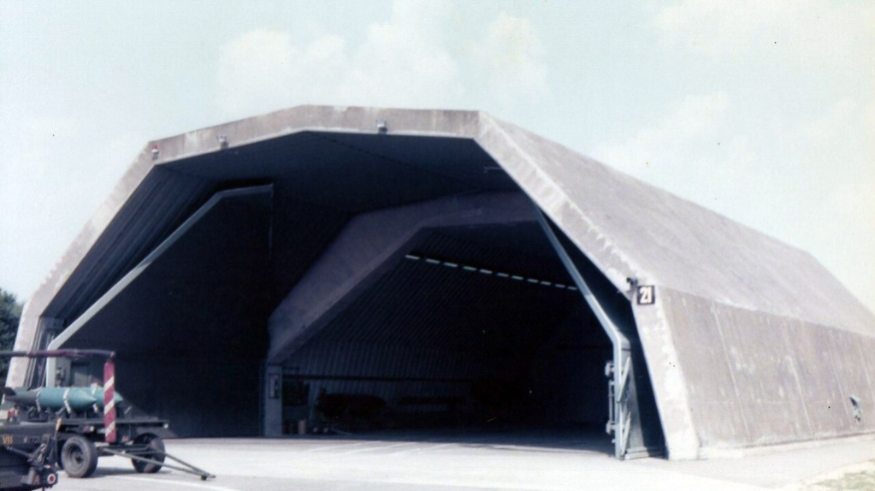
Why India needs hardened shelters for its aircraft?

Modern airpower may seem impressive in the sky. But when these aircraft are on the ground, they are nothing but easy targets for drones. The inexpensive drones, such as the Iranian HESA Shahed-136, or even an FPV (First Person View) drone, can deliver precision strikes. The drones have changed the dictionary of warfare and are the modern Kalashnikovs.
In 2021, two UAVs dropped improvised explosive devices (IEDs) on an Indian Air Force base in Jammu, causing severe damage to a building. If the attack had been aimed at the air assets, we would have lost millions of dollars’ worth of equipment. And the best part, the UAV destroying these assets is just worth a few thousand dollars.
The question arises of how to defend aircraft. If the aircraft are in the open, then they are cheap targets. The example of this is the destruction of a Black Hawk helicopter in Camp Victory in Iraq on 24 March by an FPV (First Person Drone). It’s not a simple answer. The only way is a layered defence option. The latest being the destruction of Boeing E-3 Sentry AWACS at the Prince Sultan airbase in Saudi Arabia on 27 March.
First is using hardened aircraft shelters. They use blast-resistant materials to prevent shrapnel damage. Countries like Russia and China use them extensively. Meanwhile, Indian bases still rely on open parking. Then we have counter-drone systems like radio frequency jammers and short-range defence guns. Using Electronic Warfare is also a must. They jam drone signals and disrupt GPS navigation.
Deception is also a very simple way to trick satellites. Iran painted aircraft on the road, which led to missiles striking these decoys. Lastly, we need base design reforms. Use underground storage wherever possible. Design these while thinking like the attacker. One thing is very clear. Protecting airbases is as important as flying missions. Because in warfare, we can’t afford to lose the battle before our planes take off. India needs to work on developing hardened shelters to not only protect its fighter jets but also the transport aircraft and helicopters.
The government of India approved the construction of 108 modern shelters to house fighter aircraft in forward areas near India’s northern borders in 2019. In May 2020, the Ministry of Defence had signed a Rs 1,200 crore contract with Tata Power SED (TPSED) for the Modernisation of Air Field Infrastructure (MAFI) of 37 airfields for the Indian Air Force, Indian Navy and Indian Coast Guard. This was a follow-on programme to MAFI Phase 1 that included the upgradation of 30 airfields of the Indian Air Force. The project included installation and commissioning of modern airfield equipment like Cat-II Instrument Landing System (ILS) and Cat II Air Field Lightning System (AFLS), among others, which were directly connected to Air Traffic Control (ATC).




Comments