









Top Headlines: 5th August 2025

1. Chinese military activity again recorded by Taiwan
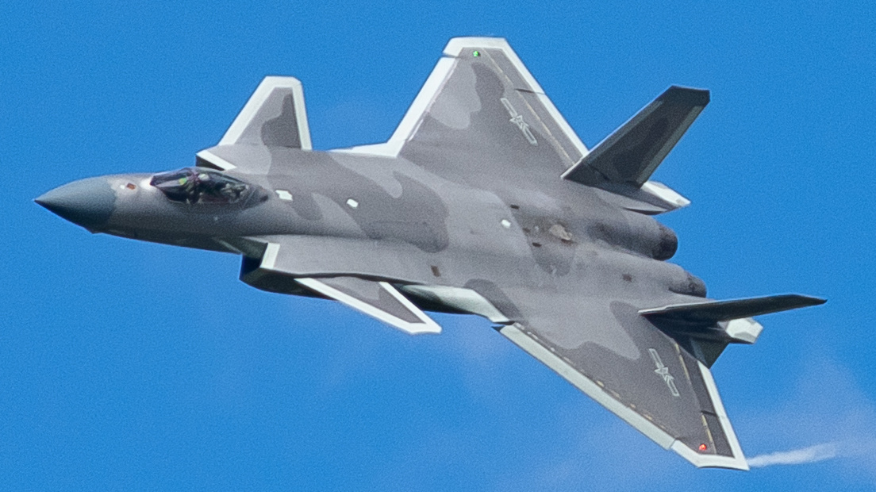
On 5 August 2025, Taiwan’s Ministry of National Defence (MND) detected Chinese military activity around its northern and eastern Air Defence Identification Zone (ADIZ) at around 6 a.m. (UTC+8).
According to the MND’s post on X, 12 sorties were conducted by the Chinese military, of which 8 entered Taiwan's ADIZ. The ministry stated that an appropriate response was initiated.
China continues to conduct amphibious drills and aircraft sorties near Taiwan’s waters as part of its long-term strategy to assert control over the island. In response, Taiwan is seeking increased support from the United States, including weapons and joint exercises.
2. DRDO AIP for Kalvari Submarine hits delay
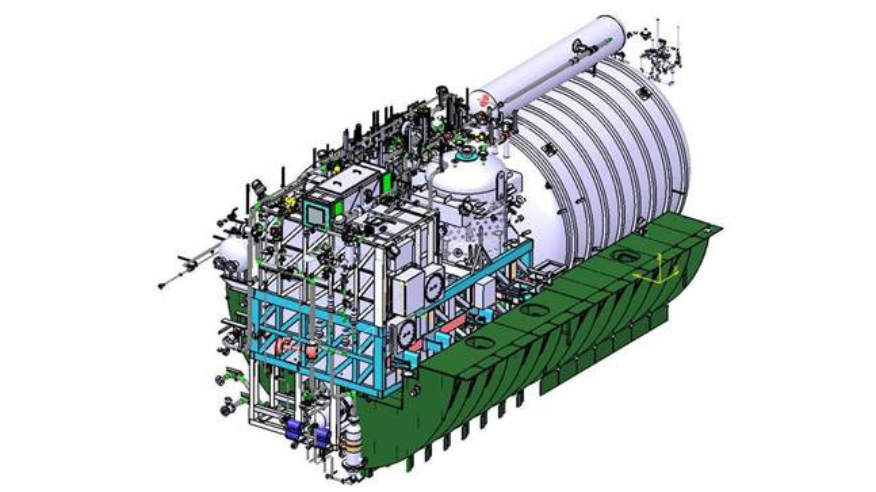
India has once again missed the opportunity to upgrade the underwater endurance and stealth of its Kalvari-class (Scorpene) submarines. The Air Independent Propulsion (AIP) system, being developed by DRDO, remains unready for integration.
INS Kalvari, the first Scorpene-class submarine built at Mazagon Docks (MDL) in collaboration with France’s Naval Group and commissioned in December 2017, is currently undergoing a refit at the Mumbai Naval Dockyard. However, the originally planned AIP retrofit will not be part of this maintenance cycle.
The delay in the AIP system further weakens the capabilities of the already delayed Project-75I, under which these submarines were acquired.
“Armed Forces are prepared for fifth-generation conflicts”: General Upendra Dwivedi
Chief of Army Staff (COAS) General Upendra Dwivedi stated at an event at IIT Madras that the Armed Forces are fully prepared for fifth-generation conflicts, defined by non-contact warfare, strategic tempo, and psychological dominance.
He emphasised the need for a blend of conventional strength and modern technologies, where “boots must share space with bots.”
General Dwivedi also described Operation Sindoor as a “landmark, intelligence-driven response” that redefined India’s counter-terrorism doctrine. He added that the tri-services operation forced Pakistan to seek a ceasefire within 88 hours, demonstrating India’s capacity for “precise, punitive and coordinated action.”
3. Russia ends nuclear treaty as US deploys intermediate-range weapons
Russia has officially withdrawn from the Intermediate-Range Nuclear Forces (INF) Treaty. On 4 August 2025, the Russian Foreign Ministry declared it no longer considers itself bound by prior self-imposed restrictions under the treaty, citing the deployment of US intermediate-range weapons in Europe and the Asia-Pacific as a threat to its security.
The INF Treaty, signed in 1987 by US President Ronald Reagan and Soviet leader Mikhail Gorbachev, had banned ground-launched ballistic and cruise missiles with ranges between 500 and 5,500 kilometres. Over 2,600 missiles were dismantled under the pact, then seen as a major arms control milestone.
The US withdrew from the treaty in 2019 under President Donald Trump, alleging Russia had violated it by deploying the 9M729 (SSC-8) missile system — a claim Moscow has denied.
4. Indian Army recalls US arms supply to Pakistan in 1971
In a subtle response to Washington’s recent energy overtures to Islamabad, the Indian Army’s Eastern Command shared a 1971 newspaper clipping highlighting how the US supplied Pakistan with over $2 billion worth of arms from 1954 to 1971.
The archival post, part of the “This Day That Year” series on X, pointed out that Pakistan received fighter jets, submarines, missiles, tanks, and artillery at throwaway prices, even during the crackdown in East Pakistan. Then Defence Production Minister V.C. Shukla had revealed the details in Parliament.
5. Japan’s Mitsubishi Heavy Industries to supply frigates to Australia
Japan’s Mitsubishi Heavy Industries (MHI) will supply three new frigates to Australia under a A$10 billion ($6.5 billion) deal, Deputy Prime Minister Richard Marles announced on 5 August 2025.
The Mogami-class frigate was selected over Germany’s ThyssenKrupp MEKO A-200 during the National Security Committee meeting on 4 August. The new vessels, capable of launching long-range missiles and operating with a smaller crew, will replace Australia’s Anzac-class frigates, significantly increasing range from 6,000 to 10,000 nautical miles.
This marks Australia’s largest defence acquisition since joining AUKUS and committing to nuclear submarine development with the US and UK in 2023.
6. Former Bangladesh Army Chief found dead in Chittagong
Lt Gen (retd.) M Harun-Ar-Rashid, former Chief of the Bangladesh Army (2000–2002), was found dead in a Chittagong Club room. He had travelled from Dhaka to attend a court hearing related to financial irregularities involving Destiny Group, where he was president.
His body was discovered after he failed to attend court and did not respond to calls. While the official cause of death is yet to be confirmed, police and family members suspect brain haemorrhage.
7. UK to increase border security with £100 million boost
On 4 August 2025, the UK government announced a £100 million investment to tackle illegal migration.
The funding will be used to recruit 300 additional National Crime Agency (NCA) officers and acquire state-of-the-art surveillance and detection equipment aimed at disrupting smuggling networks across Europe, the Middle East, Africa, and Asia.
8. BEML to supply High Mobility Vehicles to Indian Army
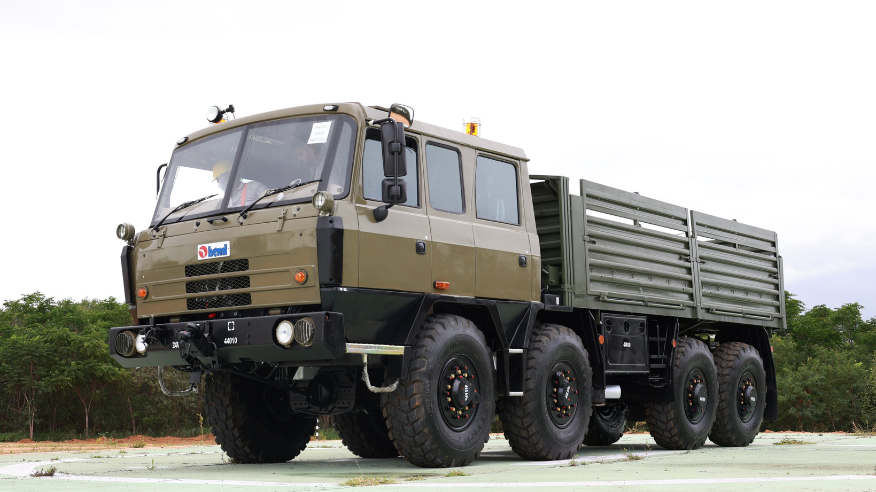
Bharat Earth Movers Limited (BEML) announced on 4 August 2025 that it has secured a ₹282 crore contract to supply High Mobility Vehicles (HMVs) to the Indian Army.
The contract includes specially designed four-door cabin HMVs capable of transporting tanks, engineering equipment, and other critical assets. Built for rugged environments, these vehicles feature all-terrain powerlines and are engineered to ensure performance in extreme conditions, enhancing operational logistics across India's varied terrain.
Arjun Dev Singh
Arjun Dev Singh has a deep interest in defence, security, and strategic affairs. With a strong analytical lens and a passion for military and geopolitical developments, Arjun strives to bring clarity and context to complex national and international issues.



Comments