







The Real Story Behind the Trump-Pakistan Narrative in 2025

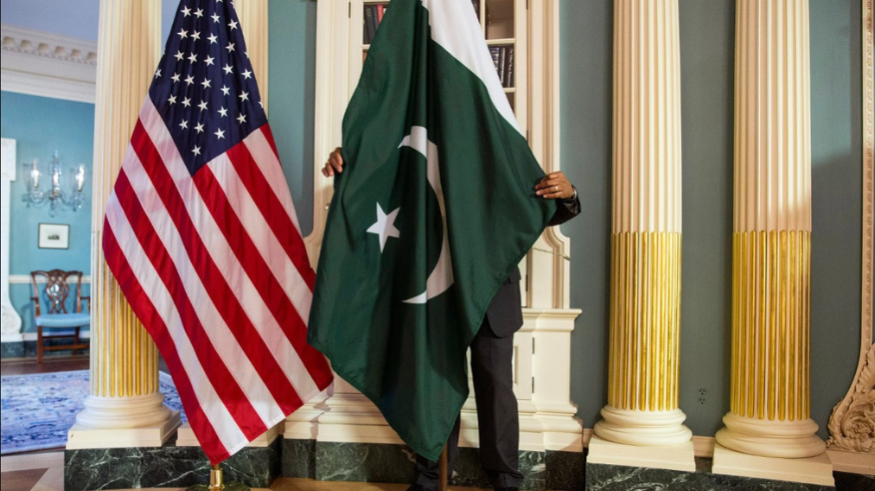
If one glanced at the headlines that have emanated from Pakistan and Trump’s America, one would be forgiven for believing that Pakistan-US relations have entered a new phase of friendship. Trump praised Pakistan’s Field Marshall Asim Munir as “an exceptional human being and an inspiring personality.” Pakistan in turn hailed Trump for his decisive diplomatic intervention and pivotal leadership in “ending the conflict” with India. Throughout 2025, virtually every single month, a new headline emerged signalling yet another “landmark deal” between the two countries ranging from rare earth and oil exploration, cooperation against terror and even crypto deals. So what’s really brewing behind this seemingly unending Pak-US honeymoon?
“Pakistan detains alleged ISIS plotter of Abbey Gate bombing”: Al Jazeera and Axios, March 5, 2025
On August 26, 2021, a suicide bombing at Kabul airport’s Abbey Gate killed 13 U.S. troops and over 170 Afghans. In April 2025, Pakistan quietly handed over Sharifullah, an ISIS-K operative, to the United States, branding him as the mastermind of the 2021 Abbey Gate bombing. Former President Donald Trump hailed the move, calling it a "major breakthrough." However, it soon emerged that Sharifullah was only a low-level conspirator, involved in logistics, not planning. U.S. intelligence officials were reportedly furious, accusing Pakistan of deliberately inflating his role to gain diplomatic leverage.
“US seeks investment in Pakistan’s vast mineral reserves during top official’s visit” - Arab Times, April 10, 2025
In February 2025, Pakistan signed a rare earth minerals deal with a U.S. consortium, presenting it as a strategic step to counter China’s monopoly in critical minerals. The agreement focused on potential reserves in Balochistan, and was showcased in Washington as a key move toward “trusted, democratic supply chains.” On February 17, U.S. officials praised the deal as a breakthrough in resource diversification. However, by May 2025, independent geological surveys revealed inflated reserve estimates, and escalating violence in the region further deterred investors. The deal effectively stalled, drawing criticism that Pakistan had oversold its potential.
May 7–10, 2025 - American intervention in Op Sindoor
A four-day military confrontation between India and Pakistan triggered international alarm, with fears of escalation to full-scale conflict. On May 10, 2025, after a four day military confrontation between India and Pakistan. Donald Trump— tweeted that his diplomatic outreach had “successfully brokered a peace deal between two nuclear powers” and that he deserved full credit for preventing a disaster.
The Indian government rejected this framing. Delhi asserted that Op Sindoor had been paused as the outcome of direct bilateral backchannel talks between Indian and Pakistani officials. External Affairs Minister Subrahmanyam Jaishankar noted that India “does not accept mediation on bilateral matters.”
Pakistan’s response was tellingly different. Within 24 hours, Pakistani officials, including ISPR and Foreign Office spokespeople, began to publicly acknowledge Trump’s role in “helping facilitate communication,” with one unnamed senior source calling his intervention “decisive at a critical moment.”
“Pakistan, US explore tech diplomacy as crypto council meets acting envoy”: Pakistan Today (Profit), May 15, 2025
Pakistan’s deal with a Trump family-backed cryptocurrency firm was disclosed on May 15, 2025, when World Liberty Financial (WLF)—reportedly 60% owned by Donald Trump’s sons Eric and Donald Trump Jr. plus Jared Kushner—signed a Letter of Intent with Pakistan’s newly formed Pakistan Crypto Council (PCC)
The agreement aimed to integrate blockchain across Pakistan’s financial institutions—enabling stablecoins, tokenization of assets, and regulatory sandboxes for DeFi pilots. The deal rapidly drew scrutiny due to the Trump family’s stake and the involvement of Pakistan Army Chief Asim Munir in welcoming the WLF delegation.
“US President Donald Trump is scheduled to have lunch with Pakistani armed forces chief Asim Munir at the White House on Wednesday”: Reuters, June 18, 2025,
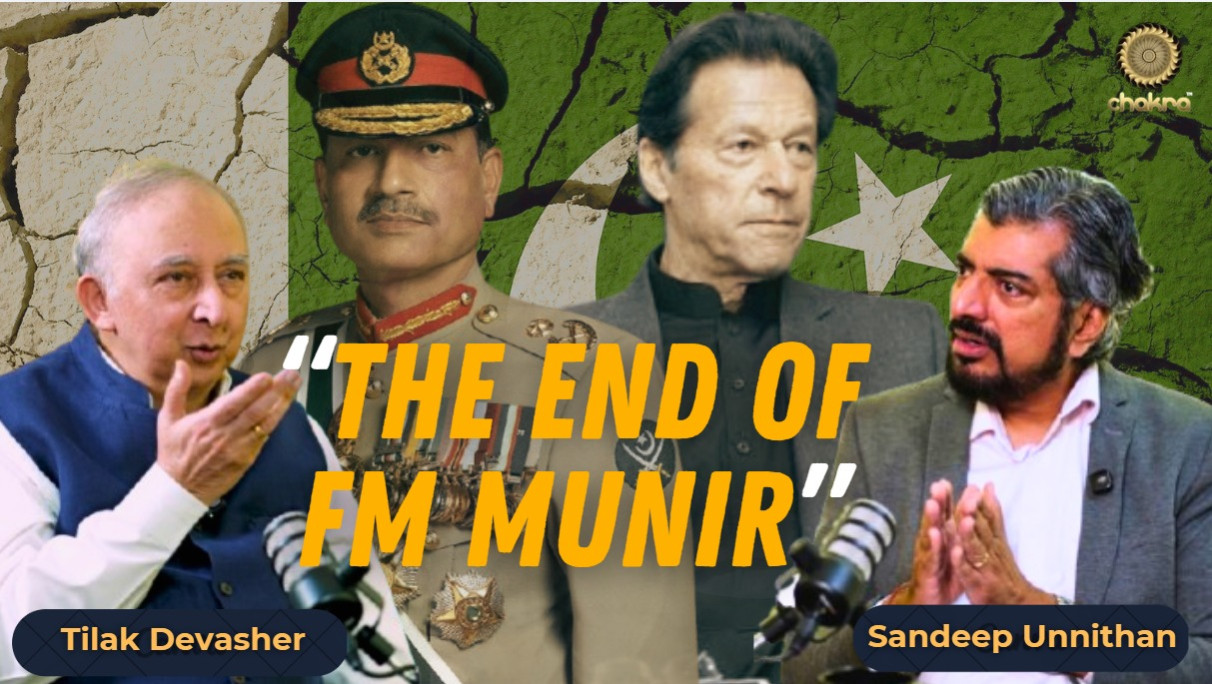
Pakistan’s Field Marshal General Asim Munir met former U.S. President Donald Trump on June 18, 2025, for a remarkable White House lunch in the Cabinet Room, marking the first time since 2001 that a Pakistani army chief visited the U.S. president unaccompanied by civilian officials
The meeting lasted about two hours. Later, Trump publicly thanked Munir for helping avert war during the May India‑Pakistan conflict and praised him for contributing to regional stability. They also discussed Iran‑Israel tensions, trade and economic development, and cryptocurrency cooperation
“Pakistan to nominate Donald Trump for Nobel Peace Prize”: Reuters, June 21, 2025
Pakistan officially announced on 21 June 2025 that it would nominate U.S. President Donald Trump for the 2026 Nobel Peace Prize, praising his diplomatic intervention to broker a ceasefire between India and Pakistan after a four‑day military confrontation in May 2025
Within a day, Pakistan condemned U.S. airstrikes on Iran as violations of international law. Critics in Pakistan—including former diplomats and opposition lawmakers—denounced the nomination as “crass flattery” and “ill‑conceived,” while protests erupted calling for its withdrawal
“Pakistan and US reach a trade agreement to develop oil reserves and reduce tariffs”: ABC News, July 31, 2025
On July 31, 2025, former U.S. President Donald Trump announced and formalized a major U.S.–Pakistan trade agreement on oil. On July 30, 2025, Trump posted that the U.S. and Pakistan had “concluded a deal … to develop their massive oil reserves,” with plans underway to select a partner company.
The following day, July 31, 2025, in Islamabad, officials confirmed the pact would help tap Pakistan’s largely untapped reserves and reduce tariffs on Pakistani exports—the first tangible step in deepening bilateral energy ties
A close look at these developments reveals some interesting patterns.
Donald Trump’s penchant for dictators: Field Marshal Asim Munir is now the key interlocutor with the U.S., sidelining Pakistan’s civilian leadership and Trump prefers that.
Trump as a transactional power broker: Whether in crypto, peace diplomacy, or oil, Trump—and his inner circle—are central players to every major move. These deals are elite-to-elite, transactional, and opaque.
Risk of Blowback: Pakistan has hitched itself to the Trump family rather than the U.S. government. This could backfire if winds change in Washington or Islamabad.
Headline management: As soon as a new headline emerges, the older stories fade into the background.
Role of geopolitics: Donald Trump appears desperate. He’s failed to deliver peace in Ukraine and needs a win for his political base. Reportedly, he’s piling pressure on India to tighten the screws on Putin. He’s also repeatedly hyphenated India and Pakistan to troll India.
So, what lies ahead? How long can a bonhomie based on transient transactional interests last?
2025 has brought important lessons for India. Chief among them: Donald Trump, a transactional leader by nature, has a long history of turning on both his creditors and closest allies. India may have initially welcomed Trump’s return to the White House, but that goodwill is now being tested. He has attempted to strong-arm New Delhi into an unequal trade arrangement—leveraging the very India-US partnership he once praised. That attempt failed.
India must now stand firm on the path it has chosen, knowing well that Trump, like all political storms, will eventually pass. And as for Pakistan—how long before Trump turns on them too?
Deepak Bhadana
Over the past decade, Deepak Bhadana has built expertise in multimedia storytelling, with a focus on military conflicts, insurgencies, international relations, the defence industry, and occasionally, wildlife and environmental issues.



Comments