











Indian Army’s Stealth Drone Breakthrough

In the modern battlefield, the fight often begins long before the first shot is fired — inside the electromagnetic spectrum. Signals overlap, deception is constant, and identifying a real target can be harder than destroying one. As electronic warfare grids grow denser, drones are increasingly exposed to jamming, spoofing, and interception.
A team of three Army officers chose a different approach. Instead of trying to overpower enemy sensors, they focused on deception. Drawing inspiration from classic aerial countermeasures, they helped design a drone that does not just survive in contested airspace — it manipulates it, creates false signatures, and misleads hostile sensors.
The result is a practical solution shaped by teamwork, operational experience, and a clear understanding of the electronic battlespace. Drones have become an integral part of the Indian Army. Now, many operations incorporate drones, and military historians have long emphasised that warfare can often be won through deception.
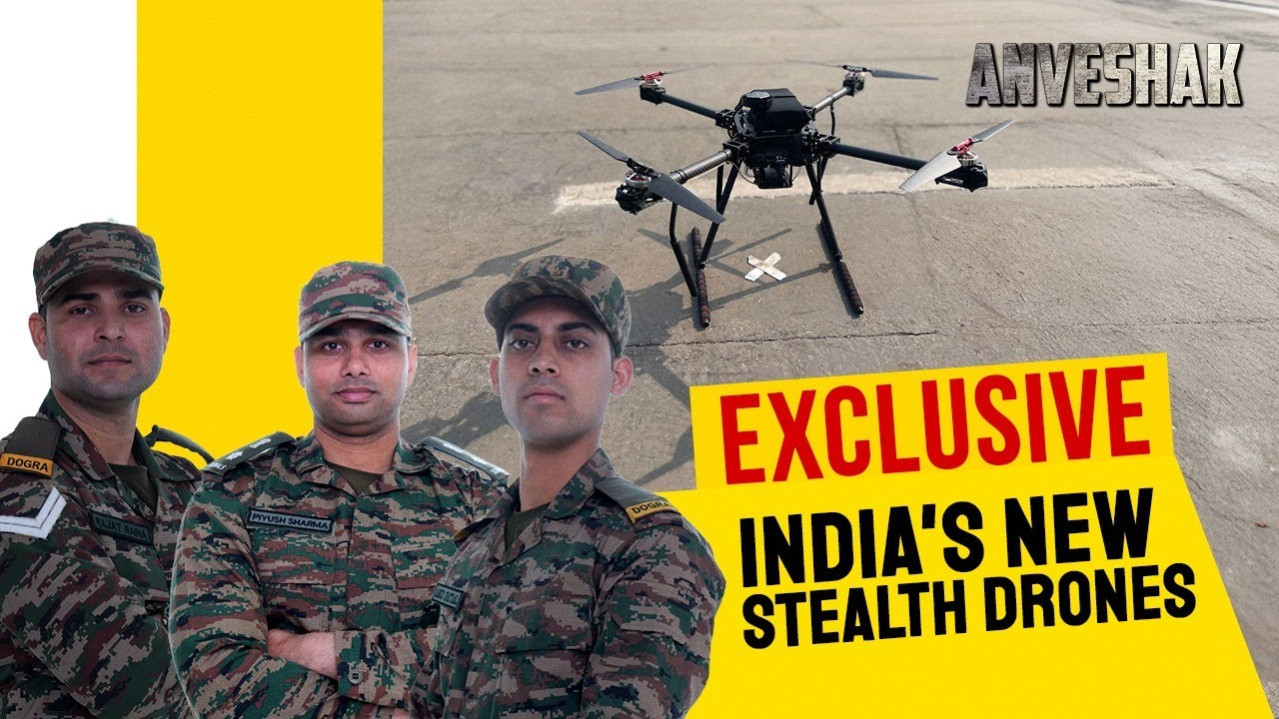
The innovation is the Vismaya Autonomous Delta Deceptor. It was developed by Lieutenant Colonel Piyush Sharma, Naik Rajat Saina, and Sepoy Abuj Patial. The name itself is fascinating — Vismaya. The system is designed to deceive enemy electronic warfare resources through electronic deception.
The Vismaya creates a false electromagnetic grid by producing frequencies across a wide range of electromagnetic radiation bands. This lures enemy electronic warfare resources and makes them believe that it is a target of interest. As a result, their jammers and EW systems are directed toward this false target. This provides greater operational freedom for our own drones and strike packages to target enemy equipment.
Lt Col Piyush Sharma explains: “Aircraft generate chaff to deceive enemy missiles that are coming towards them. The same concept has been applied to this drone.”
He also highlights another important aspect: “When we look at recent operations worldwide, we have seen challenges in operating drones effectively in an EW-contested environment. Drones need to operate closely with infantry soldiers because their incorporation into warfare is happening at a very fast pace.”
“The drone itself has been manufactured by the two partners sitting with me. Spare parts and frames available in the market were used, but converting them into a fully functional drone was done in-house. The programming, integration of payloads, and software coding were also carried out in-house by the team, with support from technical partners in hardware manufacturing,” he adds
The deception drone operator, positioned two to three kilometres away, can launch the drone and perform tasks that soldiers earlier had to do themselves. This reduces operational time and significantly enhances soldier safety.
In the end, Lieutenant Colonel Piyush Sharma mentions an important point:
“My role models are all those innovators, including those sitting with me. They are always enthusiastic about converting an idea into a working model that can solve an operational requirement and meet the needs of soldiers. Their selfless service to the organisation is always appreciated, and I truly look up to them as my role models.”
Watch the full episode: https://www.youtube.com/watch?v=9gttodY_xFw
Arjun Dev Singh
Arjun Dev Singh has a deep interest in defence, security, and strategic affairs. With a strong analytical lens and a passion for military and geopolitical developments, Arjun strives to bring clarity and context to complex national and international issues.



Comments