







India-US trade talks- from tariff tensions to upward trajectory

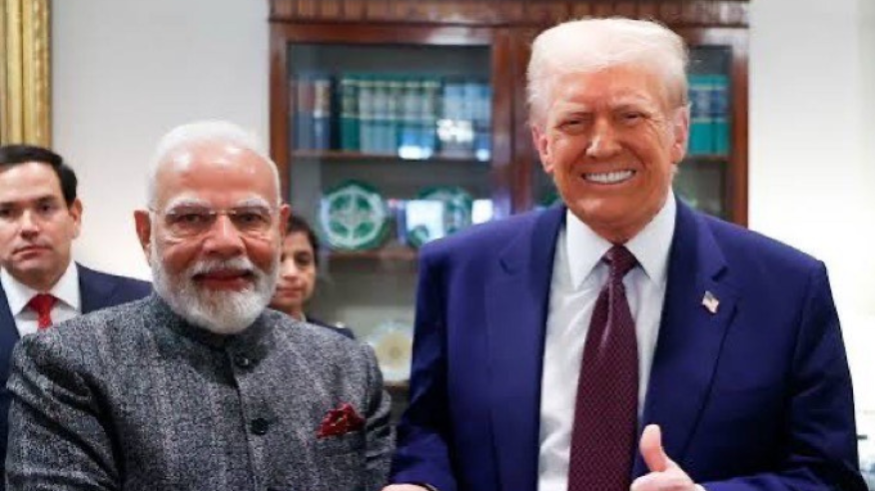
Trade talks between India and the US began with a September 16 visit to New Delhi by Assistant US Trade Representative for South and Central Asia Brendan Lynch. In August, US President Donald Trump imposed a 50 per cent tariffs on goods from India, the highest US tariffs on any country in the world. Half of these tariffs are attributed to India’s import of Russian oil. The negotiations will be intense and hard fought with both sides aiming to obtain the best possible deal. As the trade negotiations are underway, one can’t help but think about the “Theory and Practice of Negotiations”, a subject taught to me at the Indian School of Business.
Most economists will argue over its aspects but there are some prospective signs of a thaw on various issues. In an era of multilateralism, negotiations assume a very different complexion. It is an amalgamation of economic heft, mutual trade-offs, offset options and optics. In the present construct, there seem to be a number of core issues which include the agricultural sector, dairy sector and oil. Capitalism is largely transactional. While all this will be negotiated, the negotiations may have a package deal thrown in to include some issues of technology, defence as well as certain trade offs from the usual stance of both nations. These package deals with a sprinkling of some exotic ingredients make the overall negotiations lucrative, yet wholesome.
A large part of negotiations in this globally interconnected world hinges on optics as well. The optics of negotiations, a sneak peak on the trajectory of talks, the myriad point of views, giving a win win flavour of discussions to the public and more importantly some big bang announcements. The big bang announcements occasionally form part of a package deal with large numbers, as seen in the past. It isimperative that these numbers are pragmatic and achievable for a greater long-term impact.
Prospectively, while there could be some trade offs in the farm and dairy sector, GM crops may not be allowed to enter India as it goes against the very structuring of India’s farm sector which is very different from the US in terms of everything. Dairy sector also may not be very conducive to changes but the US ask of ‘zero oil purchase from Russia’, looks unlikely. A public distancing of Russian oil imports by India lies in the zone of least probability.
India’s exports to the US fell to USD 6.8 billion in August from USD 8.1 billion earlier which is a steep fall. It is therefore necessary to negotiate well on the trade barriers and formulating a clear BATNA (Best Alternative to a negotiated Agreement) or the most favourable option India can pursue, if the negotiation fails.
As Assistant Trade Representative Brenden Lynch and his team work out the modalities with the officials of Ministry of Commerce, the enduring importance of bilateral trade and the size and scale of Indian markets could be looked at as the two cornerstones of the ongoing negotiations. An ideal approach could be as follows: -
a. Consider own preferences and other’s preferences
b. Factor shared interests
c. Build trust by balancing cooperation and competition
d. Preserve the long-standing relationship
e. Create multi-issue proposals – have several options and look at packaging deals instead of staying fixed on just one option
India-US relations need to be more than transactional in these rapidly changing geopolitics. While economic standpoints may accrue short term benefits, economic sensibilities will decide the trajectory for a much deeper relationship for the future.
Col Anurag Awasthi (R)
With 30 years in the Army and corporate world, Col Anurag Awasthi is a semiconductor policy expert, public speaker, and columnist, driving strategic tech initiatives across government, academia, and global forums.



Comments