









India’s Fighter Jet Dilemma

“On F‑35A and Su‑57E, whatever has been discussed has been informal… What I can talk about is our 5th‑generation fighter, AMCA; we released the RFI yesterday,” Defence Secretary Rajesh Kumar Singh said recently.
The Defence Secretary's statement is a reflection of the crisis facing the Indian Air Force today. India needs at least 40 fighter squadrons to prepare for a possible two-front conflict with China and Pakistan. However, at present, the IAF operates only around 30 squadrons—this includes one comprising the soon-to-be-retired MiG-21 Bisons. With its fighter strength dangerously depleted, India must move swiftly to replenish and modernise its fleet.
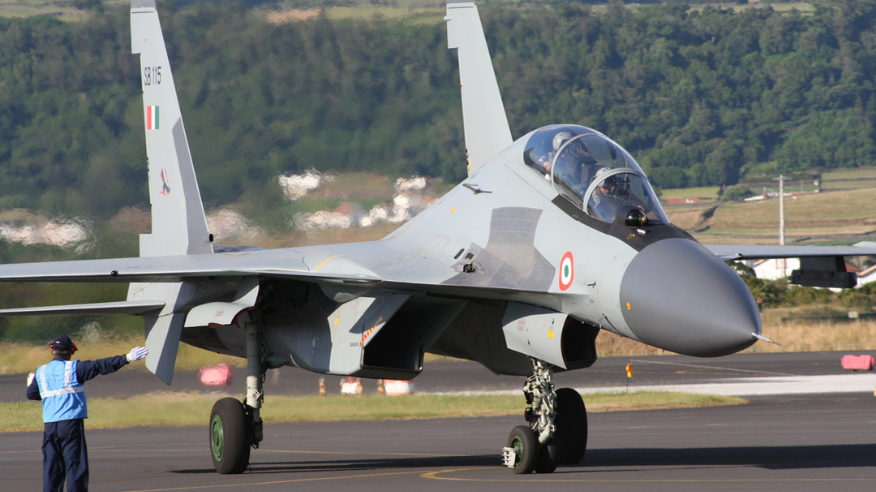
The Super Su-30 mki
As a short term solution for maintaining combat readiness, India has launched a comprehensive upgrade programme for its Su-30MKI fleet—the backbone of the IAF with approximately 265 aircraft in service.
Dubbed the “Super-30” programme, this upgrade will modernise 84 aircraft over the next 3–4 years, at an estimated cost ₹66,800 crore. The upgrades include the installation of the DRDO-developed GaN-based Virupaksha AESA radar, a modern digital cockpit, a 64-bit flight control computer, integration of indigenous Astra Mk-2 and Mk-3 missiles, the hypersonic Russian R-37M missile, advanced electronic warfare suites, and infrared search and track (IRST) systems. This modernisation is expected to extend the operational life of these aircraft until 2055 and improve their combat effectiveness—especially in contested airspaces against stealth-capable adversaries.
More Rafales, But MRFA Stalled
Alongside this, India is expanding its Rafale fleet. With 36 Rafales already inducted into the IAF, New Delhi has recently finalised a ₹64,000 crore ($7.4 billion) deal with France to procure 26 Rafale-M fighters for the Indian Navy.
This strengthens maritime strike capability while deepening India’s defence partnership with France.
Meanwhile, the long-awaited Multi-Role Fighter Aircraft (MRFA) programme—intended to acquire 114 foreign jets for the IAF—remains in limbo. Although a Request for Proposal (RFP) is expected later this year, procedural delays and changing policy frameworks around local production and transfer of technology have stalled progress.
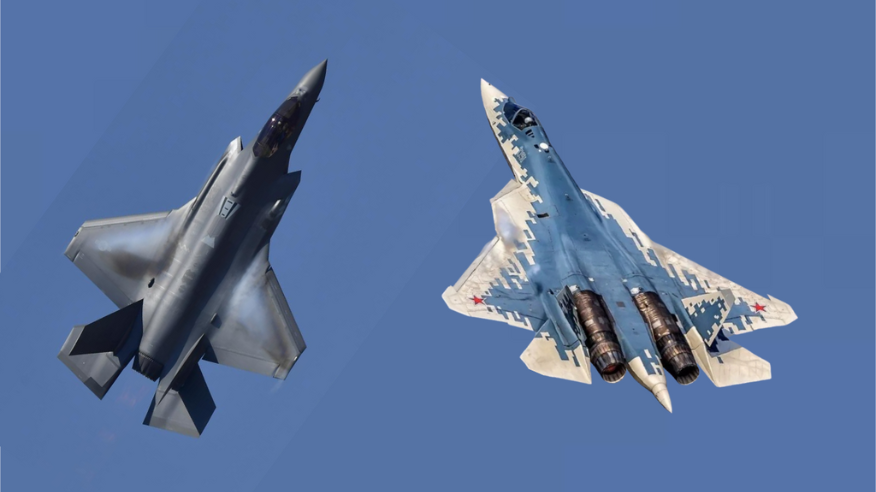
A difficult choice - F35 vs Su-57
What is clear to one and all is that the IAF must acquire a fifth-generation fighter post haste. The two prominent contenders here are the American F-35 Lightning II and the Russian Su-57 Felon.
The F-35 is reputedly the most advanced fifth-generation fighter available today, equipped with stealth, sensor fusion, artificial intelligence, and real-time data-sharing capabilities. Its inclusion would strengthen interoperability with QUAD allies like the US, Japan, and Australia. However, the F-35 comes with significant challenges—its unit cost is around $80 million, and operational expenses are high. Moreover, the US is unlikely to allow co-production or transfer of key technologies. End-user monitoring clauses and dependency on US-controlled supply chains also raise concerns over India’s strategic autonomy.
The Russian Su-57 offers a more affordable and integration-friendly option. Built for agility and long-range engagement, the Su-57 is compatible with Russia-origin systems already in the IAF inventory, including the Su-30MKI. It is also better aligned with India’s longstanding defence relationship with Moscow. However, the Su-57 lags behind the F-35 in stealth and sensor fusion capabilities. It has also faced delays and limited deployment in the Russian Air Force, raising doubts about its maturity as a fifth-generation platform.
AMCA: India’s Own Fifth-Generation Fighter
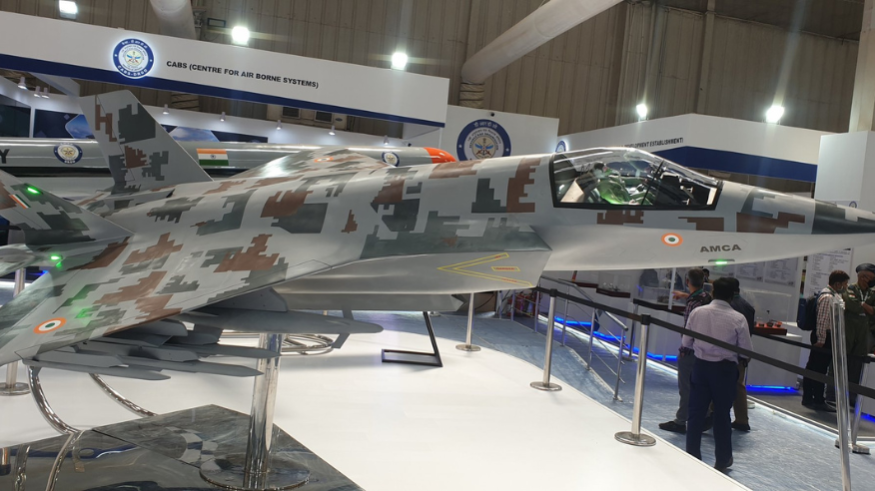
India's best bet may actually lie in the Advanced Medium Combat Aircraft (AMCA)—its indigenous fifth-generation fighter being developed by the Aeronautical Development Agency (ADA) and Hindustan Aeronautics Limited (HAL).
Approved by the Cabinet Committee on Security in March 2024, the AMCA programme envisions a 25-tonne twin-engine stealth fighter with internal weapon bays, supercruise capability, and advanced avionics. The first prototype is expected by 2028–29, with production to begin around 2032 and induction slated for 2034. The aircraft will initially be powered by the GE F-414 engine, with a more powerful variant to be co-developed with France’s Safran in later stages. In a break from past practices, the Defence Ministry has opened AMCA manufacturing to private Indian companies, aiming to foster competition and industrial capacity. HAL will have to bid alongside the private sector, a shift intended to break monopolies and improve efficiency.
Phased Strategy for Airpower Renewal
The path ahead for India’s airpower revival is layered. In the short term, the Su-30MKI upgrades and additional Rafales will help maintain a minimum deterrent capability. In the medium term, if MRFA moves forward, it could provide much-needed numerical strength. Over the long term, AMCA represents the future of India’s air dominance and self-reliance, but it will take time.
Importing fifth-generation aircraft like the F-35 or Su-57 may offer short-term capability boosts but could come at the cost of strategic flexibility.
Deepak Bhadana
Over the past decade, Deepak Bhadana has built expertise in multimedia storytelling, with a focus on military conflicts, insurgencies, international relations, the defence industry, and occasionally, wildlife and environmental issues.



Comments