







How a defence satellite could have saved Captain Saurabh Kalia
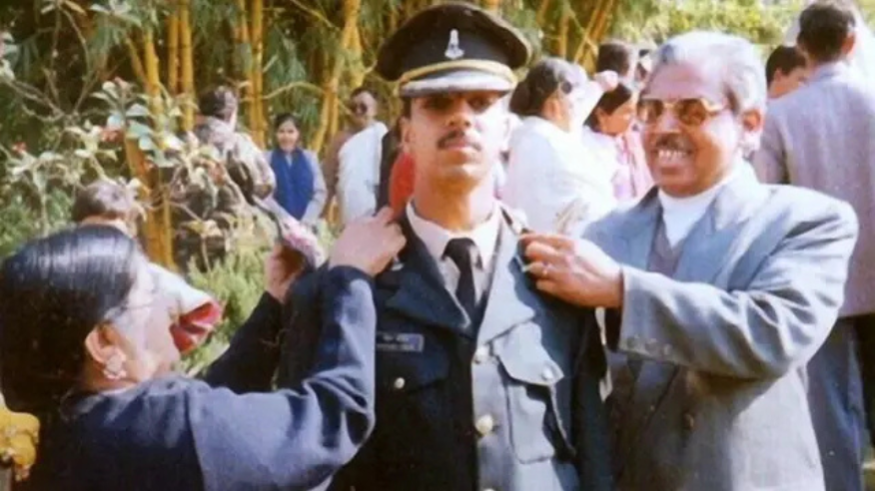
Wars are going to be dependent on space. On May 15, 1999, a 23-year-old officer named Captain Saurabh Kalia was asked to investigate information given to us by grazers in the Kargil sector. So he went up with a patrol from a battalion of the 4th Jat near Bajrang Post. He never came back. He was kept in Pakistani captivity for 22 days. He was tortured, and all that was done, everything that could be broken in a human body was broken. And at the end of it, there was a bullet injury. We found out after 22 days. Another patrol recovered his body and those of his five-man patrol. Now if we had a satellite at that time, Captain Kalia would not have had to go there to find out what happened. Satellite pictures would have told us. Saurabh Kalia could have radioed back on a satellite communication set to say he had encountered something. But there was no communication with his unit. The screening effect had affected his VHF radio sets. And the third thing was that we did not have his exact coordinates. After all, we were reliant on the global positioning system (GPS), and the US had switched off GPS. This was a denial of service. So, what the Indian armed forces faced was that some piece of technology, which was given to us for precision shooting by the air force and artillery was no longer available to us.
Therefore, our bombs were falling all over. Our air force could not pick up targets. We could not precisely target our objectives. So that was a big problem. Today, 23-year-olds like Saurabh Kalia are the ones who are innovators. They are the ones who make rockets and satellites. People, young people, are making satellites. I'm running a space club. I've started a space club in India, and I find some people in sixth or seventh grade. Young boys and girls are talking about space. I am mentoring some young startups. A 23-year-old girl is making a space plane, and I'm helping her to do it. I said you are 23 years old doing this. The 23-year-old was Saurabh Kalia, who did not have technology, and we had to lose him that way.
So what does military space involve? How do you define space? There are three use cases of space— positioning, navigation and timing. That is what the GPS is equivalent to. The second thing is radio and optical communication. Starlink is one example. And then of course you have the most important and the most basic Intelligence Surveillance and Reconnaissance (ISR), an eye in the sky which does earth observation, by day, night, and in bad weather. And with all the data collected over a period of time, you can even go around predicting what is going to happen to the earth. Or if you're going to pick up some movements of adversaries, tanks moving or or even if you want to concentrate on an industry, an oil rig or a dockyard, you can find out how many ships have come, how many containers were loaded, how many ships have moved out, how many ships are waiting. You can map out the economy of a country or economy of a sector like energy for example. When you talk about national security there are three things which are most important: energy security, data security and nuclear deterrence.
If you have oil you have to have a nuclear bomb otherwise you will not be able to sell the oil and you know what happens. You have to have a nuclear deterrent to ensure no one attacks you and takes away whatever you have. Data is extremely important. So the data and oil relationship people have been talking about data is the new oil. But I think today even oil is new data because how much oil is coming, how much oil should have gone, how many ships have gone. All this can be aggregated by the space as a sector.
When you talk about warfare you talk about land you talk about sea. Ultimately the three domains of warfare the land, sea and air have been put together because they can all communicate through space and when you communicate with space you can also communicate with one another better because all are interconnected through that medium. So when you are communicating with one another on the ground without going to space is terrestrial communication and when you are communicating through a satellite is non-terrestrial communication. Now the networks have got to combine terrestrial and non-terrestrial networks and the total cover that the space can give is wholesome. It is regional. It is global. It can be sectoral. You can focus your beam on something more precise. So from tactical to operational to strategic level, space can cover it all. Space is the fourth domain of warfare. It is also the final frontier because when you go up and you're putting your assets on top immediately they become a global commons because the satellite cannot go and sit on top it has to go around it has to go into an orbit. So therefore if there is an Indian satellite or American satellite or a Russian or a Chinese or Japanese or whichever satellite they are not standing on top of the sovereign territory. They go around the globe. There is a system of satellite orbits. Slots are allotted to satellites at the international level by the UN something called the ITU which governs how the frequencies will be shared. Low earth orbit low earth orbit is about 300 km to about say 2,000 km and medium earth orbit goes from 2,000 to almost 20,000 and then above that is all geo that is the geostationary and geosynchronous at 36,000 plus kilometers.
So when you have to throw satellites into these orbits. It is not that all are going to be sitting at 300- 350. Km. Some will be at 350, some will be at 400, somebody will be at 450. So there is a huge amount of space which is out of space and the number of satellites which are going to be moving up maximum now have been occupied by one company called SpaceX whose CEO Elon Musk is installing 10,000 satellites. There are only 18,000 satellites in all.
There is something called space situational awareness which tells you what are the assets moving around in space. But when you talk about space warfare, then it is space domain awareness. It is not that you are finding out who's where. You have to find out who is doing what and where. Whose satellite is it? Is it the one that I need to do something about? Is it something which is my own asset or something that I can collaborate with? So over a period of time what happens is that the rockets are the ones which are launching the satellite.
Heavier the satellite, the higher it has to go, the heavier the rocket. Second thing is the satellites which are being thrown up are actually going around the earth. So a number of ground stations or earth stations called the ground segment can actually receive the signals from any satellite in the world. So it is only that you have to be able to be given permission to to download the data. So I mean you could have an Indian satellite but the Australians can download data or you could have the Chinese satellite Pakistanis can use it or anybody can use. So there's a lot of collaboration which comes in.
So ITU is one place where there's a lot of diplomacy which goes on that if you have applied for a ITU slot and you don't get it on time or if you have to ask for so many satellites for a particular reason and you're not given permission in time you just lose the slot or you don't have it. So therefore international diplomacy is very very important as far as space is concerned. Second thing is when you are going to use those assets for the military then you have to navigate a lot of treaties. You have to make sure that all the regulations and all the law is understood. You should not be on the wrong side of the law.
There are huge job opportunities available for space lawyers. There are huge job opportunities for MBAs to form management of space assets or the space sector itself is a huge market. In the next about 10 years it is going to be about 2 trillion dollars worth of business the space would be doing. When I talk about India and when I talk about the world in India we were early starters in space but we invested more as far as civilian or exploratory scientific involvement is concerned but we did not use our space assets for the military.
Imagine we started in the 1960s and by the 1970s we were making a satellite, but in 1999 we didn’t have a defence satellite, else something like the Saurav Kalia incident should not have happened. So first of course the Indian Navy communication satellite went up. Then slowly we had the SBS programs for surveillance. They went up SBS1, SBS2, SBS3 still not enough. So one thing is that if the warfare has to be looked at the three things that I spoke about then that goes onto broadband also.
Second thing is your global positioning that tells you exactly what where is and then it tells you what is being observed all the pictures got to be downloaded. So all the three layers got to be put together. The communication, the location and and and what you what you what you see uh where it is at a at a given time at a given spot.
GIS global information system is one big subject that in India we need to develop. How to make our own maps digital maps? How to make sure that digital maps are updated? How do we make sure that the imagery is transposed onto the GIS? Only then it becomes usable for the military. As a result, you find that space is something which is going to remain at the forefront of all the battlefield and also in the dual technology for industrial use, for growth, for disasters, for farming or there are far too many sectors including pharmaceutical sector that the space has got a huge amount of future.
The next layer is the fifth domain which is a cyber a cheaper but smarter the legacy technologies of the space where the satellites have been thrown up 20 years 15 years 10 years back may not be smart or largely are not smart because they're not software defined they're not computers but today's satellites are going to be flying computers and I say flying computers obviously it is not computer thing but having programs which are smarter. So once you have software defined satellites moving up when you have smaller satellites moving up size, weight and power is a combination that you know you can have smaller but you need to have batteries you need to have something which can move them together and more you have uh uh as far as the weight is concerned more payload it can carry heavier it becomes more fuel is required because otherwise the life goes down and if the fuel is required then you need to make sure that the solar batteries and the solar panels are working very well. So the weight goes up but you can only throw the size, weight and power relationship whether it can be used in LEO MO or geo but that is a lot of science that goes into what kind of rockets are to be deployed so therefore cyber attacks can bring the space assets down. It is very important for us to work that out together. Cyber and space sectors are nearly coming together. And third layer of course uh between the space cyber and artificial intelligence because cyber is the one because the computers compute capability it can have data but in the networks the data can reside anywhere. The data can move around anywhere and all the data needs to be put somewhere. Elon Musk has come up with an idea that he wants to build data banks in space. He also wants to make sure that a lot of power generation happens in space. Edge computing is one process that happens in space. So it means you don't have to bring so much raw data to be processed because they'll occupy the bandwidth. Whatever you want the mission statements, whatever is required then you can give it to the edge. The satellites can compute it and satellites would make sure that all that processed data comes and you can make your data useful at your no. That is a network operation center where all your data centers can be run directly which are much lighter and much better. So with artificial intelligence you can make a decision but all that how you write your codes, how you make your programs you can generally take a decision but the processes will make it right and they will make it precise. So over a period of time when you talk about the UDA loop observe orient, decide and act it cannot be done unless it is USDA it has to be secured and it has to be shared because in so much of network, you can't have insecure and you can't have systems which are not sharable. So over a period of time you realize that a country which invests in space will become a power to reckon with and a country which does not invest in space and in combination with cyber and artificial, put together as stacks, these are the three things which are important. So ultimately, when you're talking about multi-domain operations, you're talking about mosaic warfare. You have to make sure that the army, navy, air force or land, sea and air, and space, The cyber, the artificial intelligence, all put together makes the country progress not only in the war rooms but also in the boardrooms, you can do better. So as a result today you may not be very much aware of the sector but unless you become a space enthusiast we have a problem in a mindset to say oh rocket science you know my child can't learn it or because you know because he doesn't want to become so what we have done is we have opened up this because we have now started creating the space clubs anybody can join. You can have a history, geography, economics background. You don't have to be physics, chemistry, or mathematics. Everybody can join the space club. All of you are welcome.
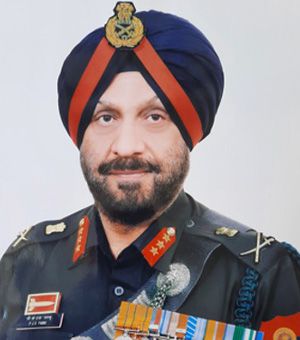
Lt General SPS Pannu (retd)
Lt General Pannu is former Deputy Chief Indian Integrated Defence Staff (Operations). He raised the Defence Space, Defence Cyber Agency, and the Special Forces Division.


A wonderful educational article. Youngsters Must grasp it and explore.