

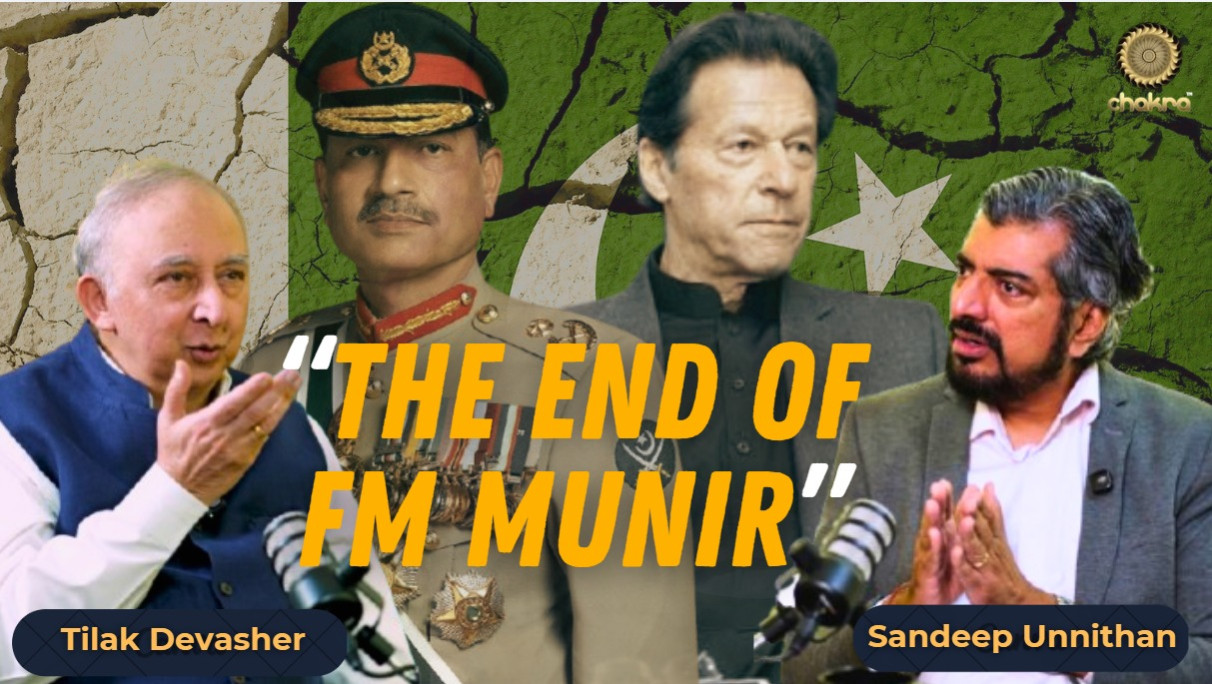









What is Pakistan trying to achieve with the KP emergency?

Pakistan has imposed emergency rule in Khyber Pakhtunkhwa (KP). Islamabad accuses the provincial government, led by jailed former Prime Minister Imran Khan’s Pakistan Tehreek-e-Insaf (PTI), of failing to cooperate in counterterrorism operations.
But is this really about terrorism? Or is national security being used to settle a political score?
Today, Chakra examines: Will Pakistan’s emergency in KP work — and what is Islamabad really trying to achieve?
On October 11, President Asif Ali Zardari approved emergency rule under Articles 232 and 234 of Pakistan’s Constitution, suspending the elected provincial government and transferring executive authority to Governor Faisal Karim Kundi. An 11-member advisory council will assist him, while the army has been deployed to maintain law and order. Chief Minister Sohail Afridi and other PTI leaders have been detained. The move came amid preparations for a march on Islamabad demanding Imran Khan’s release.
This is the fourth spell of governor’s rule in KP’s history.
So why take such an extreme step?
Prime Minister Shehbaz Sharif cites rising militancy, failed negotiations and Afridi’s opposition to large-scale military operations, which he argues could displace civilians. Yet the army and Frontier Corps already conduct counterterrorism operations in KP. Why, then, was suspending an elected government necessary?
Critics point to several possible motives. One theory alleges that Islamabad exaggerated the security crisis. Citing Centre for Research on Security Studies (CRSS) figures, critics claim fatalities among civilians and security personnel in KP fell by 16% in the first nine months of 2026 compared with the same period in 2025. This figure requires independent verification and does not, by itself, establish that the government fabricated a threat.
Another theory suggests the federal government wanted to prevent PTI from using provincial resources or police to protect its Long March. Others speculate that the intervention was timed to pre-empt possible judicial relief for Khan and prevent protests from disrupting sensitive diplomatic engagements, including SCO-related meetings.
More troubling allegations concern the security establishment itself. Critics invoke the “Good Taliban vs Bad Taliban” theory, alleging that certain militant factions are tolerated to justify recurring military intervention. A related theory claims elements within the establishment have facilitated or turned a blind eye to Islamic State Khorasan Province (ISKP) to counter the Tehreek-e-Taliban Pakistan (TTP) and Afghan Taliban. Others allege that highlighting militant threats helps Pakistan secure foreign assistance and diplomatic leverage.
The political response has been sharply divided. Government-aligned commentators portray the intervention as overdue; PTI supporters and independent journalists condemn it as an assault on provincial autonomy. Some social media users supported the crackdown on the grounds of counterterrorism, while others fear it could normalise greater central control and deepen political repression.
On the ground: PTI workers staged demonstrations in Bajaur and Mohmand and NetBlocks confirmed a major internet disruption in parts of KP on 11 October, with cellular connectivity problems also reported
KP has endured decades of militancy and repeated military operations. Now with the province under federal control, the establishment will have to bring the situation - that is governance, economy and militancy under control, there will be no one else to blame this time.
Chakra Desk
Chakra News is a specialised digital media platform committed to in-depth coverage of India’s defence, national security, geopolitics, and critical technologies.



Comments